Kedrostis foetidissima
(Jacq.) Cogn.
Stinking kedrostis
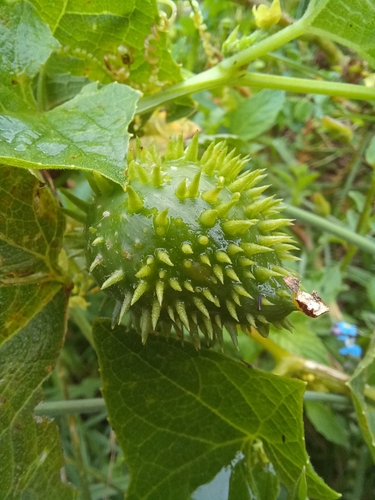
iNaturalist· cc-by-nc
(c) Ray Brown, some rights reserved (CC BY-NC), uploaded by Ray Brown
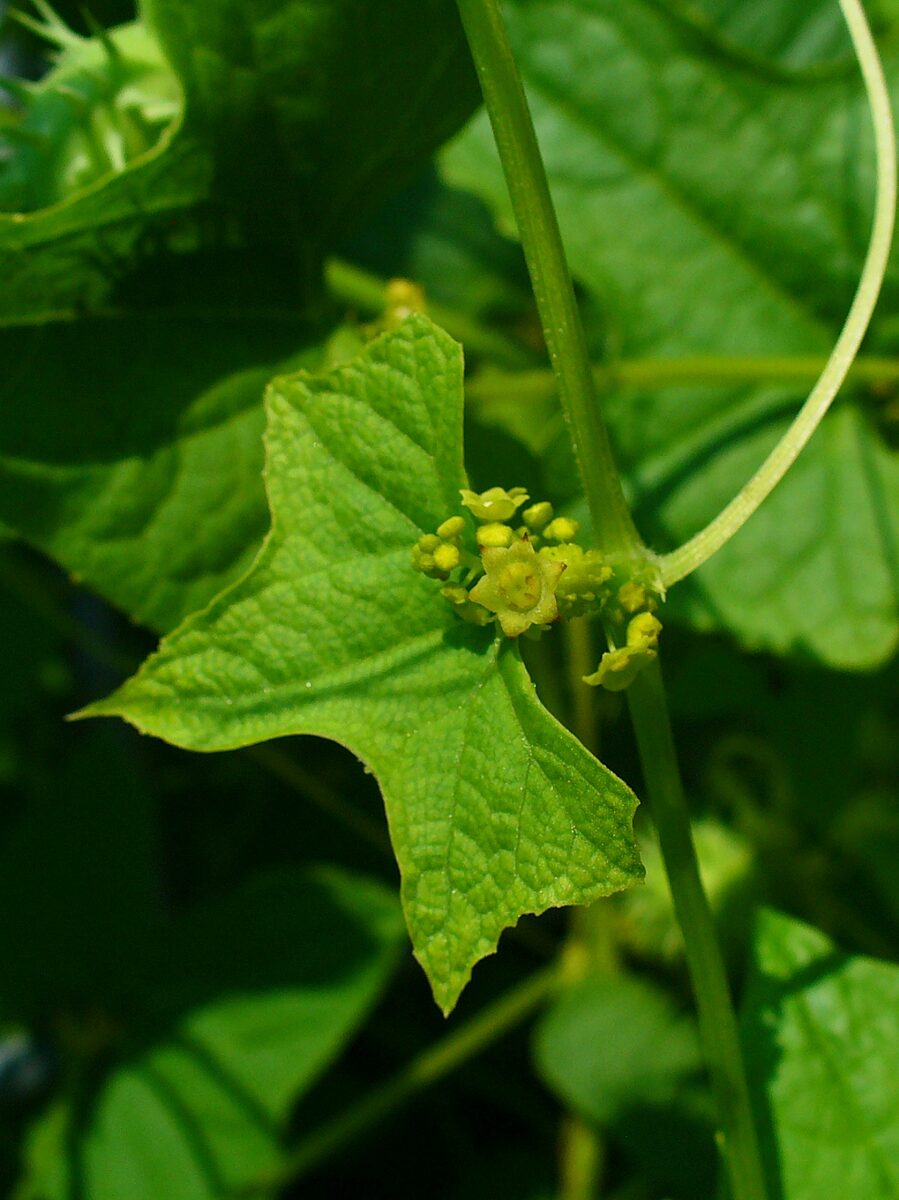
iNaturalist· cc-by-nc
(c) Ray Brown, some rights reserved (CC BY-NC)
Description
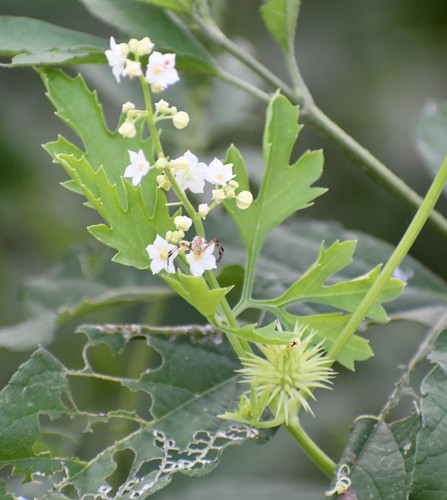
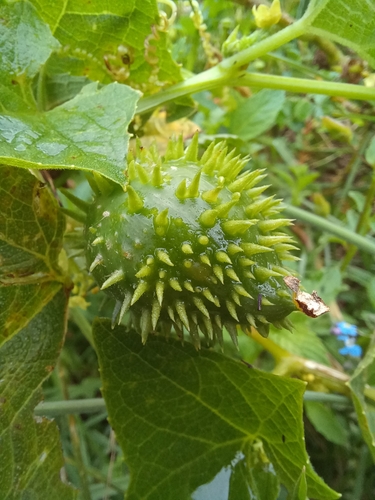
A pumpkin family plant. It is a herb and a climber. The tendrils are usually unbranched. It has a strong unpleasant smell. It has a tuberous root. The leaf stalk is 1 cm long. The leaf blade is triangle shaped. It can have shallow lobes. There can be teeth along the edge. Both flower sexes are usually on the same plant. The flowers are a few and in small stalked clusters. Flowers are bell shaped and white. The fruit are fleshy and have a few seeds. The fruit are pear shaped and 3 cm long. They occur singly.
Edible Uses
The leaves are eaten fresh, used in fish dishes and relishes, and the fruit is also consumed. The tubers are edible. It is an important food in the Kalahari and a famine food in India.
Traditional Uses
The leaves are eaten fresh. They are also used in fish dishes, and relishes. The fruit and leaves are eaten.
This uses section is brief — help expand it
Medicinal Uses
Traditional uses include preparation in fish dishes and relishes, suggesting culinary medicinal applications.
Distribution
It is a tropical plant. It grows in rocky and sandy soils. It needs well-drained soils. It needs shade. It grows in areas with an annual rainfall of 1,100-1,900 mm. In Africa it grows between 50-1,350 m above sea level. It can grow in arid places.
Where It Grows
Africa, Asia, Bangladesh, Benin, Botswana, East Africa, Eswatini, Ethiopia, Guianas, Kenya, India, Mozambique, Myanmar, Namibia, Pakistan, SE Asia, South Africa, Southern Africa, Suriname, Swaziland, Uganda, West Africa, Zambia, Zimbabwe,
Cultivation
All parts of the plant have an offensive odour when crushed.
Other Information
It is an important food in the Kalahari. It is a famine food in India.
Synonyms
Also Known As
Appakovay, Chunane, Erikoi, Kzaram Acetacet, Kukumadunda, Lodwar, Namusiisi, Nurakvel, Putribudinga, Shuntee, Shunto, Tjwala benyoni, Ziizi
References (31)
- Achigan-Dako, E, et al (Eds), 2009, Catalogue of Traditional Vegetables in Benin. International Foundation for Science.
- Addis, G., et al, 2013, The Role of Wild and Semi-wild Edible Plants in Household Food Sovereignty in Hamer and Konso Communities, South Ethiopia. Ethnobotany Research & Applications. 11:251-271
- Ambasta, S.P. (Ed.), 2000, The Useful Plants of India. CSIR India. p 308 (As Kedrostis rostrata)
- East African Herbarium records, 1981,
- Famine foods (As Rhynchocarpa foetida)
Show all 31 references Hide references
- Fowler, D. G., 2007, Zambian Plants: Their Vernacular Names and Uses. Kew. p 79
- Fox, F. W. & Young, M. E. N., 1982, Food from the Veld. Delta Books. p 178
- GAMMIE, (As Rhynchocarpa foetida)
- Goode, P., 1989, Edible Plants of Uganda. FAO p 26
- Grubben, G. J. H. and Denton, O. A. (eds), 2004, Plant Resources of Tropical Africa 2. Vegetables. PROTA, Wageningen, Netherlands. p 562
- Hedrick, U.P., 1919, (Ed.), Sturtevant's edible plants of the world. p 365 (As Kedrostis rostrata)
- Kidane, B., et al, 2014, Wild and semi-wild leafy vegetables used by the Maale and Ari ethnic communities in southern Ethiopia. Genetic Resour Crop Evol. Springer. p 8
- Long, C., 2005, Swaziland's Flora - siSwati names and Uses http://www.sntc.org.sz/flora/
- Lulekal, E., et al, 2011, Wild edible plants in Ethiopia: a review on their potential to combat food insecurity. Afrika Focus - Vol. 24, No 2. pp 71-121
- Matlhare, T., et al, Vegetables in Botswana. p 21 Bioversity website.
- Mohan, V. R. & Kalidass, C., 2010, Nutritional and Antinutritional Evaluation of some Unconventional Wild Edible Plants. Tropical and Subtropical Agroecosystems, 12 (2010): 495- 506
- Mutie, F. M., et al, 2023, Important Medicinal and Food Taxa (Orders and Families) in Kenya, Based on Three Quantitative Approaches. Plants 2023, 12, 1145
- Njoroge, G. & Newton, L. E. 1994, Edible and Poisonous Species of Cucurbitaceae in the Central Highlands of Kenya. Journal of East African Natural History. 83:101-115
- Peters, C. R., O'Brien, E. M., and Drummond, R.B., 1992, Edible Wild plants of Sub-saharan Africa. Kew. p 101
- Royal Botanic Gardens, Kew (1999). Survey of Economic Plants for Arid and Semi-Arid Lands (SEPASAL) database. Published on the Internet; http://www.rbgkew.org.uk/ceb/sepasal/internet [Accessed 16th April 2011]
- Ruiters-Welcome, A. K., 2019, Food plants of southern Africa. Ph.D. thesis. Univ. of Johannesburg p 50
- Salvi, J. et al, 2016, A review: Underutilized wild edible plants as a potential source of alternative nutrition. International Journal of Botany Studies. Volume 1; Issue 4; May 2016; Page No. 32-36
- SHORTT (As Bryonia rostrata)
- Singh, H.B., Arora R.K.,1978, Wild edible Plants of India. Indian Council of Agricultural Research, New Delhi. p 39, 78 (As Kedrostis rostrata)
- Swaziland's Flora Database http://www.sntc.org.sz/flora
- Tanaka, 1980,
- Teklehaymanot, T., and Mirutse Giday, M., 2010, Ethnobotanical study of wild edible plants of Kara and Kwego semi-pastoralist people in Lower Omo River Valley, Debub Omo Zone, SNNPR, Ethiopia Journal of Ethnobiology and Ethnomedicine 2010, 6:23
- van Wyk, Be., & Gericke, N., 2007, People's plants. A Guide to Useful Plants of Southern Africa. Briza. p 72
- WATT, (As Rhynchocarpa foetida)
- Welcome, A. K. & Van Wyk, B.-E., 2019, An inventory and analysis of the food plants of southern Africa. South African Journal of Botany 122 (2019) 136–179
- World Checklist of Useful Plant Species 2020. Royal Botanic Gardens, Kew