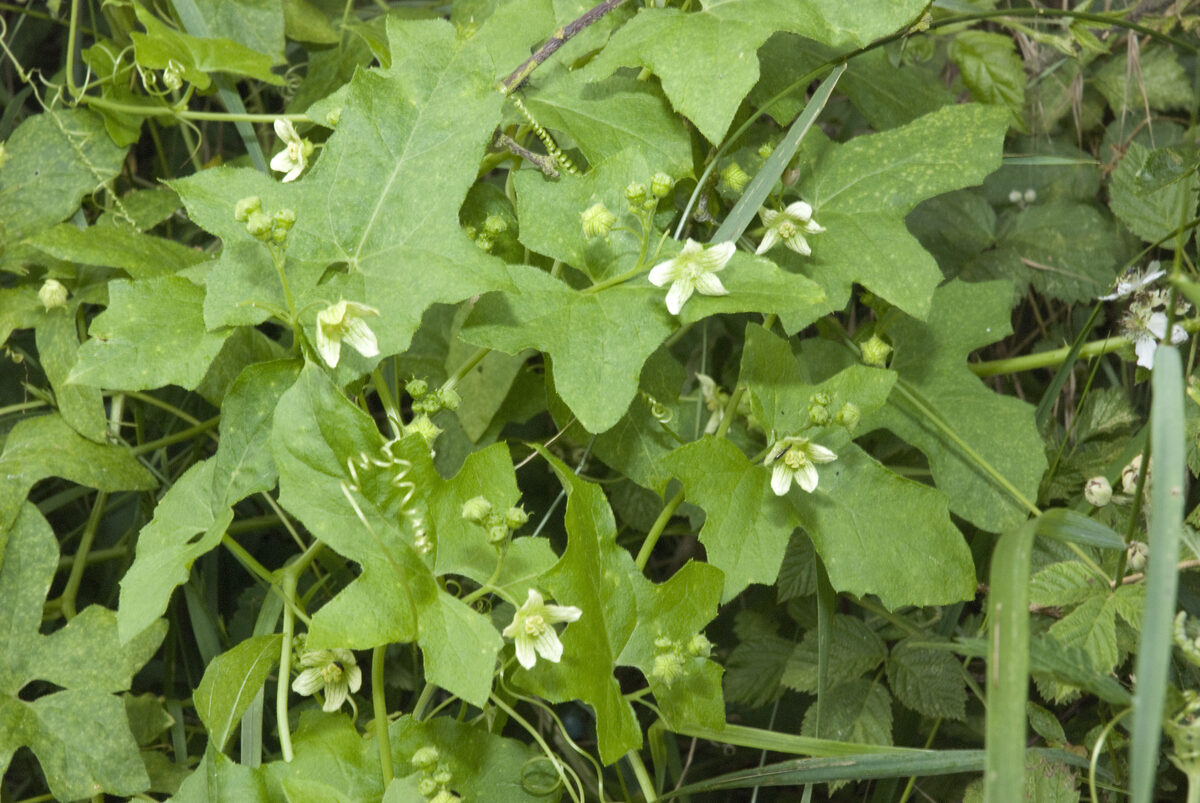
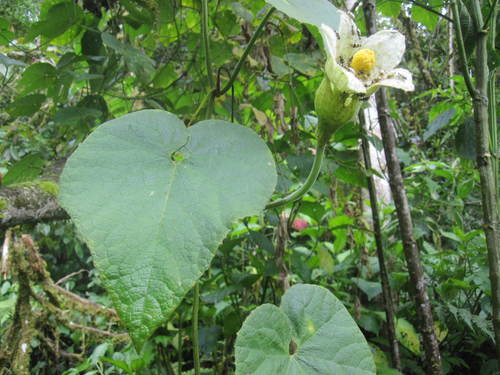
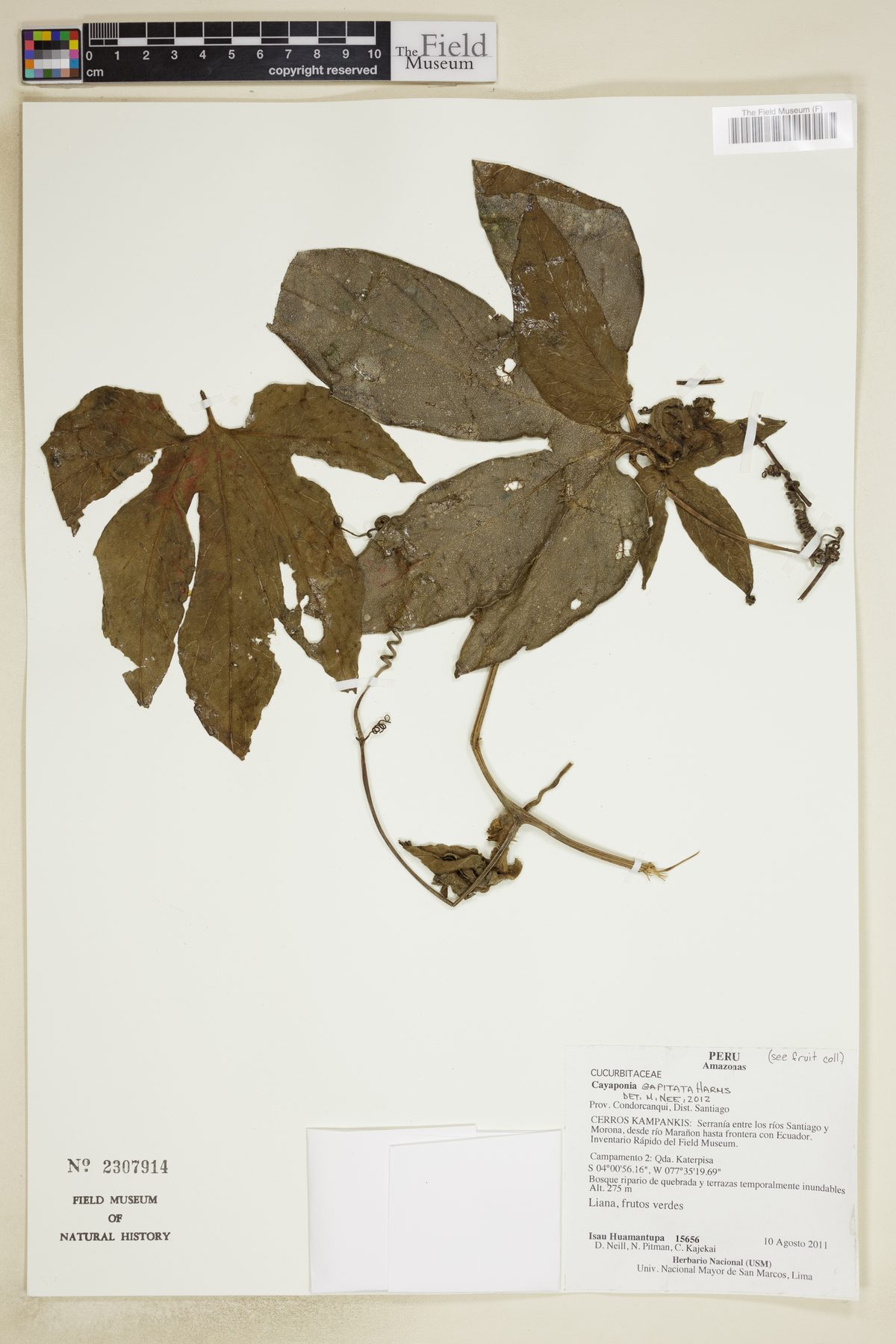
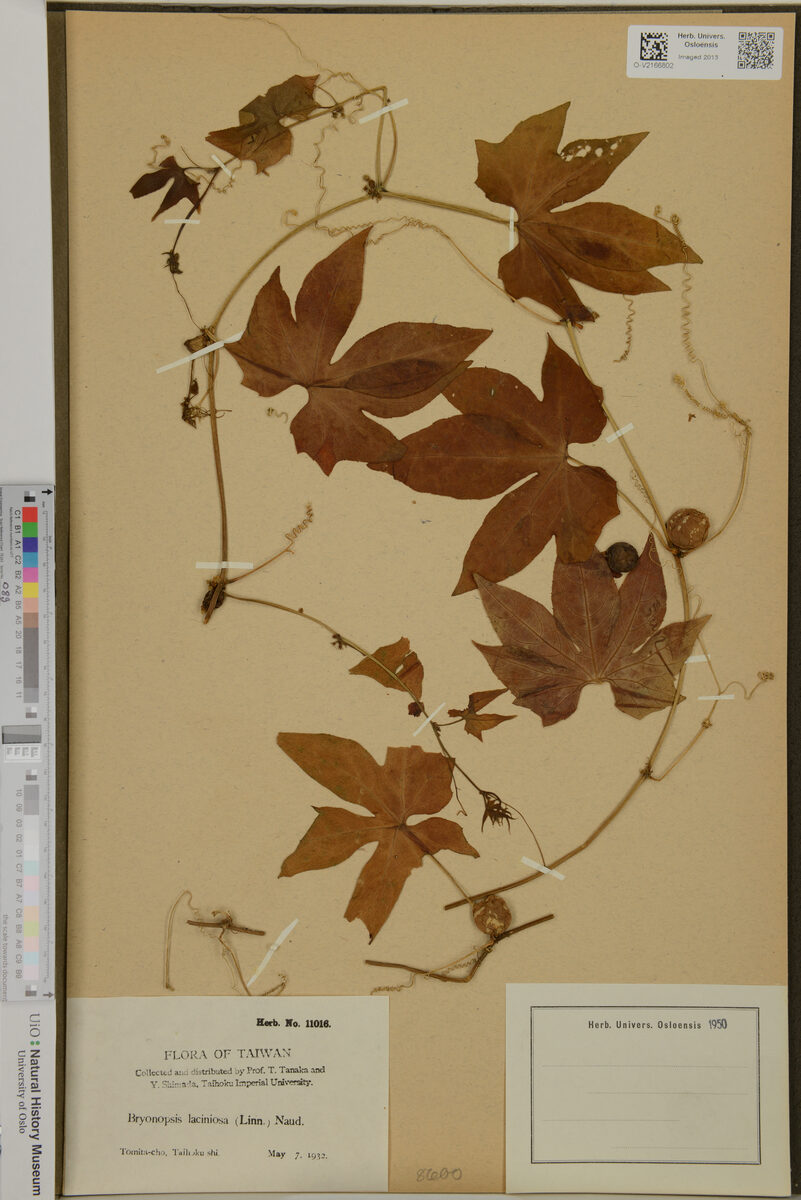
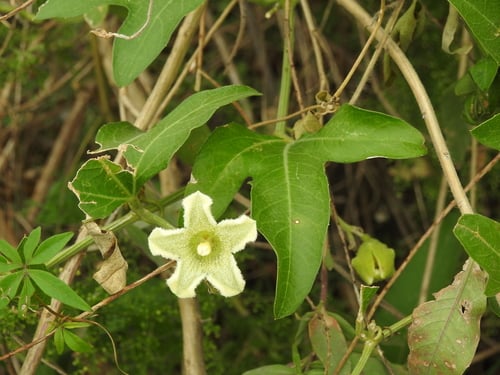
Herpetospermum pedunculosum - (Ser.)Baill.
(Ser.)Baill.
gbif· cc-by-nc
Alexander Naumov
gbif· cc-by-nc
Jasmine Star Outdoor Photography
gbif· cc-by-nc
Jasmine Star Outdoor Photography
Description
Herpetospermum pedunculosum is a ANNUAL CLIMBER growing to 2 m (6ft 7in). It is in flower from July to October, and the seeds ripen from August to October. The species is dioecious (individual flowers are either male or female, but only one sex is to be found on any one plant so both male and female plants must be grown if seed is required). and is pollinated by Insects. Suitable for: light (sandy), medium (loamy) and heavy (clay) soils. Suitable pH: mildly acid, neutral and basic (mildly alkaline) soils. It can grow in semi-shade (light woodland) or no shade. It prefers moist soil.
Edible Uses
Seed - fried and then eaten.
Medicinal Uses
Antiinflammatory Cholagogue Febrifuge. The seeds are used in Tibetan medicine, where they are considered to have a bitter taste and a cooling potency. Anti-inflammatory, cholagogue, choleretic and febrifuge, they are used in the treatment of piles, inflammation of the stomach and the intestines. The pounded root is used to treat problems of the bile ducts.
Distribution
E. Asia - Himalayas to China and Tibet.
Where It Grows
TEMPERATE ASIA: China (Xizang Zizhiqu, Yunnan Sheng) TROPICAL ASIA: Bhutan, India (Sikkim, Assam, Himachal Pradesh, Manipur, Nagaland, Uttar Pradesh, West Bengal), Nepal
Cultivation
We have very little information on this species and do not know if it will be hardy in Britain. However, judging by its native range, it could succeed outdoors at least in the milder areas of the country. Judging by its native habitat, it is likely to prefer growing along a warm sunny woodland border in Britain. 241077
Propagation
Seed - sow spring in a greenhouse. Prick out the seedlings into individual pots when they are large enough to handle and grow them on in the greenhouse or cold frame for at least their first winter. Plant them out into their permanent positions in early summer and consider giving them some winter protection for at least their first winter outdoors - a simple pane of glass is usually sufficient.