Phyllostachys propinqua
McClure
iNaturalist· cc-by-nc
(c) Sally Chingaipe, some rights reserved (CC BY-NC), uploaded by Sally Chingaipe
wikimedia· cc-by-sa
Wikimedia Commons - PQ77wd
Summary
Source: WikipediaPhyllostachys propinqua is a species of bamboo found in the Chinese provinces of Anhui, Fujian, Guangxi, Guizhou, Henan, Hubei, Jiangsu, Jiangxi, Yunnan, and Zhejiang.
Description
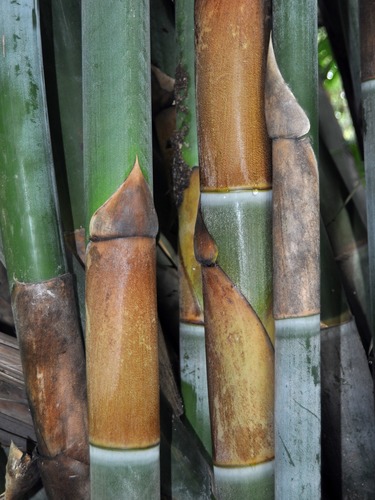
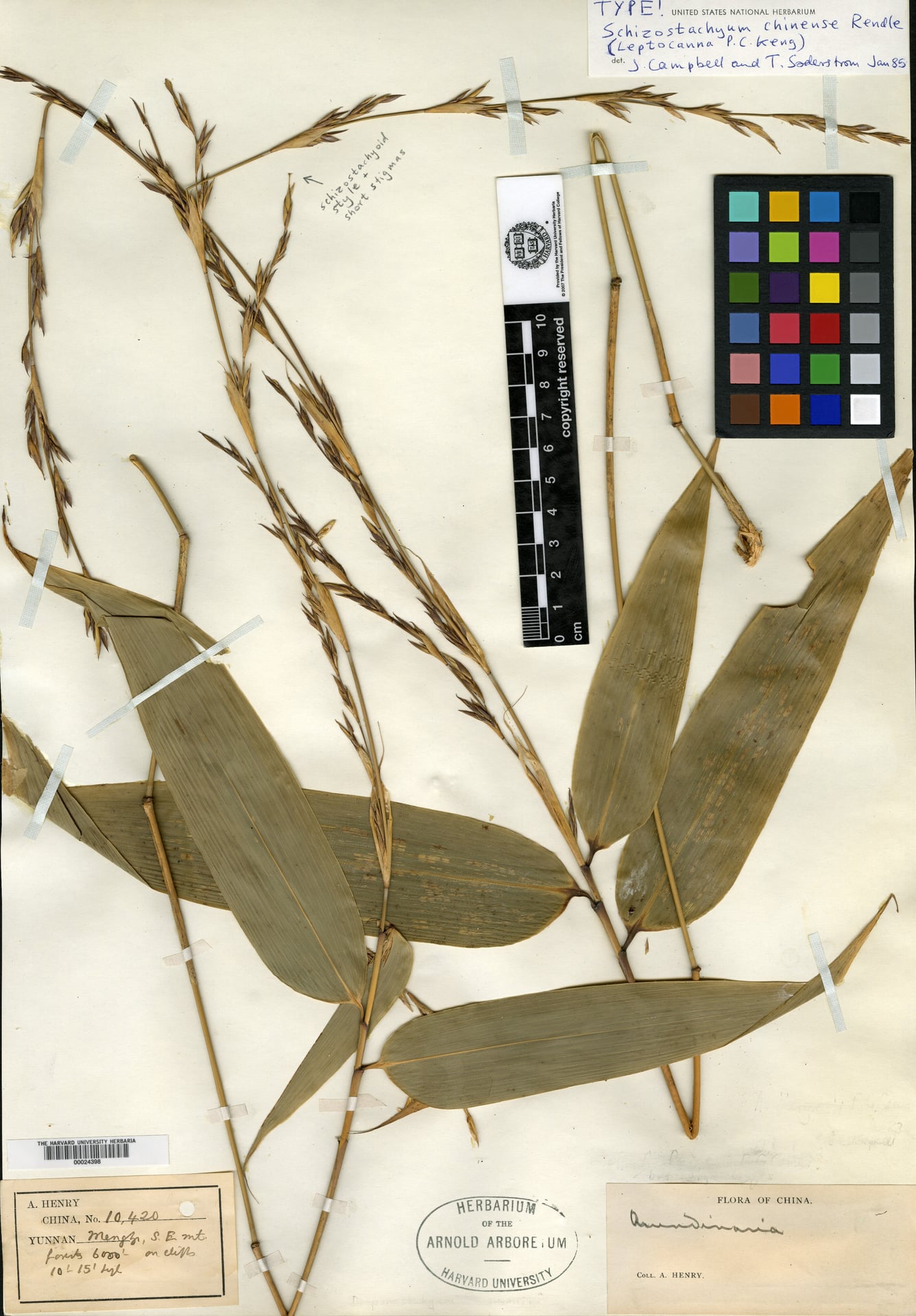
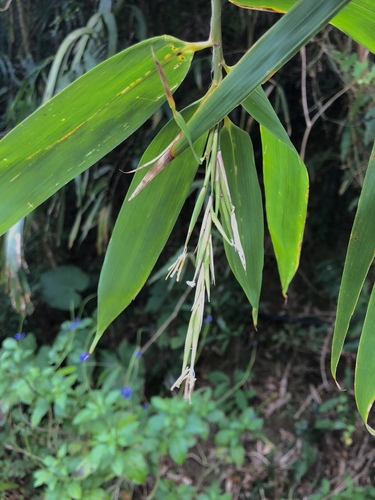
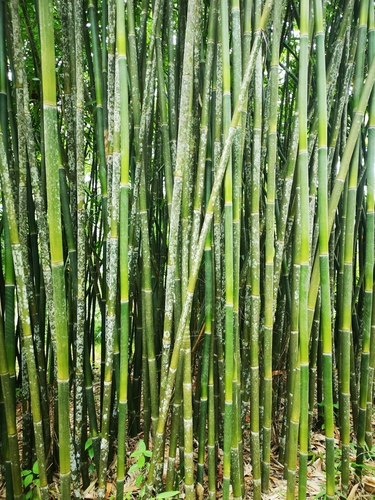
A bamboo. It grows 2-6 m tall. The stems are dark green. They are 3-4 cm across. The internodes are 20 cm long. There are 2-3 leaves on the last branch. The leaf blade is 7-16 cm long by 1-2 cm wide.
Edible Uses
The young shoots are eaten cooked, usually boiled in at least one change of water. They measure 3–4cm in diameter and are harvested in spring when they reach about 8cm above the ground, cut approximately 5cm below soil level.
Medicinal Uses
None known.
Distribution
It is a temperate and subtropical plant.
Where It Grows
Asia, China*,
Cultivation
Requires a rich damp soil in a sheltered position and plenty of moisture in the growing season. This species is not hardy in the colder areas of the country, it tolerates temperatures down to between -5 and -10°c. It dislikes prolonged exposure to hard frosts. This species is notably resistant to honey fungus. Plants only flower at intervals of many years. When they do come into flower most of the plants energies are directed into producing seed and consequently the plant is severely weakened. They sometimes die after flowering, but if left alone they will usually recover though they will look very poorly for a few years. If fed with artificial NPK fertilizers at this time the plants are more likely to die. This is a good companion species to grow in a woodland because the plants are shallow rooted and do not compete with deep rooted trees. Closely related to P. meyeri.
Propagation
Surface sow seed as soon as it is ripe in a greenhouse at around 20°C, keeping the compost consistently moist. Germination usually occurs fairly quickly with good-quality seed, though it can take 3–6 months. Grow seedlings on in a lightly shaded greenhouse until large enough to plant out. Seed is rarely available. Divide in spring as new growth begins; divisions from open ground transplant poorly and will need careful treatment under cover in pots until at least late spring. Divide during wet weather, as small divisions establish better than large clumps. Alternatively, large divisions can be taken from established clumps and moved directly to their permanent positions, provided they are misted or drenched frequently until established. Basal cane cuttings can also be taken in spring.
Other Uses
The canes are split into splints for weaving, and are also used whole as handles for farm tools and appliances.
Other Information
It is cultivated for its slightly sweet shoots.
Synonyms
Also Known As
Zao yuan zhu
References (5)
- Chen & Chia. 1988,
- http://www.plantnames.unimelb.edu.au/sorting/Bamboos_Edible.html
- Mansfeld,
- Wiersema, J. H. & Leon, B., 2013, World Economic Plants. A Standard Reference CRC Press. 2nd Ed. p 523
- World Checklist of Useful Plant Species 2020. Royal Botanic Gardens, Kew