Bromus mango
E. Desv.
Mango, Brome, Wild rye
Wikipedia· cc-by-sa
Wikimedia Commons - Bromus_mango_É.Desv._(AM_AK367378).jpg
wikimedia· cc0
Wikimedia Commons - Gay, Claudio; Johnston, I. M.
Summary
Source: WikipediaBromus mango is a species of flowering plant in the broom tribe Bromeae, family Poaceae, native to central and southern Chile and southern Argentina. A biennial, it is believed to have been cultivated as a food crop by indigenous peoples of the area.
Description
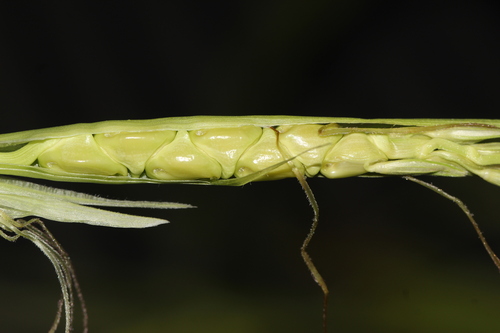
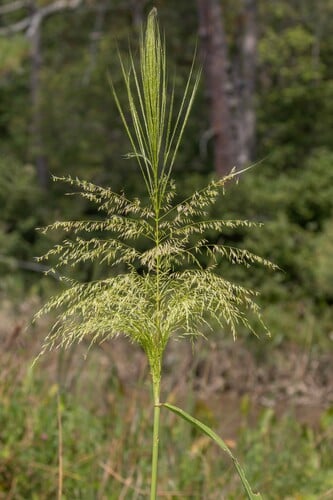
A grass. It was grown as a biennial. The grass was grazed for one year then allowed to produce seed the next year. It grows 30-80 cm tall. The seeds are 5-8 mm long.
Edible Uses
Edible Parts: Seed Edible Uses: Drink Seed - cooked. It is toasted and ground into a flour, then used to make an unleavened bread called 'cougue'. It is also used to make a drink called 'chicha'.
Traditional Uses
The grains are toasted and ground into flour and used for unleavened bread.
This uses section is brief — help expand it
Medicinal Uses
None known
Distribution
It is a temperate plant. It will grow on infertile acid soil.
Where It Grows
Andes, Argentina, Chile, South America,
Cultivation
We have very little information on this species and do not know if it will be hardy in Britain, though judging by its native range it could succeed outdoors in this country. It succeeds on infertile acid soils. This plant was cultivated as a biennial cereal by the Araucana Indians of Chile until at least the middle of the last century. Thought to have become extinct, it has recently (1990 article) been rediscovered. It has been grown successfully outdoors at Kew Gardens in Londn. The following notes are based on the general needs of the genus. Succeeds in most well-drained soils in a sunny position.
Propagation
Seed - sow spring or autumn in situ and only just cover. Germination should take place within 2 weeks. If seed is in short supply it can be surface sown in a cold frame in early spring. When large enough to handle, prick out the seedlings into individual pots and plant them out in early summer.
Other Uses
None known Special Uses
Other Information
It has been a cultivated food plant.
Notes
There are about 150 Bromus species. They are temperate. This species was almost extinct.
Synonyms
References (12)
- Cruz, A.W., 1972, Bromus mango, a disappearing plant. Indesia 2:127-31
- Facciola, S., 1998, Cornucopia 2: a Source Book of Edible Plants. Kampong Publications, p 174
- C. Gay, Fl. chil. 6:436. 1854
- GRIN
- Hermandez Bermejo, J.E., and Leon, J. (Eds.), 1994, Neglected Crops. 1492 from a different perspective. FAO Plant Production and Protection Series No 26. FAO, Rome. p 12
Show all 12 references Hide references
- Kermath, B. M., et al, 2014, Food Plants in the Americas: A survey of the domesticated, cultivated and wild plants used for Human food in North, Central and South America and the Caribbean. On line draft. p 147
- Kiple, K.F. & Ornelas, K.C., (eds), 2000, The Cambridge World History of Food. CUP p 113
- Leon-Lobos, P., et al, 2022, Patterns of Traditional and Modern Uses of Wild Edible Native Plants of Chile: Challenges and Future Perspectives. Plants (Basel) v 11 (6) Table S1
- Plants for a Future database, The Field, Penpol, Lostwithiel, Cornwall, PL22 0NG, UK. http://www.scs.leeds.ac.uk/pfaf/
- Schmeda-Hirschmann, G., et al, 1999, Proximate Composition and Biological Activity of Food Plants gathered by Chilean Amerindians. Economic Botany Vol. 53. No. 2. pp. 177-187
- USDA, ARS, National Genetic Resources Program. Germplasm Resources Information Network - (GRIN). [Online Database] National Germplasm Resources Laboratory, Beltsville, Maryland. Available: www.ars-grin.gov/cgi-bin/npgs/html/econ.pl (10 April 2000)
- Wiersema, J. H. & Leon, B., 2013, World Economic Plants. A Standard Reference CRC Press. 2nd Ed. p 119