Zizania latifolia
(Griseb.) Turcz. ex Stapf
Water bamboo, Manchurian wild rice
iNaturalist· cc-by-nc
(c) Eduard Garin, some rights reserved (CC BY-NC), uploaded by Eduard Garin
iNaturalist· cc-by-nc
(c) V.S. Volkotrub, some rights reserved (CC BY-NC), uploaded by V.S. Volkotrub
iNaturalist· cc-by-nc
(c) V.S. Volkotrub, some rights reserved (CC BY-NC), uploaded by V.S. Volkotrub
Summary
Source: WikipediaZizania latifolia, known as Manchurian wild rice (Chinese: 菰; pinyin: gū), is the only member of the wild rice genus Zizania native to Asia. It is used as a food plant. Both the stem and grain are edible. Gathered in the wild, Manchurian wild rice was an important grain in ancient China. A wetland plant, Manchurian wild rice is now very rare in the wild, and its use as a grain has completely disappeared in Asia, though it continues to be cultivated for its stems. A measure of its former popularity is that the surname Jiǎng (simplified Chinese: 蒋; traditional Chinese: 蔣), one of the most common in China, derives from this crop.
Description
A grass which grows in water. It keeps growing from year to year. It grows 1.2 m tall. It has stout rhizomes or underground stems buried in the mud. The internodes near the base are 6-8 cm long by 2 cm wide. The leaves are crowded towards the base of the plant. The leaf blade is 70-130 cm long by 2-3 cm wide. The stems become swollen as the result of infection by a smut fungus. They are like a stubby bamboo shoots. They are harvested before the black fungus spores develop.
Edible Uses
The swollen stem bases, when infected with the smut fungus Ustilago esculenta, are eaten as a vegetable in Chinese cuisine. They must be harvested before the fungus begins producing spores, as the flesh deteriorates at that point. Parboiled then sautéed with other vegetables, they have a nutty flavour reminiscent of coconut. Because wild forms of this species have developed resistance to the smut, specially disease-susceptible cultivars are grown for this purpose. The seed can be cooked and used like rice in sweet or savoury dishes, or ground into flour for cakes and biscuits; it contains approximately 13.7% protein, 0.9% fat, 72.7% carbohydrate, and 0.7% ash. Young inflorescences are cooked and used as a vegetable. Young shoots can be eaten raw or cooked and have a pleasant sweet taste; they contain about 1% protein, 0.3% fat, 4.7% carbohydrate, and 0.7% ash. The root is also edible, though no further details are available.
Traditional Uses
The tender green shoots are sometimes used as a vegetable. They are shredded, sliced, boiled in soups or scalded and used in salads. The rhizomes and grains are also eaten in times of scarcity. The seeds are used like rice. The very young flowering stalk is cooked and eaten as a vegetable. The swollen infected culms are eaten as a vegetable. The enlarged tender shoots infested with the smut fungus Ustilago esculenta are eaten. The cucumber like infested shoots are harvested before any black vein appears.
Medicinal Uses
The shoots, roots, and seed are diuretic and febrifuge. The leaves are tonic.
Distribution
It suits warm temperate places. It is damaged by frost. It grows in stagnant water along the edges of pools. It grows in wetlands. In Sichuan and Yunnan.
Where It Grows
Asia, China, India, Indochina, Japan, Korea, Manchuria, Myanmar, Northeastern India, Russia, SE Asia, Taiwan,
Cultivation
It is grown by dividing the clump.
Propagation
Seed must not be allowed to dry out, as viability is lost quickly — usually within 4 weeks. Store collected seed in jars of water in a cool place such as the salad compartment of a refrigerator. Sow in a greenhouse in spring, immersing pots so they are covered by about 5cm of water. When large enough to handle, prick seedlings out into individual pots and grow on in the greenhouse through their first winter. Plant out into permanent positions in late spring or early summer, after the last expected frosts. Division can also be done in spring; larger divisions can go directly into permanent positions, while smaller divisions are best potted up and grown on in light shade in a greenhouse or cold frame until establishing well, then planted out in summer or the following spring.
Other Uses
The leaves are woven into mats.
Other Information
It is a commercially cultivated vegetable. It is considered a delicacy. Flowers are sold in local markets.
Nutrition
| Part | Moisture | kJ | kcal | Protein | Vit A | Vit C | Iron | Zinc |
|---|---|---|---|---|---|---|---|---|
| Shoots | 109 | — | 1.7 | — | — | 1.2 | — | — |
Synonyms
Also Known As
Chinese wild rice, Eshing, Esing kambong, Gau sun, Ishing-kambong, Jiao bamboo shoot, Jiaobai, Jiaoer vegetable, Jiaoercai, Jiaosun, Kah peh sung, Kaw-sun, Makomo, Manchurian water-rice, Manchurian zizania, Perennial rice, Water grass, Water rice, White jiao, Zizania shoot
References (29)
- Ambasta, S.P. (Ed.), 2000, The Useful Plants of India. CSIR India. p 702 (As Zizania caduciflora)
- Arora, R. K., 2014, Diversity in Underutilized Plant Species - An Asia-Pacific Perspective. Bioversity International. p 47
- Bull. Misc. Inform. Kew 1909:385. 1909
- Devi, O.S., P. Komor & D. Das, 2010, A checklist of traditional edible bio-resources from Ima markets of Imphal Valley, Manipur, India. Journal of Threatened Taxa 2(11): 1291-1296
- Facciola, S., 1998, Cornucopia 2: a Source Book of Edible Plants. Kampong Publications, p 184
Show all 29 references Hide references
- Flora of China. www.eFloras.org
- Herklots,
- Hu, Shiu-ying, 2005, Food Plants of China. The Chinese University Press. p 298 (As Zizania caduciflora)
- Jain et al, 2011, Dietary Use and Conservation Concern of Edible Wetland Plants at Indo-Burma Hotspot: A Case Study from Northeast India. Journal of Ethnobiology and Ethnomedicine 7:29 p 8
- Kays, S. J., and Dias, J. C. S., 1995, Common Names of Commercially Cultivated Vegetables of the World in 15 languages. Economic Botany, Vol. 49, No. 2, pp. 115-152
- Konsam, S., et al, 2016, Assessment of wild leafy vegetables traditionally consumed by the ethnic communities of Manipur, northeast India. Journal of Ethnobiology and Ethnomedicine, 12:9
- Larkcom, J., 1991, Oriental Vegetables, John Murray, London, p 125
- Marinelli, J. (Ed), 2004, Plant. DK. p 278
- Martin, F.W. & Ruberte, R.M., 1979, Edible Leaves of the Tropics. Antillian College Press, Mayaguez, Puerto Rico. p 194
- Plants for a Future database, The Field, Penpol, Lostwithiel, Cornwall, PL22 0NG, UK. http://www.scs.leeds.ac.uk/pfaf/
- PROSEA (Plant Resources of South East Asia) handbook Volume 10 Cereals. p 154
- Purseglove, J.W., 1972, Tropical Crops. Monocotyledons. Longmans p 162
- Singh, H.B., Arora R.K.,1978, Wild edible Plants of India. Indian Council of Agricultural Research, New Delhi. p 85
- Slocum, P.D. & Robinson, P., 1999, Water Gardening. Water Lilies and Lotuses. Timber Press. p 103
- Tanaka,
- Terra, G.J.A., 1973, Tropical Vegetables. Communication 54e Royal Tropical Institute, Amsterdam, p 83
- USDA, ARS, National Genetic Resources Program. Germplasm Resources Information Network - (GRIN). [Online Database] National Germplasm Resources Laboratory, Beltsville, Maryland. Available: www.ars-grin.gov/cgi-bin/npgs/html/econ.pl (10 April 2000)
- Valder, P., 1999, The Garden Plants of China. Florilegium. p 235
- van Wyk, B., 2005, Food Plants of the World. An illustrated guide. Timber press. p 390
- Wiersema, J. H. & Leon, B., 2013, World Economic Plants. A Standard Reference CRC Press. 2nd Ed. p 735
- Wild edible plants of Himachal Pradesh
- World Checklist of Useful Plant Species 2020. Royal Botanic Gardens, Kew
- Zeven, A. C. & de West, J. M. J., 1982, Dictionary of cultivated plants and their regions of diversity. Wageningen. p 39
- Zhang, Y., et al, 2014, Diversity of wetland plants used traditionally in China: a literature review. Journal of Ethnobiology and Ethnomedicine. 10:72
More from Poaceae
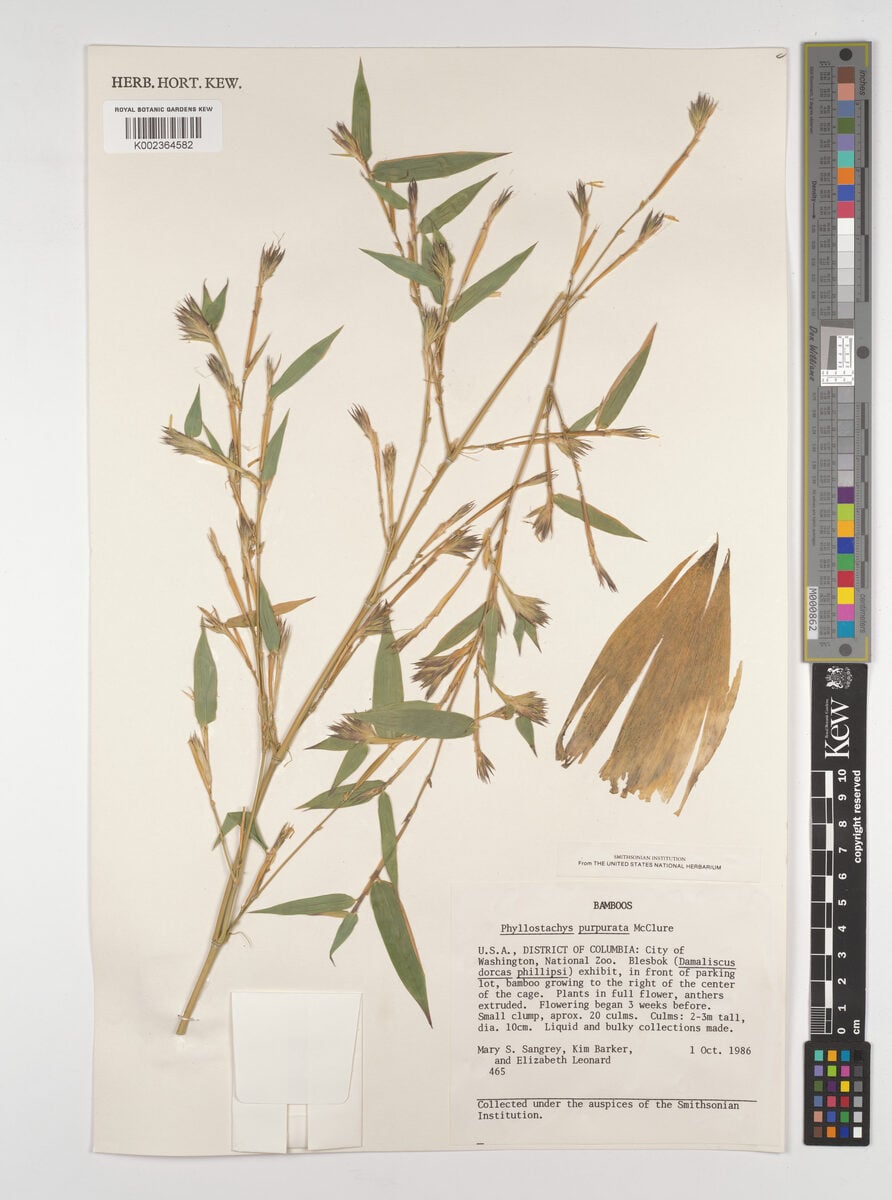
Phyllostachys purpurata
Water bamboo
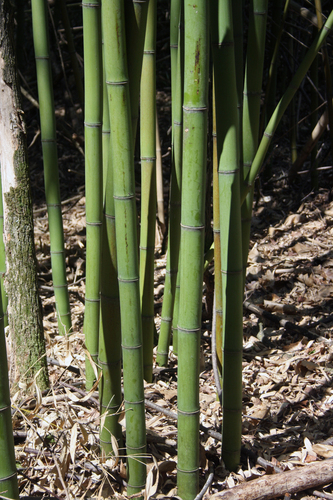
Phyllostachys reticulata
Hardy timber bamboo, Japanese timber bamboo, Giant timber bamboo, K'u chu, Ma dake
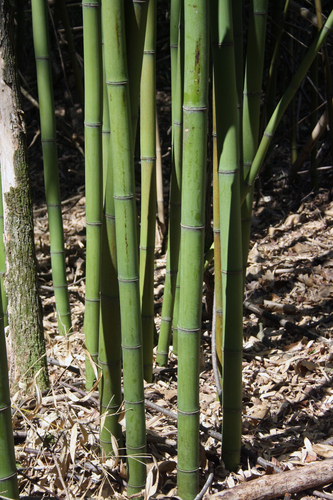
Phyllostachys reticulata forma kashirodake
Kashiro dake
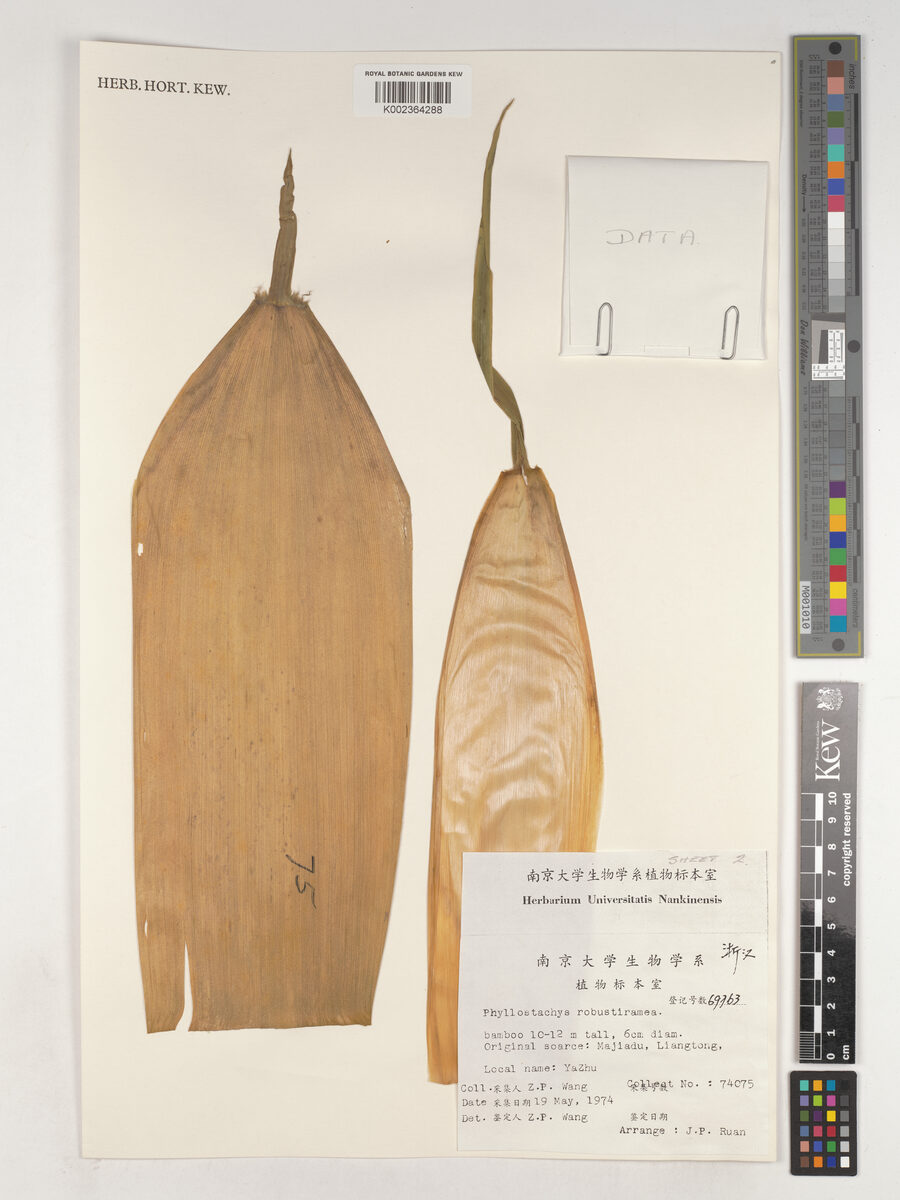
Phyllostachys robustiramea
Phyllostachys rubicunda
Phyllostachys rubromarginata
Red-margined bamboo