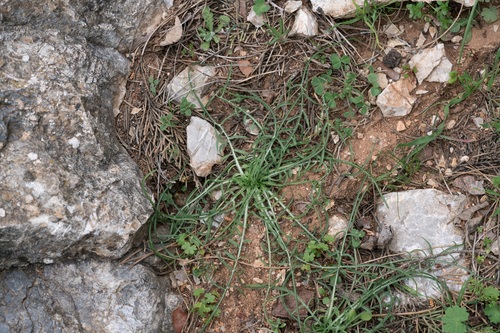
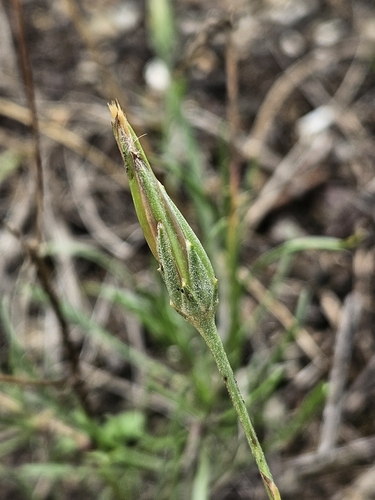
Launaea intybacea
(Jacq.) Beauv.
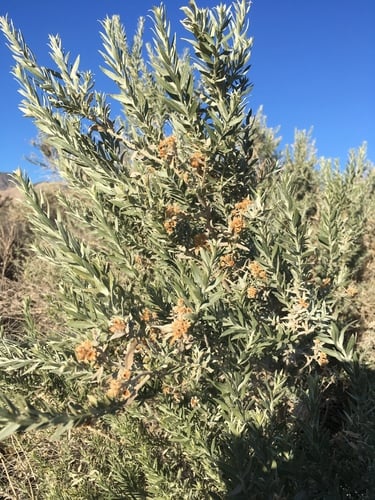
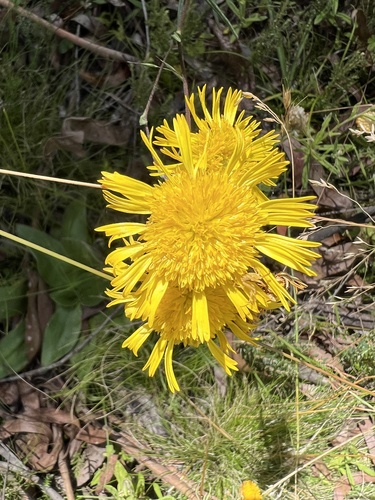
iNaturalist· cc-by
(c) Francisco Farriols Sarabia, some rights reserved (CC BY), uploaded by Francisco Farriols Sarabia
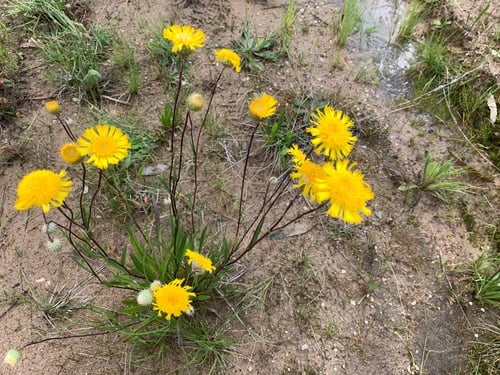
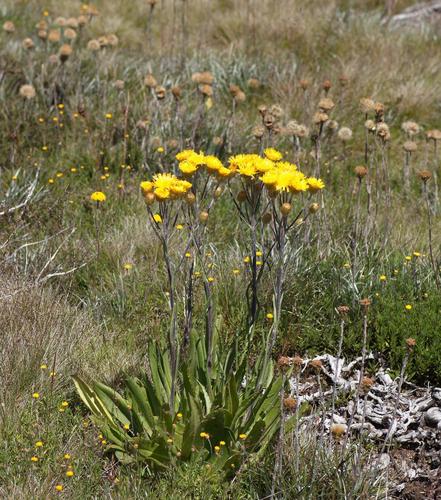
iNaturalist· cc-by-sa
(c) Tony Rebelo, some rights reserved (CC BY-SA)
Summary
Source: WikipediaLaunaea intybacea, with numerous English names, and often sharing the names wild lettuce and bitter lettuce with several other species, is a flowering plant of the family Asteraceae.
Description
A herb. The stems are 1 m tall. It has milky sap. The leaves are crowded near the base. The leaves are 10-25 cm long by 2-6 cm wide. The leaves have lobes and there are teeth at the edge of the last lobes. The flowers are yellow.
Edible Uses
In Ethiopia, Launaea intybacea is regarded as a "famine food" which in normal times is uprooted as a weed, but during famines the leaves are boiled to reduce their natural bitterness. Green Deane, author of the popular book Eat the Weeds with Green Deane, warns that the raw plants are bitter, needing to be cooked: "Don't be surprised if you have to boil leaves 40 minutes or so in a lot of water to make it edible."
Traditional Uses
The young leaves are boiled and eaten. They are bitter unless well cooked. They are used as a potherb.
This uses section is brief — help expand it
Medicinal Uses
In Saudi Arabia, all parts of the plant are use in traditional medicine for a variety of ailments, from jaundice and skin diseases to liver disorders and dry coughs. It is thought to aid digestion and, in women, to promote lactation. Laboratory analyses have revealed that in fact its compounds show anti-inflammatory, antithrombotic and antitumor effects. A study using albino rats specifically validated the traditional use of Launaea intybacea for liver disorders.
Distribution
It is a tropical plant. In Ethiopia it grows as a weed in farmer's fields in low and mid altitudes.
Where It Grows
Africa, Anguilla, Asia, Bahamas, Botswana, Burkina Faso, Cape Verde, Central America, Cuba, Dominican Republic, East Africa, Ethiopia, Haiti, India, Madagascar, Middle East, Pakistan, Puerto Rico, South America, West Indies, Yemen,
Cultivation
Plants can be grown from pieces of the underground stem or rhizome.
Production
It is available in wet times.
Other Information
It is a famine food.
Nutrition
| Part | Moisture | kJ | kcal | Protein | Vit A | Vit C | Iron | Zinc |
|---|---|---|---|---|---|---|---|---|
| Leaves | 80.1 | 133 | 32 | 4.8 | — | — | 4.4 | 0.6 |
Synonyms
Also Known As
Algodai-de-garca, Atheli, Athhelli, Hankolayita, Hanlolayita, Hawa, Lessan-albaqarah, Paja-de-leite, Pathari, Senthatti keerai, Serralha, Zarkoboti pa sapasthoke
References (17)
- Addis, G., et al, 2013, Dietary values of wild and semi-wild edible plants in Southern Ethiopia. African Journal of Food, Agriculture, Nutrition and Development. 13(2) (Recalculated from dmb)
- Addis, G., Asfaw, Z & Woldu, Z., 2013, Ethnobotany of Wild and Semi-wild Edible Plants of Konso Ethnic Community, South Ethiopia. Ethnobotany Research and Applications. 11:121-141
- Addis, G., et al, 2013, The Role of Wild and Semi-wild Edible Plants in Household Food Sovereignty in Hamer and Konso Communities, South Ethiopia. Ethnobotany Research & Applications. 11:251-271
- Al-Fatimi, M. A., Wild Edible Plants Traditionally Collected and Used in Southern Yemen. Research Square. University of Aden. p 19
- Datar, M. N. & Upadhye, A. S., 2016, Forest foods of northern region of Western Ghats. MACS - Agharkar Research Institute, Pune. Pp 1-160. ISBN: 978-93-85735-10-3 p 99 (As Lactuca intybacea)
Show all 17 references Hide references
- Duarte, M. C., et al, 2022, Diversity of Useful Plants in Cabo Verde Islands: A Biogeographic and Conservation Perspective. Plants 2022, 11, 1313 p 4
- Duguma, H. T., 2020, Wild Edible Plant Nutritional Contribution and Consumer Perception in Ethiopia. Hindawi International Journal of Food Science Volume 2020, Article ID 2958623, 16 pages
- Ethiopia: Famine Food Field Guide. http://www.africa.upenn.edu/faminefood/category1.htm
- Jardin, C., 1970, List of Foods Used In Africa, FAO Nutrition Information Document Series No 2.p 85 (As Lactuca intybacea)
- Karthi, Sathya, & Salome, 2014, Uncultivated Edible Greens from Small Millet Farms Tamil Nadu India. IDRC (As Lactuca runcinata)
- Kuhnlein, H. V., et al, 2009, Indigenous Peoples' food systems. FAO Rome p 192 (As Lactuca runcinata)
- Lulekal, E., et al, 2011, Wild edible plants in Ethiopia: a review on their potential to combat food insecurity. Afrika Focus - Vol. 24, No 2. pp 71-121
- Martin, F.W. & Ruberte, R.M., 1979, Edible Leaves of the Tropics. Antillian College Press, Mayaguez, Puerto Rico. p 79, 130, 185 (As Lactuca intybacea)
- Ocho, D. L., et al, 2012, Assessing the levels of food shortage using the traffic light metaphor by analyzing the gathering and consumption of wild food plants, crop parts and crop residues in Konso, Ethiopia. Journal of Ethnobiology and Ethnomedicine 8:30
- Plants of Haiti Smithsonian Institute http://botany.si.edu
- Seidemann J., 2005, World Spice Plants. Economic Usage, Botany, Taxonomy. Springer. p 195 (As Lactuca runcinata)
- Tareen, N. M., et al, 2016, Ethnomedicinal Utilization of Wild Edible Vegetables in District Harnai of Balochistan Province - Pakistan. Pakistan Journal of Botany 48(3): 1159-1171