Aloe saponaria
(Aiton) Haw.
Broad-leaved Aloe
iNaturalist· cc-by-sa
(c) Margaret Burger, some rights reserved (CC BY-SA)
iNaturalist· cc-by-sa
(c) Margaret Burger, some rights reserved (CC BY-SA)
iNaturalist· cc-by-sa
(c) Margaret Burger, some rights reserved (CC BY-SA)
Description
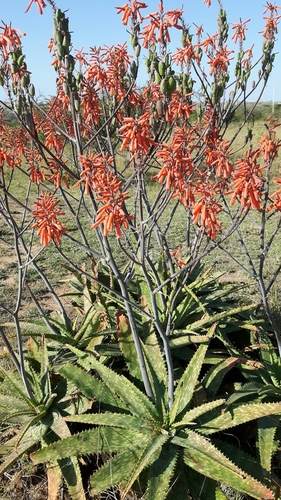
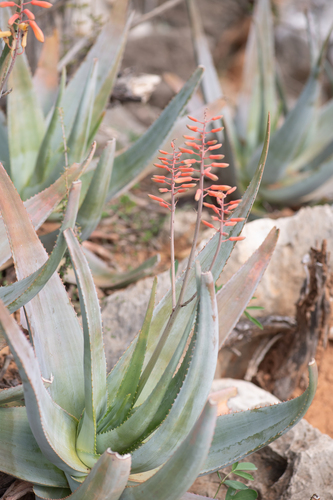
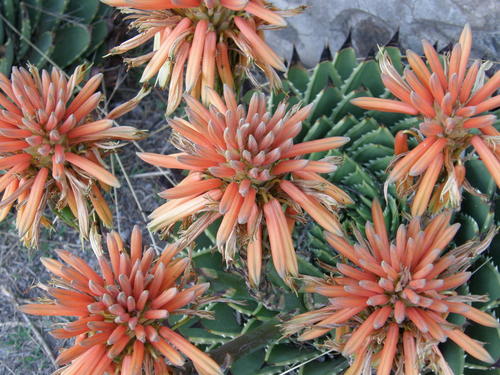
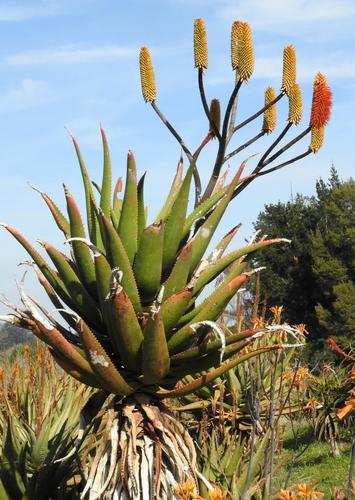
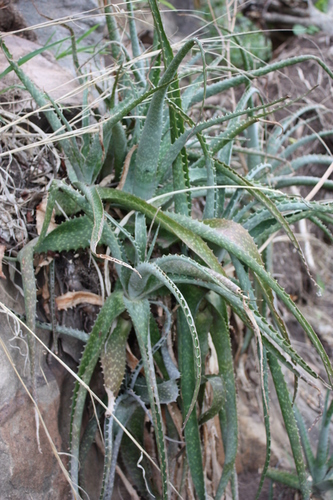
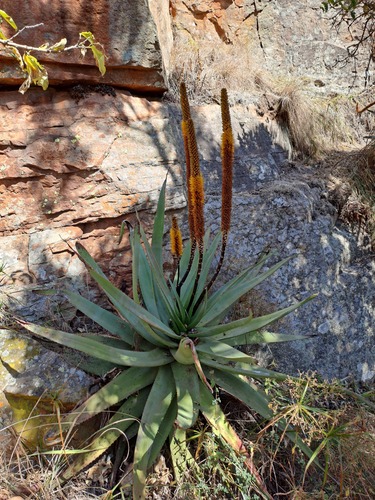
It is a succulent plant. It has a single stem. There are 20-30 leaves in a circle at the base of the stem. The leaves spread out and are sword shaped. The leaves are 30 cm long and are thick and fleshy. Along the edge of the leaves are teeth which are 6-8 mm long. The top surface of the leaves are dark green with dull white spots. The lower surface of the leaves is rounded and pale green. The flowers are pink, red or yellow. The main stem branches 2 or 3 times and carries flower clusters at the top. The flower stalk is 30-65 cm high. The flowers are 3.5-4.5 cm long. There are about 30 flowers in a cluster.
Edible Uses
The flowers are eaten cooked with groundnuts or added to soups, and can be dried for later use. The leaves are also edible.
Traditional Uses
The flowers are eaten. They are cooked with groundnuts or added to soups. The flowers can be dried and kept for later use.
This uses section is brief — help expand it
Medicinal Uses
This plant gel is used traditionally as a remedy for many medicinal properties by local people like: Skin complaints, inflammation, respiratory system, muscular-skeletal system, circulation and endocrine system diseases.
Known Hazards
None documented.
Distribution
It is a tropical and subtropical plant. It grows naturally in sub desert scrub. It suits areas there rainfall is 250-750 mm per year. It can grow where temperatures are high in summer and where it snows in winter. It grows from sea level to 2,000 m altitude. It needs well drained soil. It can grow in arid places.
Where It Grows
Africa, Australia, Canada, East Africa, Eswatini, Kenya, Lesotho, North America, Slovenia, South Africa, Southern Africa, Sudan, Swaziland, Tanzania, Tasmania, Uganda, Zambia, Zimbabwe,
Cultivation
It is grown from seed. Seed are sprinkled evenly over the surface of a well prepared seed bed. Plants can be transplanted when 1 year old.
Notes
There are about 350-400 Aloe species. Also put in the family Aloaceae. Also put in the family Asphodelaceae.
Synonyms
Also Known As
Bontaalwyn, Emahala, Navuria, Seepaalwyn
References (10)
- Brickell, C. (Ed.), 1999, The Royal Horticultural Society A-Z Encyclopedia of Garden Plants. Convent Garden Books. p 101
- FAO, 1988, Traditional Food Plants, FAO Food and Nutrition Paper 42. FAO Rome p 68
- Fox, F. W. & Young, M. E. N., 1982, Food from the Veld. Delta Books. p 255
- Jardin, C., 1970, List of Foods Used In Africa, FAO Nutrition Information Document Series No 2.p 53
- Lazarides, M. & Hince, B., 1993, Handbook of Economic Plants of Australia, CSIRO. p 15
Show all 10 references Hide references
- Martin, F.W. & Ruberte, R.M., 1979, Edible Leaves of the Tropics. Antillian College Press, Mayaguez, Puerto Rico. p 202
- Morley, B.D., & Toelken, H.R., (Eds), 1983, Flowering Plants in Australia. Rigby. p 325
- Ogle, B. M. & Grivetti, L. E., 1984, Legacy of the Chameleon: Edible Wild Plants in the Kingdom of Swaziland, Southern Africa. A Cultural, Nutritional Study. Part 4 - Nutritional Analysis and Conclusions. Ecology of Food and Nutrition. Vol 17, pp 431-64
- Rubaihayo, E. B., Conservation and use of traditional vegetables in Uganda. Bioversity International.
- Trans. Linn. Soc. London 7:17. 1804