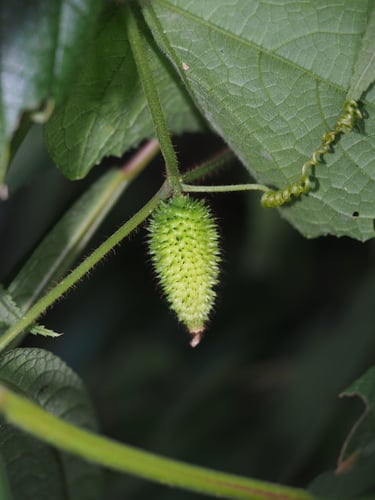
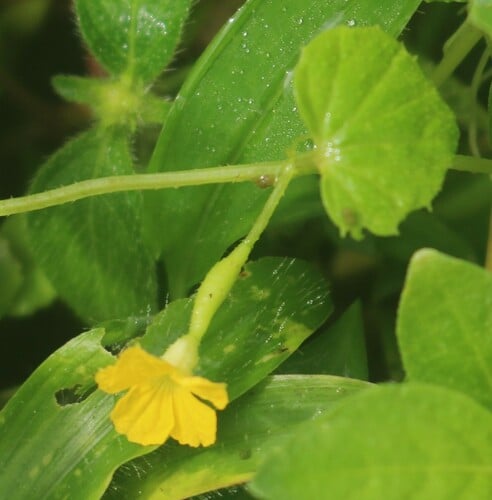
Acanthosicyos naudinianus
(Sonder) C. Jeffrey
Herero cucumber
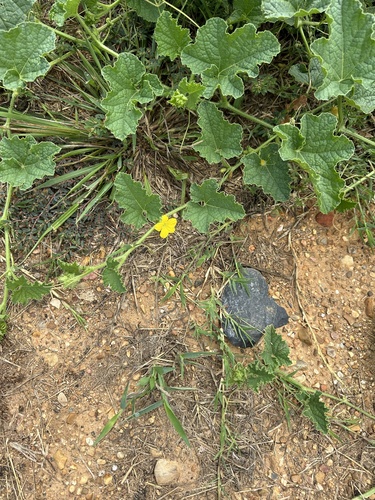
iNaturalist· cc-by-nc
(c) Lisa Schwarz, some rights reserved (CC BY-NC)
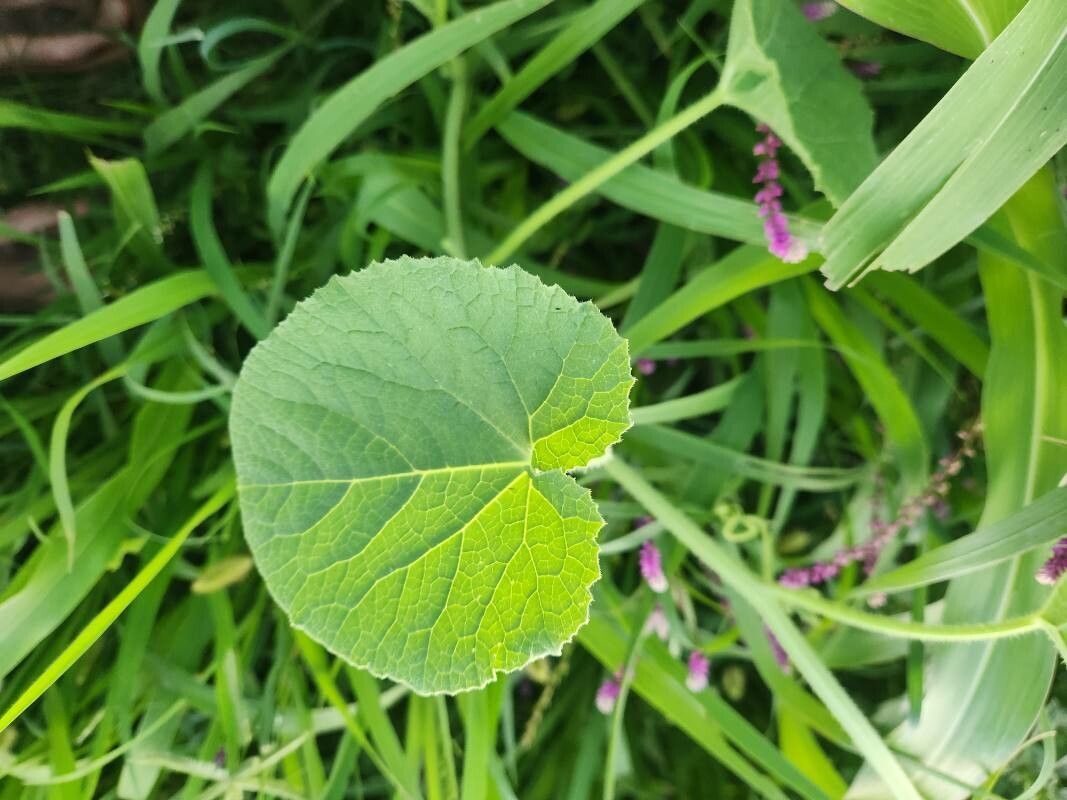
iNaturalist· cc-by-nc
(c) Lisa Schwarz, some rights reserved (CC BY-NC)
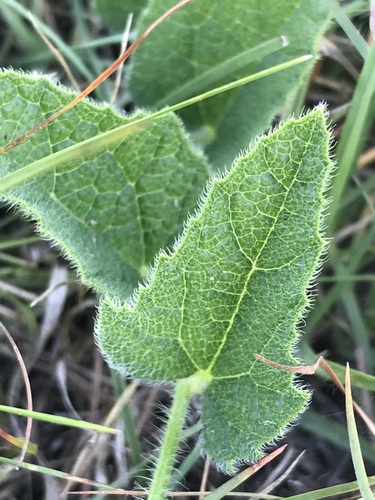
iNaturalist· cc-by-nc
(c) Lisa Schwarz, some rights reserved (CC BY-NC)
Summary
Source: WikipediaAcanthosicyos naudinianus, known as the Gemsbok cucumber, is a perennial African melon with edible fruits and seeds.
Description
A shrub or small tree. It grows 5 m tall. There are prickles along the stem. The leaves are twice divided and there are 8-18 pairs of pinnae. There are up to 50 pairs of pinnules on each pinnae. The flowers are yellow. They are in large clusters at the ends of branches. The pods are flattened.
Edible Uses
The mature fruit are eaten boiled, roasted, or made into pickles, and can be used as a rennet for curdling milk. The seeds are roasted and ground into flour for use as a confectionary, or pressed to extract oil. Tubers are also edible.
Traditional Uses
The mature fruit are eaten boiled, roasted or made into pickles. The fruit are also used as a rennet for curdling milk. The seeds are roasted and ground into flour. They are used as a confectionary. The seeds can be used to extract oil. Caution: The roots are considered poisonous. Some fruit can be bitter.
Medicinal Uses
The fruit are used as a rennet for curdling milk.
Known Hazards
The tuberous roots are considered inedible or even poisonous and in Zambia they have been reportedly used for homicidal purposes. The unripe fruits cause a burning sensation of the tongue and lips when eaten raw.
Distribution
It is a subtropical plant. It grows best in deep sandy soils. In the Kalahari it grows between 900-1,350 m altitude. It cannot tolerate frost. It will grow in salty soils. It can grow in arid places.
Where It Grows
Africa, Angola, Botswana, Central Africa, East Africa, Eswatini, Mozambique, Namibia, South Africa, Southern Africa, Swaziland, Zambia, Zimbabwe,
Cultivation
Plants grow naturally from seed.
Other Uses
The long, firm stems are used by children as skipping ropes.
Other Information
Cultivated. The seeds are sold.
Notes
There are 2 Acanthosicyos species. The seeds contain 35% protein.
Synonyms
Also Known As
Cha, Chirakaraka, Ga, Gemsbok cucumber, Lungwatanga, Mokapana, Ruputui, Sirakarana, Wild cucumber
References (30)
- Arnold, T.H., Wells, M.J. & Wehmeyer, A.S., Khoisan food plants: taxa with potential for future economic exploitation, in Wickens, G.E., Goodin, J.R., and Field, D.V.,(Eds.) 1985, Plants for Arid Lands. Unwin Hyman, London, p 73
- Bircher, A. G. & Bircher, W. H., 2000, Encyclopedia of Fruit Trees and Edible Flowering Plants in Egypt and the Subtropics. AUC Press. p 6
- Bosch, C.H., 2004. Acanthosicyos naudinianus (Sond.) C.Jeffrey. [Internet] Record from Protabase. Grubben, G.J.H. & Denton, O.A. (Editors). PROTA (Plant Resources of Tropical Africa / Ressources végétales de l’Afrique tropicale), Wageningen, Netherlands. < http://database.prota.org/search.htm>. Accessed 13 October 2009.
- Facciola, S., 1998, Cornucopia 2: a Source Book of Edible Plants. Kampong Publications, p 84 Fowler, D. G., 2007, Zambian Plants: Their Vernacular Names and Uses. Kew. p 22
- Fox, F. W. & Young, M. E. N., 1982, Food from the Veld. Delta Books. p 165
Show all 30 references Hide references
- Grubben, G. J. H. and Denton, O. A. (eds), 2004, Plant Resources of Tropical Africa 2. Vegetables. PROTA, Wageningen, Netherlands. p 34
- Heywood, V.H., Brummitt, R.K., Culham, A., and Seberg, O. 2007, Flowering Plant Families of the World. Royal Botanical Gardens, Kew. p 117
- INFOODS:FAO/INFOODS Databases
- Jardin, C., 1970, List of Foods Used In Africa, FAO Nutrition Information Document Series No 2.p 50
- Keith, M. E. & Renew, A., 1975, Notes on some edible wild plants found in the Kalahari. Koedoe 18:1-12
- Kew Bull. 15:346. 1962
- Kubitzki, K., (Ed.), 2011, The Families and Genera of Vascular Plants. Vol. 10, Springer. p 155
- Long, C., 2005, Swaziland's Flora - siSwati names and Uses http://www.sntc.org.sz/flora/
- Lee, 1979,
- Maguire, 1978,
- Magwede, K., van Wyk, B.-E., & van Wyk, A. E., 2019, An inventory of Vhavenḓa useful plants. South African Journal of Botany 122 (2019) 57–89
- Marshall, 1976, Mason, 1971,
- Ruiters-Welcome, A. K., 2019, Food plants of southern Africa. Ph.D. thesis. Univ. of Johannesburg p 48
- D. Oliver, Fl. trop. Afr. 2:549. 1871 (As Citrullus naudinianus)
- Peters, C. R., O'Brien, E. M., and Drummond, R.B., 1992, Edible Wild plants of Sub-saharan Africa. Kew. p 98
- Royal Botanic Gardens, Kew (1999). Survey of Economic Plants for Arid and Semi-Arid Lands (SEPASAL) database. Published on the Internet; http://www.rbgkew.org.uk/ceb/sepasal/internet [Accessed 15th April 2011]
- Silberbauer, 1965, 1972, 1981,
- Story, 1958, (As Citrullus naudinianus)
- Swaziland's Flora Database http://www.sntc.org.sz/flora
- Tanaka, 1980,
- Tanno, T., Plant Utilization of the Mbuti Pygmies. p 47 (As Citrullus naudinianus)
- van Wyk, Be, & Gericke, N., 2007, People's plants. A Guide to Useful Plants of Southern Africa. Briza. p 34
- Wehmeyer, A. S, 1986, Edible Wild Plants of Southern Africa. Data on the Nutrient Contents of over 300 species
- Welcome, A. K. & Van Wyk, B.-E., 2019, An inventory and analysis of the food plants of southern Africa. South African Journal of Botany 122 (2019) 136–179
- World Checklist of Useful Plant Species 2020. Royal Botanic Gardens, Kew