Juniperus communis nana
Syme.
Juniper
gbif· cc-by-sa
Magnus Vandbakk
gbif· cc-by-sa
GBIF
gbif· cc-by
Remi Aleksander Nielsen
Description
Juniperus communis nana is an evergreen Shrub growing to 0.5 m (1ft 8in) by 1 m (3ft 3in) at a slow rate. See above for USDA hardiness. It is hardy to UK zone 2 and is not frost tender. It is in leaf all year, in flower from May to June, and the seeds ripen in October. The species is dioecious (individual flowers are either male or female, but only one sex is to be found on any one plant so both male and female plants must be grown if seed is required). and is pollinated by Wind. The plant is not self-fertile. It is noted for attracting wildlife. Suitable for: light (sandy), medium (loamy) and heavy (clay) soils, prefers well-drained soil and can grow in heavy clay and nutritionally poor soils. Suitable pH: mildly acid, neutral and basic (mildly alkaline) soils and can grow in very acid and very alkaline soils. It can grow in semi-shade (light woodland) or no shade. It prefers dry or moist soil and can tolerate drought. The plant can tolerate maritime exposure.
Edible Uses
Tea. Fruit - raw or cooked. It is usually dried. The fruit is often used as a flavouring in sauerkraut, stuffings, vegetable pates etc, and is an essential ingredient of gin. The aromatic fruit is used as a pepper substitute according to one report. An essential oil is sometimes distilled from the fruit to be used as a flavouring. Average yields are around 1%. The cones are about 4 - 8mm in diameter and take 2 years to mature. Some caution is advised when using the fruit, see the notes above on toxicity. The roasted seed is a coffee substitute. A tea is made by boiling the leaves and stems. A tea made from the berries has a spicy gin-like flavour.
Medicinal Uses
Antiseptic Aromatic Carminative Diaphoretic Diuretic Rubefacient Stomachic Tonic Urinary. Juniper fruits are commonly used in herbal medicine, as a household remedy, and also in some commercial preparations. They are especially useful in the treatment of digestive disorders plus kidney and bladder problems. The fully ripe fruits are strongly antiseptic, aromatic, carminative, diaphoretic, strongly diuretic, rubefacient, stomachic and tonic[4, 7, 9, 21, 46, 165, 240, 254]. They are used in the treatment of cystitis, digestive problems, chronic arthritis, gout and rheumatic conditions. They can be eaten raw or used in a tea, but some caution is advised since large doses can irritate the urinary passage. Externally, it is applied as a diluted essential oil, having a slightly warming effect upon the skin and is thought to promote the removal of waste products from underlying tissues. It is, therefore, helpful when applied to arthritic joints etc. The fruits should not be used internally by pregnant women since this can cause an abortion. The fruits also increase menstrual bleeding so should not be used by women with heavy periods. When made into an ointment, they are applied to exposed wounds and prevent irritation by flies. The essential oil is used in aromatherapy. Its keyword is 'Toxin elimination'.
Known Hazards
Although the fruit of this plant is quite often used medicinally and as a flavouring in various foods and drinks, large doses of the fruit can cause renal damage. Juniper should not be used internally in any quantities by pregnant women.
Distribution
Northern temperate zone, incl Britain, south to the mountains of N. Africa, Himalayas and California
Where It Grows
TEMPERATE ASIA: Azerbaijan, China, Dagestan, Eastern Siberia, Georgia, Hokkaidô, Honshu, Japan, Jilin Sheng, Kamcatskij kraj, Kazakhstan (east), Korea, Kurile Islands, Kyrgyzstan, Russian Federation, Russian Federation, Russian Federation-Eastern Siberia, Russian Federation-Western Siberia, Sakhalin, Tajikistan, Turkey, Western Siberia, Xinjiang Uygur Zizhiqu, Xizang Zizhiqu,Afghanistan. TROPICAL ASIA: Nepal, Pakistan, NORTHERN AMERICA: Canada, Northwest Territories, Yukon, Québec, Nova Scotia, Ontario, Prince Edward Island, New Brunswick, Newfoundland and Labrador, Saskatchewan, Alberta, Manitoba, British Columbia, United States, Alaska, Connecticut, Indiana, Maine, Massachusetts, Michigan, New Hampshire, New York, Ohio, Pennsylvania, Rhode Island, Vermont, Illinois (north & east), Minnesota, North Dakota, South Dakota (northwest), Wisconsin, Colorado, Idaho, Montana, Oregon, Washington, Wyoming, Georgia (north), North Carolina, South Carolina, Virginia, New Mexico, Arizona, California, Nevada, Utah, EUROPE: Denmark, Finland, United Kingdom (U.K.), Ireland, Iceland, Norway, Sweden, Austria, Belgium, Switzerland, Czech Republic, Germany, Hungary, Netherlands, Poland, Slovakia, Russian Federation-European part, European part, Belarus, Estonia, Lithuania, Latvia, Moldova, Ukraine (incl. Krym), Albania, Bulgaria, Bosnia and Herzegovina, Greece, Croatia, Italy (incl. Sardinia, Sicily), Montenegro, Romania, Serbia, Slovenia, Spain, France (incl. Corsica), Portugal, AFRICA: Algeria (north), Morocco.
Cultivation
Succeeds in hot dry soils and in poor soils. Succeeds in most soils so long as they are well drained, preferring a neutral or slightly alkaline soil. Does well in chalky soils. Grows well in heavy clay soils. Tolerates a pH range from 4 to 8. Succeeds in light woodland but dislikes heavy shade. Established plants are very tolerant of drought. Although the fully dormant plant is cold-tolerant throughout Britain, the young growth in spring can be damaged by late frosts. A very polymorphic species, there is a huge range of cultivars of widely diverse habits. At least some forms tolerate maritime exposure, there is a thriving colony in an exposed position at Land's End in Cornwall. Seed takes 2 - 3 years to ripen on the plant. Plants are usually very slow growing, often only a few centimetres a year. Resists honey fungus. Plants are sometimes attacked by a rust, this fungus has an aecidial stage on hawthorn (Crataegus spp.). Dioecious. Male and female plants must be grown if seed is required. In garden design, as well as the above-ground architecture of a plant, root structure considerations help in choosing plants that work together for their optimal soil requirements including nutrients and water. Juniper berries (the fleshy cones) are typically harvested in late summer to early autumn depending on the species. Junipers produce male cones in spring, while the female cones develop into berries over the summer. Growth rates vary by species, but many Junipers are considered slow to moderate growers, typically reaching maturity in 5 to 15 years, depending on environmental conditions and species.
Propagation
The seed requires a period of cold stratification. The seed has a hard seedcoat and can be very slow to germinate, requiring a cold period followed by a warm period and then another cold spell, each of 2 - 3 months duration. Soaking the seed for 3 - 6 seconds in boiling water may speed up the germination process. The seed is best sown as soon as it is ripe in a cold frame. Some might germinate in the following spring, though most will take another year. Another possibility is to harvest the seed 'green' (when the embryo has fully formed but before the seedcoat has hardened). The seedlings can be potted up into individual pots when they are large enough to handle. Grow on in pots until large enough, then plant out in early summer. When stored dry, the seed can remain viable for several years. Cuttings of mature wood, 5 - 10cm with a heel, September/October in a cold frame. Plant out in the following autumn. Layering in September/October. Takes 12 months.
Other Uses
Fibre Fuel Hair Incense Repellent Resin Strewing Tinder Agroforestry uses: Junipers can be used as windbreaks or hedges and are often employed in erosion control due to their extensive root systems. They also provide habitat and shelter for wildlife. A decoction of the branches is used as an anti-dandruff shampoo. Yields the resin 'Sandarac', used in the production of a white varnish. The stems were at one time used as a strewing herb. The whole plant can be burnt as an incense and fumigant. It makes a good insect repellent. The bark is used as cordage and as a tinder. An excellent fuel wood. Many forms of this species are good ground cover plants for sunny situations.
Synonyms
More from Cupressaceae
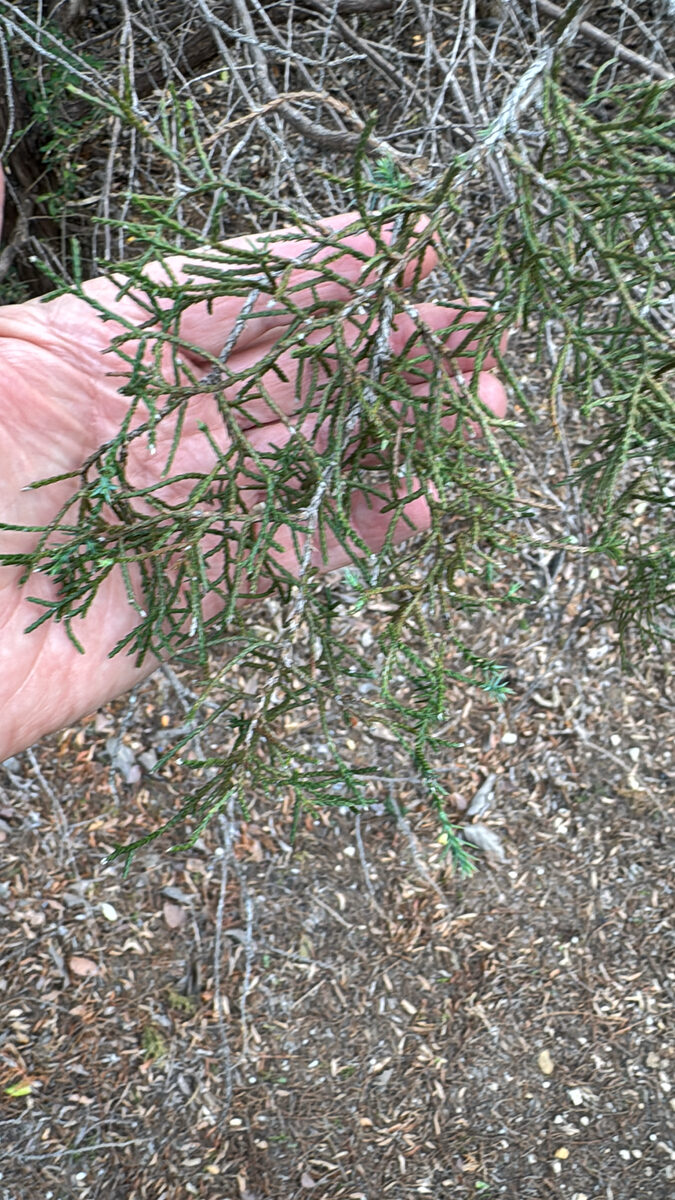
Juniperus tetragona
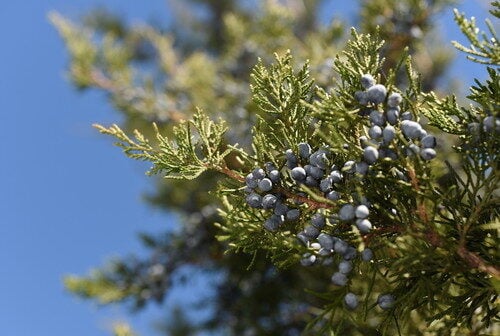
Juniperus virginiana
Pencil Cedar, Eastern redcedar, Southern redcedar, Silver Cedar, Burk Eastern Red Cedar, Silver East
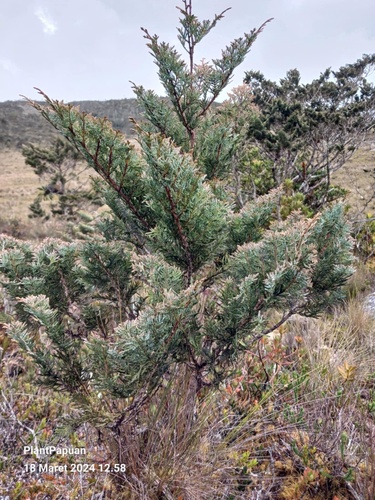
Papuacedrus papuana
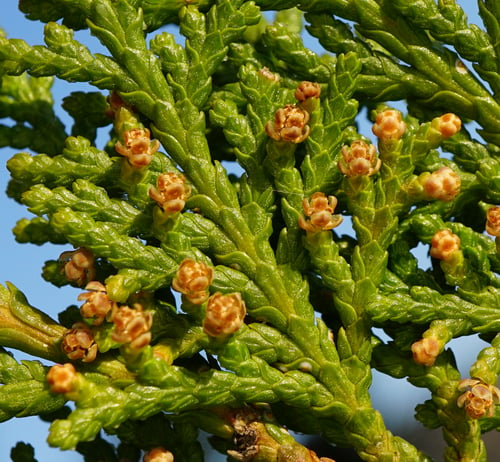
Platycladus orientalis
Oriental cedar
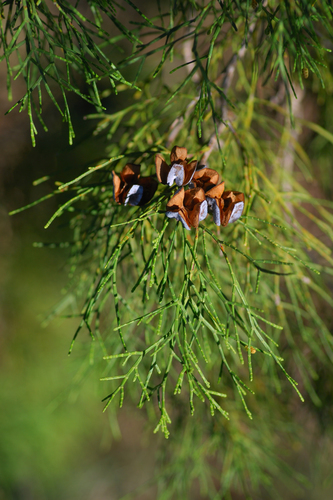
Tetraclinis articulata
Arartree
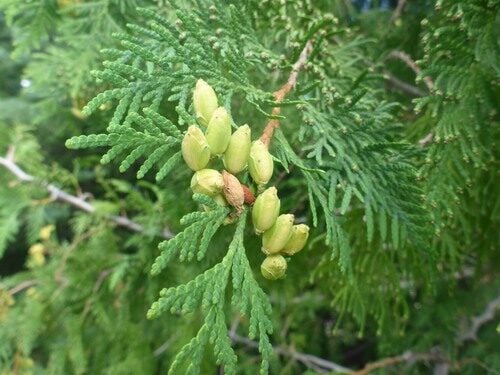
Thuja occidentalis
American Arbor-Vitae, Arborvitae, Eastern Arborvitae, Siberian Arborvitae, Northern White Cedar, Wh