Galium aparinoides
Forssk.
Ashkit
iNaturalist· cc-by-nc
(c) Troos van der Merwe, some rights reserved (CC BY-NC)
iNaturalist· cc-by-nc
(c) Troos van der Merwe, some rights reserved (CC BY-NC)
iNaturalist· cc-by-nc
(c) Troos van der Merwe, some rights reserved (CC BY-NC)
Description
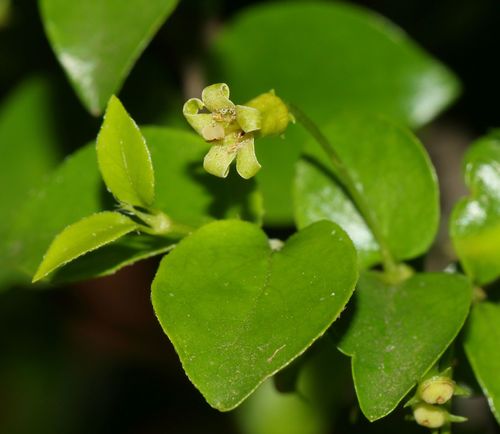
A scrambling herb. It grows 1.8-2.1 m long. The stems have small prickles. The leaves are in rings of about 6. They are narrowly oval and 1-3 cm long by 3-8 mm wide. Young leaves have hairs. The fruit are 2-3 mm across.
Edible Uses
The leaves are boiled and eaten, or boiled to make a drink.
Traditional Uses
The leaves are boiled and eaten.
This uses section is brief — help expand it
Known Hazards
Caution advised with this plant.
Distribution
It is a tropical plant. In East Africa it grows between 1,680-3,600 m above sea level.
Where It Grows
Africa, Arabia, East Africa, Eritrea, Ethiopia, Kenya, Middle East, Tanzania,
Notes
Probably edible. (The plant is eaten by cattle) The leaves are boiled to make a drink - probably as a medicine.
Synonyms
Also Known As
Katikonoy, Olengeriantus
References (2)
- Molla, A., Ethiopian Plant Names. http://www.ethiopic.com/aplants.htm
- Yimer, A., et al, 2021, Ethnobotanical study of wild edible plants used by Meinit Ethnic Community at Bench-Maji Zone, Southwest Ethiopia. Research Square. p 6