Ammannia baccifera
Linn.
Blistering ammania, Dadmari
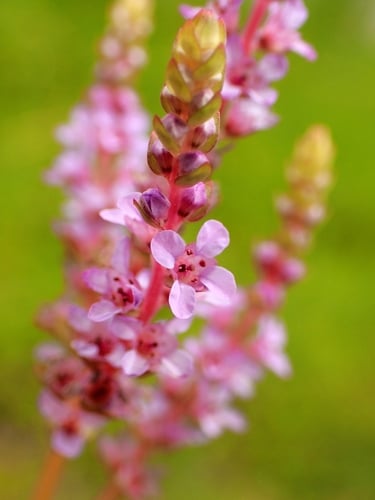
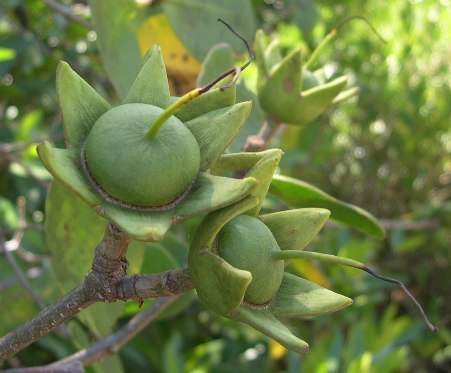
iNaturalist· cc0
no rights reserved, uploaded by 葉子
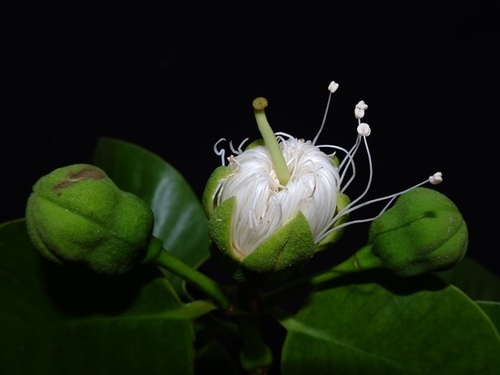
iNaturalist· cc-by
(c) madhavan a.p, some rights reserved (CC BY), uploaded by madhavan a.p
iNaturalist· cc-by-nc
(c) tern911, some rights reserved (CC BY-NC), uploaded by tern911
Summary
Source: WikipediaAmmannia baccifera, also known as the monarch redstem or blistering ammannia is a species in the family Lythraceae. It is widespread in the tropical regions of Asia, America and Africa. It has been naturalized in Spain. It is annual and herbaceous, and can be found in marshes, swamps, rice fields and water courses at low elevations. It is considered endangered in Israel, but because it is widespread and common elsewhere, the IUCN considers it to be 'Least Concern'. The plant Ammannia baccifera Linn. is erect, branched, smooth, slender, annual, more or less purplish herb 10 to 50 centimeters in height. The stems are somewhat 4-angled. The leaves are oblong, oblanceolate, or narrowly elliptic, about 3.5 centimeters long – those on the branches very numerous, small, and 1 to 1.5 centimeters long – with narrowed base and pointed or somewhat rounded tip. The flowers are small, about 1.2 millimeters long, greenish or purplish, and borne in dense axillary clusters. The capsules are nearly spherical, depressed, about 1.2 millimeters in diameter, purple, and irregularly circumscribes above the middle. The seeds are black (Nadkarni, 1982).
Description
A herb. It grows 7-32 cm high. The stems can be erect or lie along the ground. The leaves often droop. They are broadly sword shaped. They are 1-47 mm long by 1-9 mm wide. The flowers are small and white. They are in small clusters in the axils of the leaves. The fruit are flattened round capsules.
Edible Uses
Young leaves are cooked as a vegetable.
Traditional Uses
The leaf extract is considered poisonous in the Flora of Pakistan. It can cause abdominal pain. The young leaves are cooked as a vegetable.
This uses section is brief — help expand it
Medicinal Uses
The plant is used as medicine.
Known Hazards
The leaf extract is considered poisonous and can cause abdominal pain.
Distribution
It is a tropical plant. It grows in wet swampy places. It can be in rice fields. It is damaged by frost and drought.
Where It Grows
Afghanistan, Africa, Asia, Australia, Benin, Bhutan, Botswana, Burkina Faso, Cambodia, Caribbean, Central Asia, China, East Africa, Himalayas, India, Indochina, Laos, Malawi, Malaysia, Maldives, Mozambique, Myanmar, Nepal, Pakistan, Papua New Guinea, PNG, Philippines, Rwanda, SE Asia, Tajikistan, Thailand, Vietnam, West Africa, Zambia, Zimbabwe,
Cultivation
Plants can be grown by seed.
Notes
There are about 30 Ammannia species. It is used as medicine.
Nutrition
| Part | Moisture | kJ | kcal | Protein | Vit A | Vit C | Iron | Zinc |
|---|---|---|---|---|---|---|---|---|
| Leaves | 90.9 | 105 | 25 | 3.6 | — | — | 6.4 | — |
Synonyms
Also Known As
Aginbuti, Dadmari, Dhan bhaji, Kalluruvi, Kanyut, Karanfui, Umugarura
References (8)
- Achigan-Dako, E, et al (Eds), 2009, Catalogue of Traditional Vegetables in Benin. International Foundation for Science.
- Bodkin, F., 1991, Encyclopedia Botanica. Cornstalk publishing, p 75
- Food Composition Tables for use in East Asia FAO http://www.fao.org/infoods/directory No. 362
- Flora of Pakistan. www.eFloras.org
- Kiran, K. C., et al, 2019, Diversity and Seasonal Availability of Potential Wild Edible Plants from Vidarbha Region of Maharashtra State, India. Int.J.Curr.Microbiol.App.Sci (2019) 8(2): 1434-1446
Show all 8 references Hide references
- Reddy, B. M., 2012, Wild edible plants of Chandrapur district, Maharashtra, India. Indian Journal of Natural Products and Resources. 3(1) pp 110-117
- Sujanapal, P., & Sankaran, K. V., 2016, Common Plants of Maldives. FAO & Kerala FRI, p 32
- Swapna, M. M. et al, 2011, A review on the medicinal and edible aspects of aquatic and wetland plants of India. J. Med. Plants Res. 5 (33) pp. 7163-7176