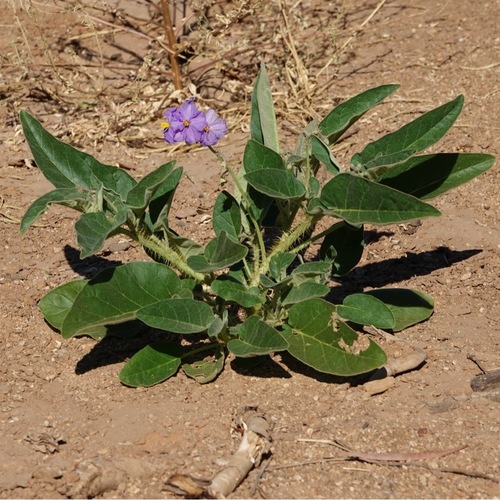
Solanum integrifolium
Poir.
Ethiopian eggplant
iNaturalist· cc-by-nc
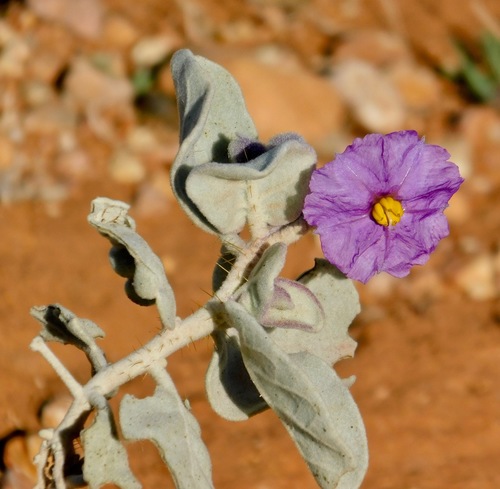
(c) Pete Zivkov, some rights reserved (CC BY-NC)
iNaturalist· cc-by-nc
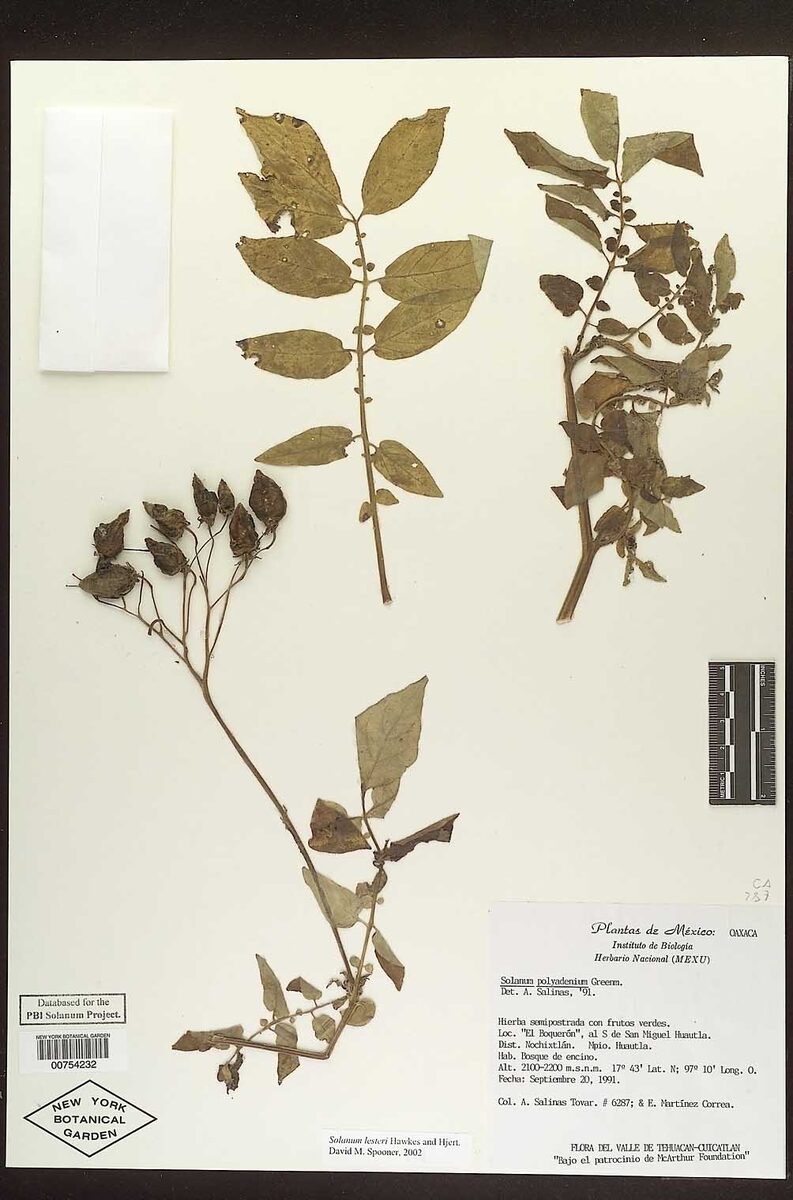
(c) Dewald du Plessis, some rights reserved (CC BY-NC)
iNaturalist· cc-by-nc
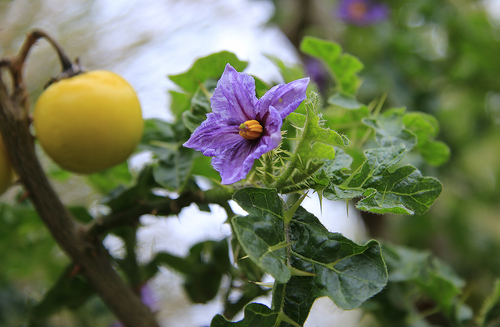
(c) Dewald du Plessis, some rights reserved (CC BY-NC)
Description
A tropical shrub in the nightshade family (Solanaceae) that is commercially cultivated as a vegetable crop. It produces edible fruit.
This description is brief — help expand it
Edible Uses
The leaves of Solanum aethiopicum are eaten as a leaf vegetable and are actually more nutritious than the fruit. The highly variable fruit of the plant is eaten both raw and cooked and is becoming more popular as a cultivated crop. These fruits are usually harvested while still green, before the skin becomes thick. Bitterness increases with higher levels of saponin in the fruit, some varieties being sweet and others very bitter. When the berries mature, they turn bright red because of high carotene content. Solanum aethiopicum is used as an ornamental in Asia. In Nigeria, Igbo people use it as a substitute for kola nut, especially for those who do not want to chew kola nut, in which case it is used to welcome guests at home or before resumption of a traditional ceremony. Garden egg, as it is commonly known in Nigeria, is sometimes used to make a tomato-based sauce which can be used to eat yam.
Distribution
It is a tropical plant.
Where It Grows
Africa, East Africa, Ethiopia,
Other Information
It is a commercially cultivated vegetable.
References (2)
- Food Composition Tables for use in Africa FAO http://www.fao.org/infoods/directory No. 623
- Kays, S. J., and Dias, J. C. S., 1995, Common Names of Commercially Cultivated Vegetables of the World in 15 languages. Economic Botany, Vol. 49, No. 2, pp. 115-152