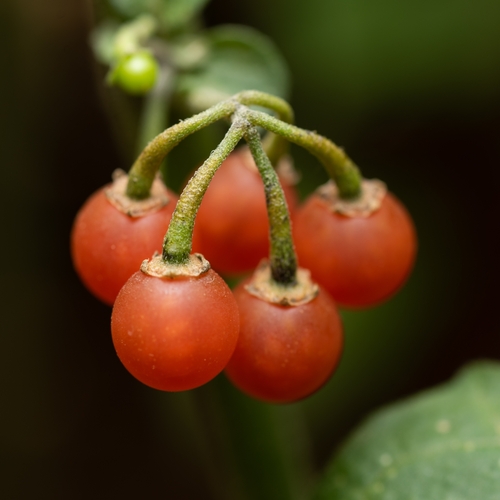
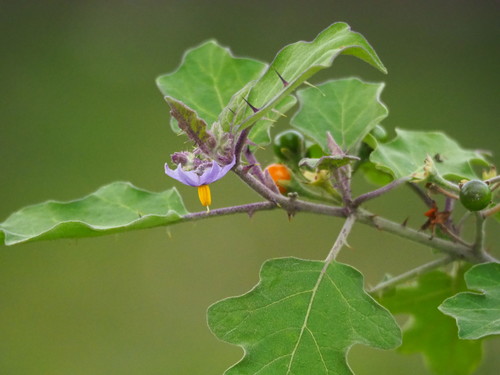
Hyoscyamus niger
Linn.
Henbane, Black henbane, Hog's bean, Stinking nightshade
iNaturalist· cc-by-nc
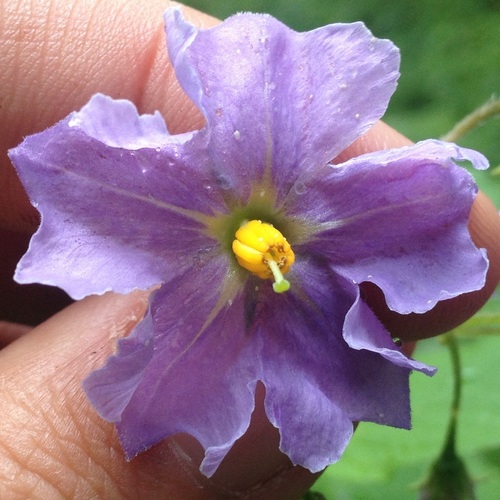
(c) Antoine Guilbaud, some rights reserved (CC BY-NC), uploaded by Antoine Guilbaud
iNaturalist· cc-by-nc
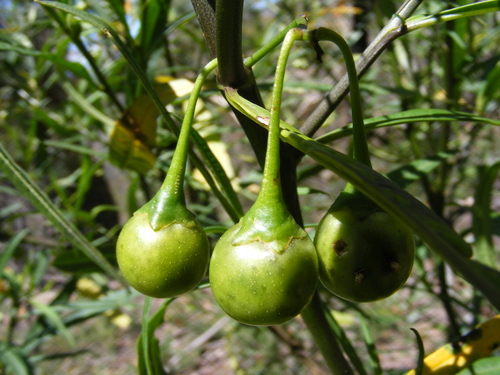
(c) Lauren Pitt, some rights reserved (CC BY-NC), uploaded by Lauren Pitt
iNaturalist· cc-by-nc
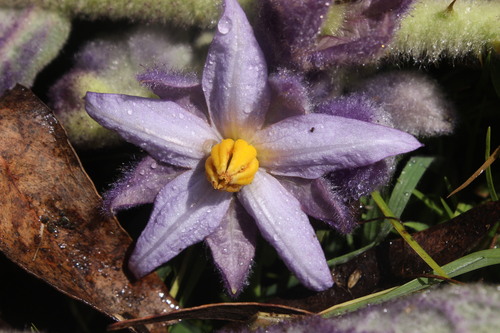
(c) Sebastian J. Dunkl, some rights reserved (CC BY-NC), uploaded by Sebastian J. Dunkl
Summary
Source: WikipediaHenbane (Hyoscyamus niger, also black henbane and stinking nightshade) is a poisonous plant belonging to tribe Hyoscyameae of the nightshade family Solanaceae. Henbane is native to temperate Europe and Siberia, and naturalised in Great Britain and Ireland.
Description
A herb. It grows 40-90 cm high and spreads 40-90 cm wide. It can be erect or lying along the ground. The leaves are softly downy and have a bad smell. They are alternate and oval or sword shaped. They have irregular cuts and are 20 cm long. The flowers are yellow and have dark purple veins. The flower groups are leafy. The flowers are funnel shaped and 30 mm wide. The fruit is a black capsule. It is 12 mm across.
Edible Uses
None known.
Traditional Uses
CAUTION: It should only be used in small amounts. It is poisonous in large quantities. It contains alkaloids such as atropine, hyoscyamine and scopolamine. The starch of the root is a famine food used for extending bread flour, after removing the bitter element.
Medicinal Uses
Henbane has a long history of medicinal use and is widely cultivated to meet demand. It is used extensively as a sedative and painkiller, particularly for urinary tract pain caused by kidney stones. Its sedative and antispasmodic effects make it useful in treating early-stage Parkinson's disease, relieving tremor and rigidity. This species is generally considered best for external use, while white henbane (H. albus) is preferred for internal use. All parts, especially the leaves and seeds, are anodyne, antispasmodic, mildly diuretic, hallucinogenic, hypnotic, mydriatic, narcotic, and sedative. Internally, it is used for asthma, whooping cough, motion sickness, Meniere's syndrome, tremor from senility or paralysis, and as a pre-operative medication. It reduces mucous secretions as well as saliva and other digestive juices. Externally, it is applied as an oil for neuralgia, dental pain, and rheumatic pain. Leaves are harvested in full flower and dried for later use. Both an annual and a biennial form exist; the biennial is considered superior medicinally. The seed treats asthma, cough, epilepsy, myalgia, and toothache. In Tibetan medicine, the seeds are described as having a bitter, acrid taste with a neutral and poisonous potency and are used as an anthelmintic, antitumour agent, and febrifuge in the treatment of stomach and intestinal pain from worm infestation, toothache, inflammation of the pulmonary region, and tumours. This is a very poisonous plant that should be used with great caution and only under the supervision of a qualified practitioner.
Known Hazards
Henbane leaves and herbage without roots are chopped and dried and are then used for medicinal purposes or in incense and smoking blends, in making beer and tea, and in seasoning wine. Henbane leaves are boiled in oil to derive henbane oil. Henbane seeds are an ingredient in incense blends. In all preparations, the dosage has to be carefully estimated due to the high toxicity of henbane. For some therapeutic applications, dosages like 0.5 g and 1.5–3 g were used. The lethal dosage is not known. Henbane is toxic to cattle, wild animals, fish, and birds. Not all animals are susceptible; for example, the larvae of some Lepidoptera species, including cabbage moths, eat henbane. Pigs are immune to henbane toxicity and are reported to enjoy the effects of the plant.
Distribution
It is a temperate plant. It grows in waste places. It suits hardiness zone 3-9.
Where It Grows
Afghanistan, Andorra, Asia, Australia, Balkans, Britain, Canada, Caucasus, Central Asia, China, Europe, France, Himalayas, India, Iran, Iraq, Italy, Japan, Korea, Kyrgyzstan, Luxembourg, Macedonia, Mediterranean, Middle East, Mongolia, Myanmar, Nepal, North America, Pakistan, SE Asia, Siberia, Slovenia, Tajikistan,
Cultivation
Prefers a sunny position and a dry soil. Succeeds in ordinary garden soil but prefers an alkaline soil. Plants succeed in sandy spots near the sea. Cultivated commercially as a medicinal plant, only the biennial form is considered officinal. Grows well in maritime areas, often self-sowing freely. Older plants do not transplant well due to a brittle taproot. The growing plant inhibits the growth of clover. The flowers emit a sickly fishy smell.
Propagation
Seed - sow in summer in a cold frame and pot on as soon as possible before the taproot becomes too long.
Other Uses
Leaves scattered around a house will drive away mice.
Other Information
It is cultivated.
Notes
There are 15 Hyoscyamus species. It is used in medicine. It has narcotic substances in its tissues.
Nutrition
| Part | Moisture | kJ | kcal | Protein | Vit A | Vit C | Iron | Zinc |
|---|---|---|---|---|---|---|---|---|
| Seed | 5 | — | — | — | — | — | — | — |
Synonyms
Also Known As
črni zobnik, Jusquaime, Samon-nan-tha
References (13)
- Ambasta S.P. (Ed.), 2000, The Useful Plants of India. CSIR India. p 280
- Blamey, M and Grey-Wilson, C., 2005, Wild flowers of the Mediterranean. A & C Black London. p 404
- Bremness, L., 1994, Herbs. Collins Eyewitness Handbooks. Harper Collins. p 253
- Brown, D., 2002, The Royal Horticultural Society encyclopedia of Herbs and their uses. DK Books. p 239
- Cormack, R. G. H., 1967, Wild Flowers of Alberta. Commercial Printers Edmonton, Canada. p 294
Show all 13 references Hide references
- Cundall, P., (ed.), 2004, Gardening Australia: flora: the gardener's bible. ABC Books. p 720
- Flora of Pakistan. www.eFloras.org
- Food Composition Tables for the Near East. http://www/fao.org/docrep No. 216
- Hibbert, M., 2002, The Aussie Plant Finder 2002, Florilegium. p 145
- Morley, B. & Everard, B., 1970, Wild Flowers of the World. Ebury press. Plate 38
- PARMENTIER, (As Hyoscyamus vulgaris)
- Sp. pl. 1:179. 1753
- Zeven, A. C. & de West, J. M. J., 1982, Dictionary of cultivated plants and their regions of diversity. Wageningen. p 118