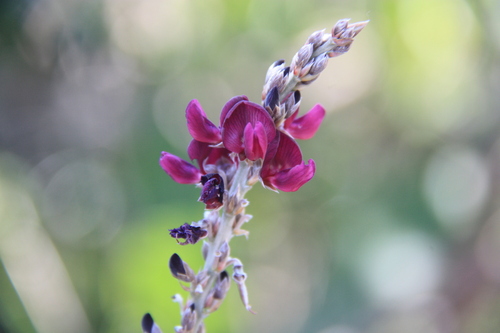
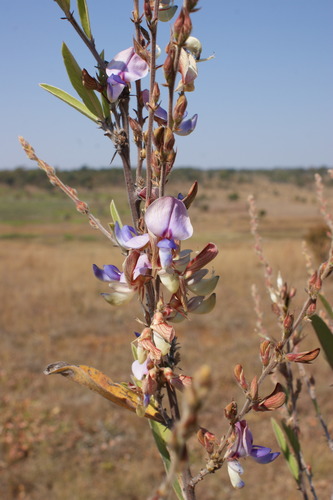
Strophostyles helvula
(L.) Elliott
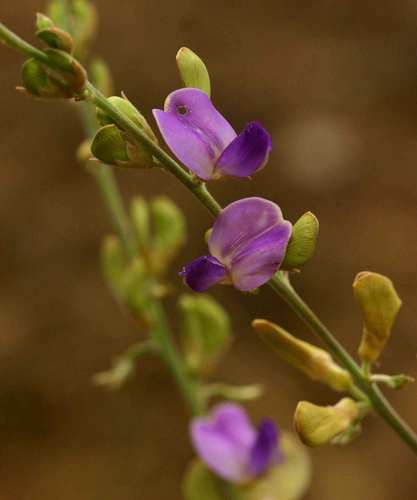
iNaturalist· cc-by-nc
(c) Misha Zitser, some rights reserved (CC BY-NC)
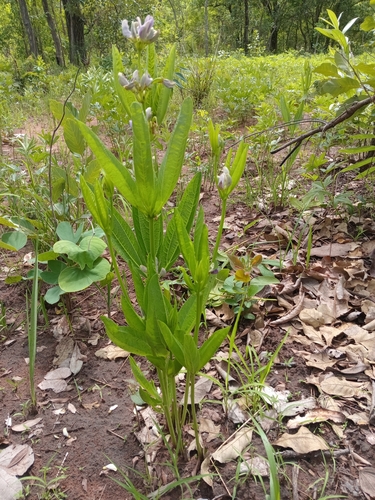
iNaturalist· cc-by-nc
(c) Misha Zitser, some rights reserved (CC BY-NC)
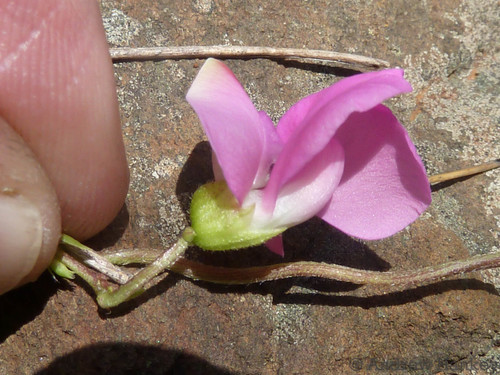
iNaturalist· cc-by-nc
(c) Misha Zitser, some rights reserved (CC BY-NC)
Description
A twining plant. It grows each year from seed. The leaflets are oval and 2-6 cm long. They can have lobed on one or both sides. The fruit are pods 4-9 cm long. The seeds are 5-10 mm long.
Edible Uses
The seeds (beans) are cooked with other vegetables.
Traditional Uses
Beans are cooked with other vegetables.
This uses section is brief — help expand it
Distribution
It is a tropical plant.
Where It Grows
Africa, Canada, Cuba, North America, USA, West Indies,
Synonyms
Cajanus helvulus (L.) Spreng.Dolichos helvulus (L.) Nutt.Glycine helvula (L.) ElliottPhaseolus helvolus L.Phaseolus helvula L.Strophostyles helvola var. missouriensis (S. Watson) Brittonand others
Also Known As
Frijol diablito, Frijol mambi, Tauri
References (3)
- Food Composition Tables for use in Africa FAO http://www.fao.org/infoods/directory (As Phaseolus helvolus)
- Maghirang, R. G., et al, 2018. Ethnobotanical Studies of Some Plants Commonly Used as Vegetables in Selected Provinces of the Philippines. Journal of Nature Studies. 17(2), 30-43. (As As helvola)
- Miguel, E., et al, 1989, A checklist of the cultivated plants of Cuba. Kulturpflanze 37. 1989, 211-357