Acacia pennatula
(Schltdl. & Cham.) Benth.
Feather acacia
iNaturalist· cc-by-nc
(c) Sune Holt, some rights reserved (CC BY-NC)
iNaturalist· cc-by-nc
(c) Sune Holt, some rights reserved (CC BY-NC)
iNaturalist· cc-by-nc
(c) Sune Holt, some rights reserved (CC BY-NC)
Description
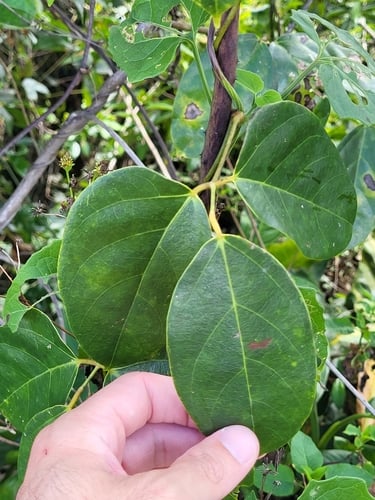
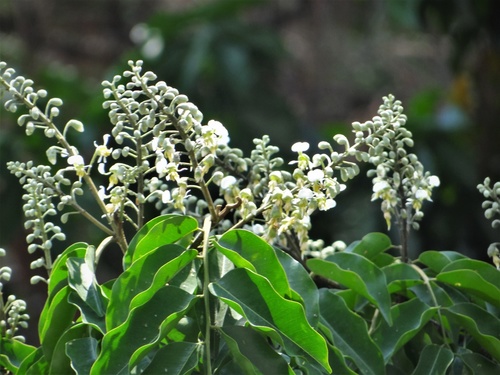
A shrub or small tree. It grows 5 m tall. There are prickles along the stem. The leaves are twice divided and there are 8-18 pairs of pinnae. There are up to 50 pairs of pinnules on each pinnae. The flowers are yellow. They are in large clusters at the ends of branches. The pods are flattened.
Edible Uses
The sap is scraped from the bark and eaten. The pods and seeds are processed into flour.
Traditional Uses
The sap is scraped off the bark and eaten. The pods and seeds are processed into flour.
This uses section is brief — help expand it
Distribution
It is a tropical plant.
Where It Grows
Central America, Columbia, Ecuador, El Salvador, Guatemala, Honduras, Mexico, Nicaragua, North America, Reunion, South America, Venezuela,
Production
Pods develop within 1-2 months of flowering. The unripe pods stay of the tree for 9-10 months.
Notes
There are about 1,350 Acacia species. Over 1,000 occur in Australia. Also as Mimosaceae.
Synonyms
Also Known As
Espino blanco, Espino jiote, Espino negro, Huizache, Palo Garabo
References (10)
- Altschul, S.V.R., 1973, Drugs and Foods from Little-known Plants. Notes in Harvard University Herbaria. Harvard Univ. Press. Massachusetts. no. 1604
- Grandtner, M. M., 2008, World Dictionary of Trees. Wood and Forest Science Department. Laval University, Quebec, Qc Canada. (Internet database http://www.WDT.QC.ca)
- Grandtner, M. M. & Chevrette, J.,2013, Dictionary of Trees, Volume 2: South America: Nomenclature, Taxonomy and Ecology. Academic Press p 7
- ILDIS Legumes of the World http:www;ildis.org/Legume/Web
- London J. Bot. 1:390. 1842
Show all 10 references Hide references
- MINNIS
- Purata, Silvia E., Russell Greenberg, Verónica Barrientos , Jorge López-Portillo, 1999, Economic Potential of the Huizache, Acacia pennatula (Mimosoideae) in Central Veracruz, Mexico. Economic Botany, Vol. 53, No. 1 (Jan. - Mar., 1999), pp. 15-29
- Roa, J. A. G. & Boada, D. S. G., 2018, Fundación para el Fortalecimiento de la Fruticultura y Plantas Alimenticias no Convencionales en Colombia.
- www.worldagroforestrycentre.org/sea/products/afdbases/af
- Yetman, D., 2002, The Guarijios of the Sierra Madre: Hidden People of Northwestern Mexico. University of New Mexico Press. p 197