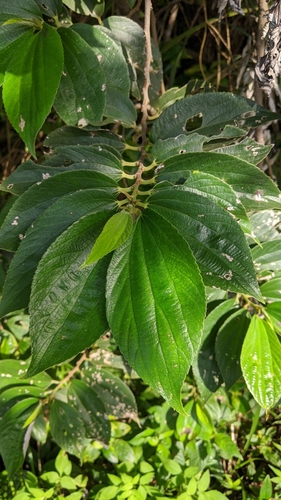
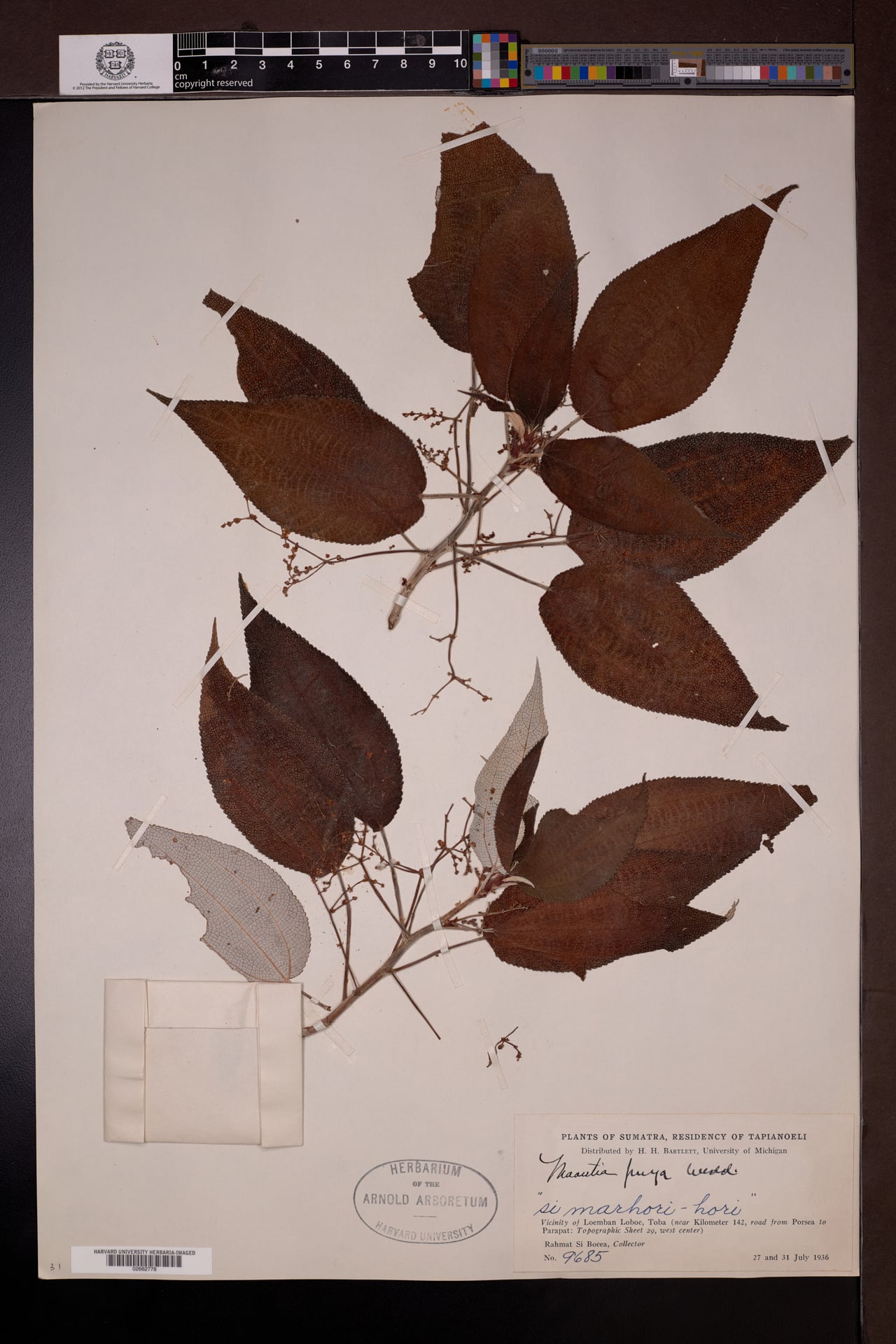
Urera caracasana
(Jacq.) Gaudich. ex Griseb.
Flame berry scratch bush
iNaturalist· cc-by-nc
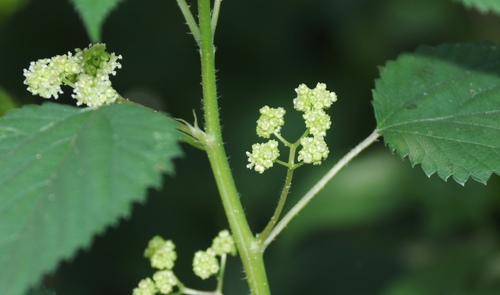
(c) fernando0c, some rights reserved (CC BY-NC)
iNaturalist· cc-by-nc
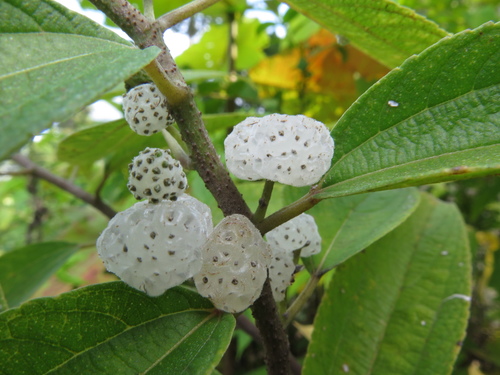
(c) Liu Idárraga Orozco, some rights reserved (CC BY-NC)
iNaturalist· cc-by-nc
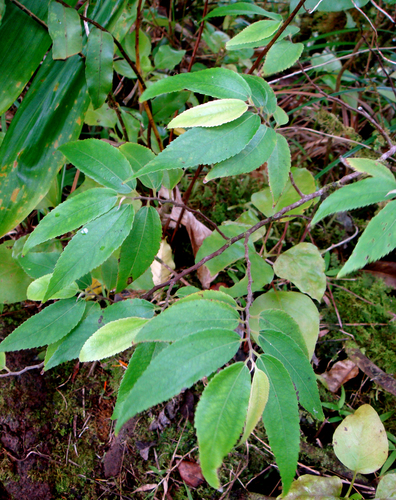
(c) Liu Idárraga Orozco, some rights reserved (CC BY-NC)
Description
A small tropical tree in the family Urticaceae, cultivated in Argentina where it grows from sea level to 2,000 m elevation.
This description is brief — help expand it
Edible Uses
The leaves are eaten in salads and the fruit is edible.
Traditional Uses
The leaves are eaten in salads.
This uses section is brief — help expand it
Medicinal Uses
The root is believed to be antihaemorrhagic, and a leaf infusion is used as a treatment for erysipelas. The leaves are used in the treatment of muscle pain. A leaf is held by its petiole and the nettles are brushed against the skin. The crushed leaves are rubbed on the skin as a febrifuge. The female flowering branches are rubbed on parts of the body where there is muscular pain (this variety has no stinging hairs on the stem or leaves, but does in the inflorescence). A tea made from the bark is used as a remedy for pulmonary diseases. The plant is used widely for medicinal purposes. The roots are boiled with honey and the liquid is used for stomach ache and as a vermicide. The leaves are also boiled and crushed for their juice, which is mixed with the juice of 9 or 13 oranges. The mixture is then heated and the resulting concoction given to babies with diarrhoea. The leaves, wrapped in a cloth and tied on the head, are said to be good for headache.
Known Hazards
The plant is furnished with stinging hairs, especially the stiff hairs of the inflorescence, but the pain produced is ephemeral and not nearly so severe as that of the related Urera baccifera.
Distribution
It is a tropical plant. In Argentina it grows from sea level to 2,000 m above sea level.
Where It Grows
Antilles, Argentina, Belize, Bolivia, Brazil, Central America, Colombia, Costa Rica, Ecuador, El Salvador, Galapagos, Guatemala, Guiana, Guianas, Honduras, Jamaica, Lesser Antilles, Mexico, Nicaragua, North America, Panama, Paraguay, Peru, Puerto Rico, South America*, Suriname, Venezuela, West Indies,
Cultivation
Found in the wild in sandy soils or light, medium loams. Usually a dioecious species, though sometimes monoecious. In general, both male and female forms need to be grown if fruit and seed are required.
Other Uses
A strong fibre is obtained from the bark. It is used to make nets, traditional short-hip clothing etc. The bark should be an excellent source of fibre for making paper. The wood is creamy yellow with purplish and dark gray patches; odourless and tasteless; straight-grained; medium textured ; very light or fairly light in weight; very difficult to cut smoothly across grain and does not take a smooth finish; perishable. No uses are recorded. With its stinging hairs to discourage intrusion, the plant is commonly used as a hedge. However, the sting has a much milder effect and so the plant is not nearly so efficient as U. Baccifera at keeping out unwanted guests. The hedges are trimmed when they get too tall, and then send up long straight simple shoots, whose growth soon restores the hedge to its former height.
Other Information
It is cultivated.
Synonyms
Also Known As
Avintsuna, Bojo, Cansacao, Caracasana, Chichicaste, Chini, Crespon, Cumala colorada, Ishanga, Ishimu, Itaphalla, Iyu chini, Kuyujimias, Laal, Nomonto, Nomowento, Origa, Ortiguilla, Pai susi, Puka chini, Sukunara, Urtiga, Viyu chini, Vuvupa anco'si, Wa tini de
References (5)
- Grandtner, M. M., 2008, World Dictionary of Trees. Wood and Forest Science Department. Laval University, Quebec, Qc Canada. (Internet database http://www.wdt.qc.ca)
- Grandtner, M. M. & Chevrette, J., 2013, Dictionary of Trees, Volume 2: South America: Nomenclature, Taxonomy and Ecology. Academic Press p 681
- Kermath, B. M., et al, 2014, Food Plants in the Americas: A survey of the domesticated, cultivated and wild plants used for Human food in North, Central and South America and the Caribbean. On line draft. p 888
- Roa, J. A. G. & Boada, D. S. G., 2018, Fundación para el Fortalecimiento de la Fruticultura y Plantas Alimenticias no Convencionales en Colombia.
- Torre, de la, L., et al, 2008, Enciclopedia de las Plantas Útiles del Ecuador. Herbario QCA. Pontificia Universidad Católica del Ecuador. p 611