Attalea rostrata
Oerst.
Liebmann scheelea
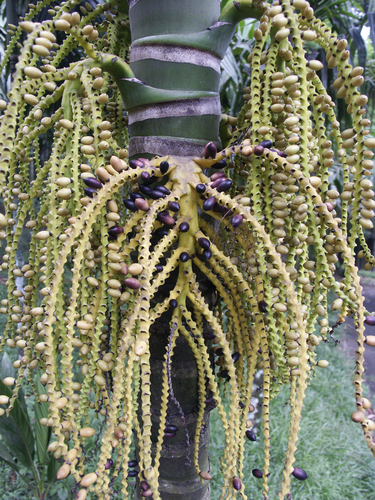
iNaturalist· cc-by-nc
(c) Efraín Barrera, some rights reserved (CC BY-NC)
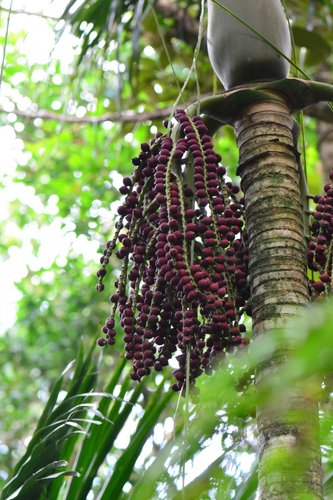
iNaturalist· cc-by-nc
(c) Ana Maria Benavides, some rights reserved (CC BY-NC)
iNaturalist· cc-by-nc
(c) Ana Maria Benavides, some rights reserved (CC BY-NC)
Description
A large palm. It often does not have a trunk but the trunk can be 3-6 m tall. It is thick. The leaves are large and 3.5 m long. There are many fruit about 5 cm long.
Edible Uses
The centre of the stem (palm cabbage) is eaten raw or cooked. The seeds yield oil, and the fruit and sap are also edible.
Traditional Uses
The centre of the stem is eaten raw or cooked.
This uses section is brief — help expand it
Distribution
It is a tropical plant. It grows near sea level.
Where It Grows
Asia, Central America*, Colombia, China, Costa Rica, Guatemala, Mexico, Nicaragua, North America, Panama, South America,
Other Uses
The leaves are commonly used as a thatch. The leaves are used to make suyacales (rain capes) and sopladores (the fans so necessary for starting kitchen fires, particularly those burning charcoal). Bunches of the nerves from the leaves are used as brooms and coarse brushes. An oil extracted from the seed is used for making soap. The oil is also used to make 'Jabon Vegetal' which is highly esteemed in Guatemala for toilet purposes. The nuts are cut transversely and shaped to make small pipe bowls. The trunks are used for various kinds of construction and sometimes for fuel.
Synonyms
Also Known As
Corozo, Coyo real, Palma real, Preuss scheelea
References (8)
- Gonzalez-Martin, R. M., et al, 2012, Traditional wetland palm uses in construction and cooking in Veracruz, Gulf of Mexico. Indian Journal of Traditional Knowledge. Vol 1(3) :408-413 (As Attalea liebmannii)
- Grandtner, M. M., 2008, World Dictionary of Trees. Wood and Forest Science Department. Laval University, Quebec, Qc Canada. (Internet database http://www.wdt.qc.ca) (Also as Scheelea preusii)
- Grandtner, M. M. & Chevrette, J., 2013, Dictionary of Trees, Volume 2: South America: Nomenclature, Taxonomy and Ecology. Academic Press p 52
- Hazlett, D. L., 1986, Ethnobotanical Observations from Cabecar and Guaymi Settlements in Central America. Economic Botany 40(3): 339-352 (As Scheelea rostrata)
- Mapes, C. & Basurto, F., 2016, Biodiversity and Edible Plants of Mexico. Chapter 5 in R. Lira, et al. (eds.), Ethnobotany of Mexico, Ethnobiology, Springer. p 102 (As Scheelea liebmannii)
Show all 8 references Hide references
- Piedra-Malagón, E. M. et al, 2022, Edible native plants of the Gulf of Mexico Province. Biodiversity Data Journal 10: e80565 p 11
- Reyes-Garcia, V., et al, 2006, Cultural, Practical and Economic Value of Wild Plants: A Quantitative Study in the Bolivian Amazon. Economic Botany 60(1):62-74
- Standley, P. & Steyermark, J., 1958, Flora of Guatemala. Fieldiana: Botany, Volume 24 part 1 p 290 (As Scheelea preussii)