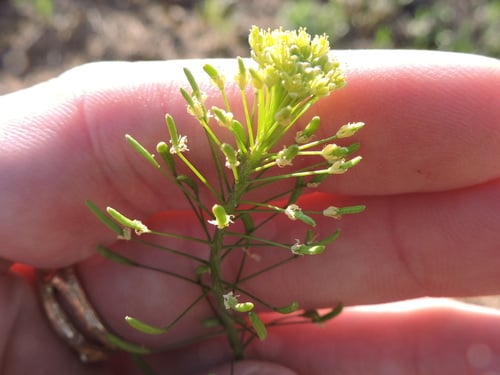
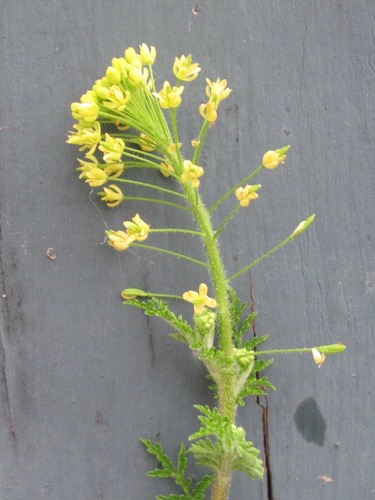
Brassica rapa subsp. pekinensis
(Lour.) Hanelt
Pe Tsai, Celery cabbage, Chinese cabbage
gbif· cc-by-nc
j_tari
gbif· cc-by-nc
j_tari
gbif· cc-by-nc
j_tari
Summary
Source: WikipediaBrassica rapa is an annual to biennial plant species native to Eurasia that is from the Brassicaceae family. It has been widely cultivated into many forms, including the turnip (a root vegetable), komatsuna, Chinese cabbage, bomdong, pak choi / bok choy, and rapini. Its domesticated forms include turnips and leafy greens, such as bok choy and napa cabbage. The oilseed types are grown for food and industrial uses. Genetic studies indicate that B. rapa was one of the earliest domesticated brassicas, with turnip-like forms arising first and additional morphotypes developing independently across Eurasia. Wild, feral, and cultivated populations are found worldwide, making the species important agriculturally, economically, and ecologically. Brassica rapa subspecies oleifera is an oilseed commonly known as turnip rape, field mustard, bird's rape, and keblock. Rapeseed oil is a general term for oil from some Brassica species. Food grade oil made from the seed of low-erucic acid Canadian-developed strains is also called canola oil, while non-food oil is called colza oil. Canola oil can be sourced from Brassica rapa and Brassica napus, which are commonly grown in Canada, and Brassica juncea, which is less common.
Description
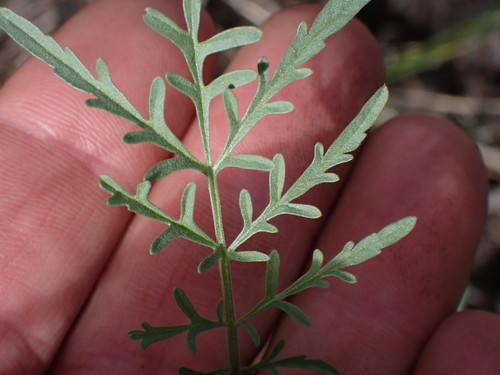
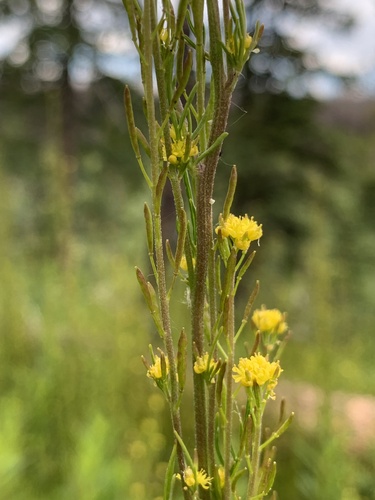
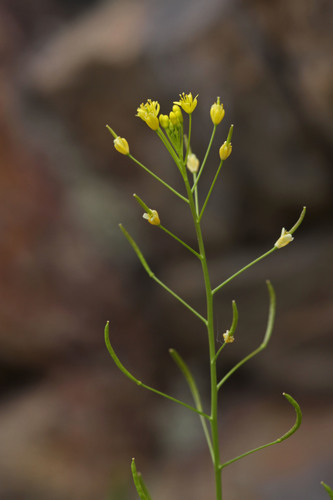
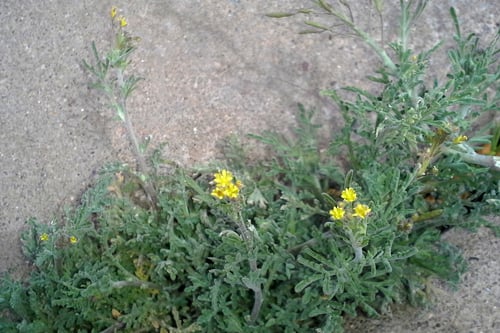
A cabbage family herb. It is a robust leafy plant. The leaves are toothed. It usually forms an oblong head. The leaves are densely packed and pale yellowish-green. Wong bok varieties have narrow leaf stalks and do not form heads.
Edible Uses
The leaves are stir-fried, boiled, pickled, or braised, and are fermented into a spicy sauerkraut-like vegetable. The seeds can be sprouted and eaten in salads and sandwiches. The flowers and leaves are also eaten as vegetables.
Traditional Uses
The leaves are stir-fried, boiled, pickled or braised. They are also fermented into a spicy, sauerkraut-like vegetable. The seeds can be sprouted and eaten in salads and sandwiches.
Medicinal Uses
Cultivated varieties of B. rapa are consumed commonly as vegetables, such as turnip roots, napa cabbage, komatsuna, pak choi, and other leafy greens, particularly in East Asian, South Asian, and Mediterranean cuisines. The young leaves are a leaf vegetable eaten raw, while older leaves are typically cooked. The taproot and seeds can also be eaten raw, although the seeds contain an oil that can cause irritation for some people. Rapeseed oil from the plant is also used to make canola and colza oils. B. rapa is also commonly used as a rotational cover crop for vegetables due to its ability to prevent erosion and deter disease. Because of their fast life-cycle and genetic diversity, the B. rapa cultivar Wisconsin Fast Plants is widely used in genetics and plant biology education.
Distribution
It is a subtropical plant. In PNG it grows best from sea level to 2,300 m above sea level. It suits hardiness zones 9-11.
Where It Grows
Africa, Asia, Australia, Balkans, China, Congo DR, Cook Islands, Cuba, Europe, Fiji, Finland, Hawaii, Israel, Japan, Korea, Kyrgyzstan, Macedonia, Madagascar, Mediterranean, Middle East, Nauru, North America, Pacific, Papua New Guinea, PNG, Philippines, Samoa, Scandinavia, SE Asia, Solomon Islands, South Africa, Southern Africa, Sri Lanka, Timor-Leste, USA, Vanuatu, West Indies,
Cultivation
Plants are grown from seed. They are usually sown directly.
Other Information
It is a commercially cultivated vegetable.
Notes
There are about 30 Brassica species and many cultivated varieties.
Nutrition
| Part | Moisture | kJ | kcal | Protein | Vit A | Vit C | Iron | Zinc |
|---|---|---|---|---|---|---|---|---|
| Leaves raw | 94.4 | 67 | 16 | 1.2 | 120 | 27 | 0.3 | 0.2 |
| Leaves boiled | 95.2 | 59 | 14 | 1.5 | 97 | 16 | 0.3 | 0.2 |
| Seed Sprouts | — | — | — | — | — | — | — | — |
| Flowers | — | — | — | — | — | — | — | — |
Synonyms
Also Known As
Bok choi, Chihli cabbage, Chinese broccoli, Col china, Da bai cai, Gay long, Hakusai, Headed Chinese cabbage, Napa, Nappa, Peking cabbage, Shantung cabbage, Siew choy, Tientsin cabbage, Wong paak
References (21)
- Arora, R. K., 2014, Diversity in Underutilized Plant Species - An Asia-Pacific Perspective. Bioversity International. p 38
- Bodner, C. C. and Gereau, R. E., 1988, A Contribution to Bontoc Ethnobotany. Economic Botany, 43(2): 307-369
- Bourke, R. M., Altitudinal limits of 230 economic crop species in Papua New Guinea. Terra australis 32.
- Chin, H. F., 1999, Malaysian Vegetables in Colour. Tropical Press. p 73 (As Brassica pekinensis var. cylindrica)
- Creasy, R., 2000, The Edible Asian Garden. Periplus p 32
Show all 21 references Hide references
- Cundall, P., (ed.), 2004, Gardening Australia: flora: the gardener's bible. ABC Books. p 256
- Facciola, S., 1998, Cornucopia 2: a Source Book of Edible Plants. Kampong Publications, p 55
- Gillaumin, R., 1954, Les Plantes utiles des Nouvelles-Hebrides (fin et complement) In: Journal d'agriculture tropicale et de botanique appliquee Vol. 1, No. 10-12 pp 453-460 (As Brassica pekinensis)
- GRIN
- Hadfield, J., 2001, The A-Z of Vegetable Gardening in South Africa. Struik p 99
- Hu, Shiu-ying, 2005, Food Plants of China. The Chinese University Press. p 413 (As Brassica pekinensis)
- Kays, S. J., and Dias, J. C. S., 1995, Common Names of Commercially Cultivated Vegetables of the World in 15 languages. Economic Botany, Vol. 49, No. 2, pp. 115-152
- Kiple, K.F. & Ornelas, K.C., (eds), 2000, The Cambridge World History of Food. CUP p 1754 (As Brassica pekinensis)
- Latham, P. & Mbuta, A. K., 2014, Useful Plants of Bas-Congo Province, Democratic Republic of Congo. Volume 1. Salvation Army. p 80
- Mansf., Verz. Landwirtsch. u. Gartn. Kulturpfl., Auf. 2, ed. J. Schultze-Motel, 1:304. 1986
- Miguel, E., et al, 1989, A checklist of the cultivated plants of Cuba. Kulturpflanze 37. 1989, 211-357
- Schneider, E., 2001, Vegetables from Amaranth to Zucchini: The essential reference. HarperCollins. p 195
- USDA, ARS, National Genetic Resources Program. Germplasm Resources Information Network - (GRIN). [Online Database] National Germplasm Resources Laboratory, Beltsville, Maryland. Available: www.ars-grin.gov/cgi-bin/npgs/html/econ.pl (10 April 2000)
- van Wyk, B., 2005, Food Plants of the World. An illustrated guide. Timber press. p 109
- Wiersema, J. H. & Leon, B., 2013, World Economic Plants. A Standard Reference CRC Press. 2nd Ed. p 116
- Woodward, P., 2000, Asian Herbs and Vegetables. Hyland House. p 43