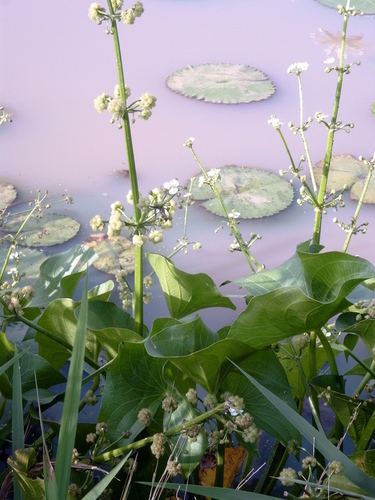
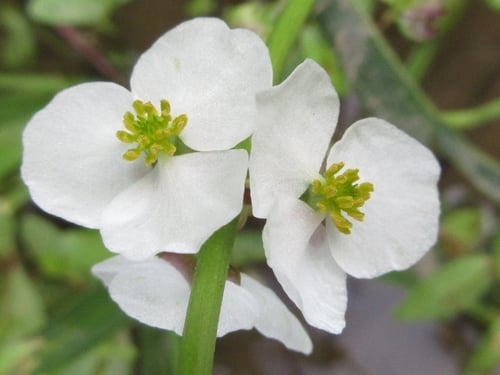
Alisma gramineum
Lej.
Water plantain
iNaturalist· cc-by-nc
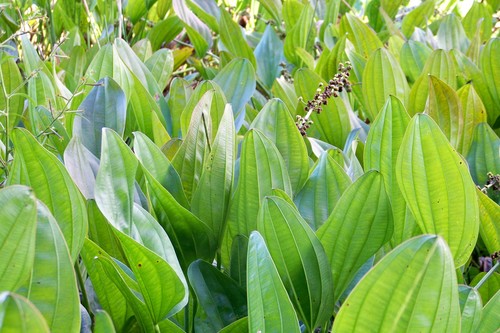
(c) jamie_fenneman, some rights reserved (CC BY-NC)
iNaturalist· cc-by-nc
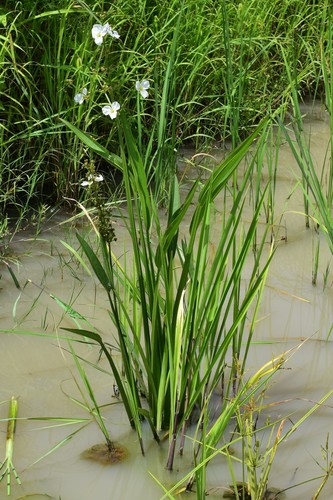
(c) jamie_fenneman, some rights reserved (CC BY-NC)
iNaturalist· cc-by
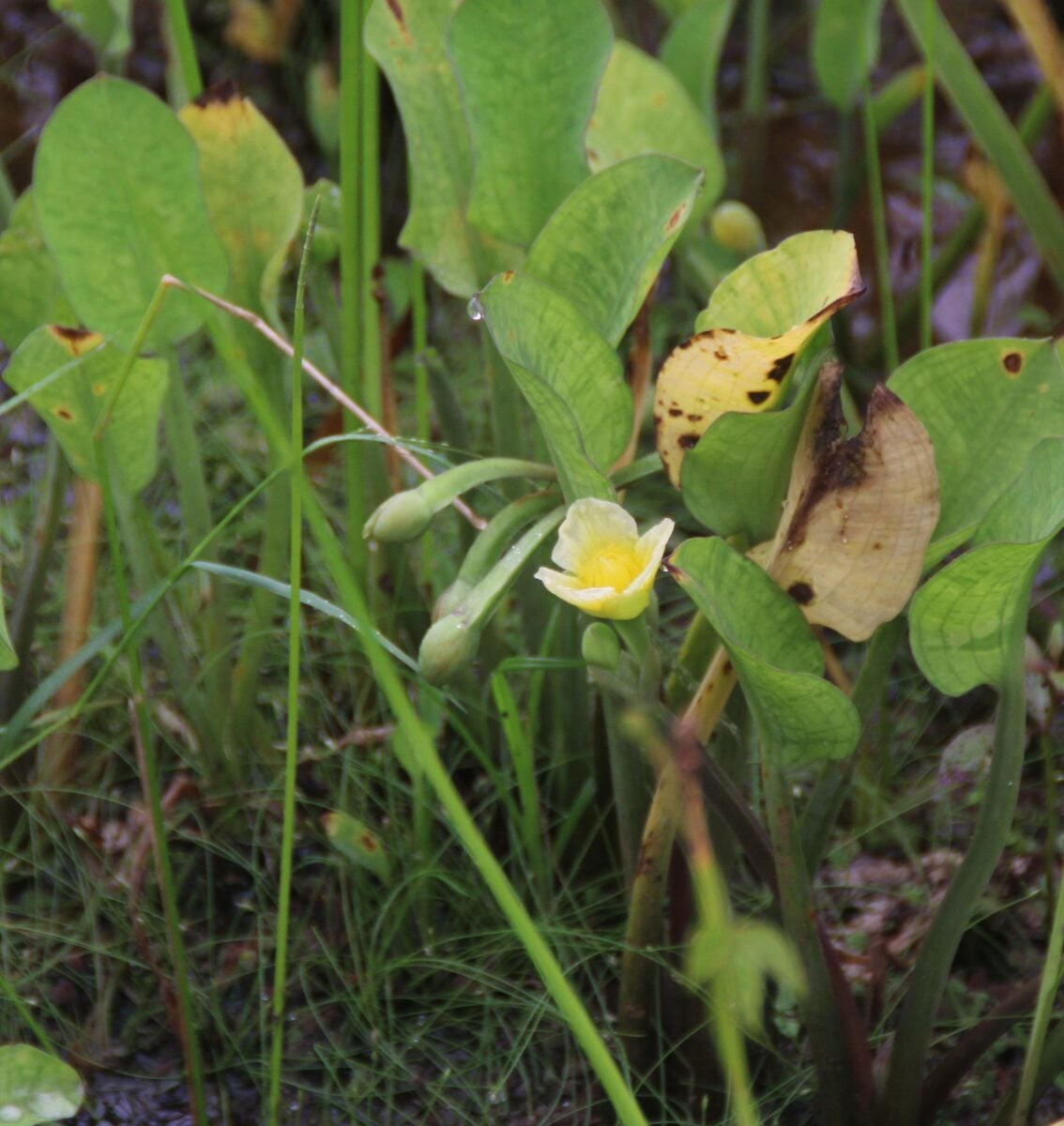
(c) Tom Norton, some rights reserved (CC BY), uploaded by Tom Norton
Summary
Source: WikipediaAlisma gramineum is a small aquatic plant in the water-plantain family. It has several common names including narrowleaf water-plantain, ribbonleaf water-plantain or ribbon-leaved water-plantain, and grass-leaved water-plantain. It grows in mud or submerged in shallow fresh or brackish water in marshy areas.
Description
A herb. Tubers are small. The leaves have leaf stalks 2-31 cm long. The leaves are 3-13 cm long by 1-2 cm wide. The flower panicles are 6-56 cm long in 2-5 rings of 3-9 branches.
Edible Uses
The rhizomes — thickened stem bases — are edible when thoroughly cooked. They are short, thick, and starchy, though raw material carries an acrid undertone that can irritate the mouth and gut. Cooking removes much of this bitterness, leaving the rhizomes mild and palatable. They can be roasted, dried, or ground into flour. Other parts of the plant, including leaves, stalks, and roots, are not documented as edible and are unlikely to yield food value given their fibrous, spongy texture. Seeds can be collected, parched, and ground, though they are tiny and yield is low. Rhizomes should be dug late in the season, peeled if needed, sliced, and boiled in ample water; if the cooked material tastes peppery, discard the first water and reboil. Underground parts are technically available year-round but are easiest to access at low water. Related water-plantains were widely used as cooked starch sources across Eurasia and North America, and this species likely shared similar occasional use where it was abundant. It rates 2 out of 5 for edibility due to limited bulk, harvest difficulty, and the need for careful preparation. Harvest only from clean wetlands free of contamination.
Medicinal Uses
None known.
Known Hazards
Raw tissues contain acrid, potentially irritant compounds; must be thoroughly cooked, often with a change of water. Harvest only from clean wetlands free of contamination.
Distribution
It is a temperate plant. It grows on the edges of lakes and marshes.
Where It Grows
Afghanistan, Africa, Asia, Canada, Central Asia, China, Europe, Kazakhstan, Mongolia, North America, Pakistan, Russia, Tajikistan, USA, Uzbekistan,
Cultivation
Identification & Habit: This species forms rosettes of narrow, linear to lanceolate submerged or emergent leaves. From these bases arise slender stalks bearing an open, branched inflorescence of small three-petaled flowers (white to pale pink) with yellowish centers. Fruits are small, many-seeded achenes in whorls. Plants grow rooted in soft substrates of shallow water or muddy margins. Growing Conditions: Requires shallow, still or slow-moving water with muddy or silty substrate. Full sun is preferred; tolerates some fluctuation in water level. Habitat & Range Occurs in scattered wetland habitats of Eurasia and North America, including cool-temperate marshes, ponds, ditches, and lake margins. Size & Landscape Performance: A delicate emergent, suitable for naturalized pond margins. Not particularly showy, but adds fine texture. Cultivation (Horticulture): Can be grown in containers or pond margins by planting seed or small divisions into shallow mud. Needs clean, unpolluted water. Pests & Problems: Vulnerable to water pollution, eutrophication, and habitat destruction more than to classic pests. Cultivar/Selection Notes: No cultivars.
Propagation
Propagate by seed sown into submerged mud, or by division of established clumps. Seeds may benefit from cold, wet stratification.
Other Uses
Ecologically, the plant provides cover and structure in shallow-water zones. Its seeds and periphyton support invertebrates and some waterfowl, and its flowers are visited by small flies and bees, with some pollination potentially autogamous. It can be grown in containers or at pond margins.
Synonyms
Also Known As
Alisma gramineum (Grassleaf, Narrowleaf, or Ribbonleaf Water Plantain)
References (2)
- http://www.stoller-eser.com/Flora/ethnobotany_table.htm
- Urgamal, M., et al, 2014, Conspectus of the Vascular Plants of Mongolia. Mongolia Academy of Sciences Insitute of Botany and National University of Mongolia Department of Biology. p 38