Haplocoelum foliolosum
(Hiern) Bullock
Northern galla-plum
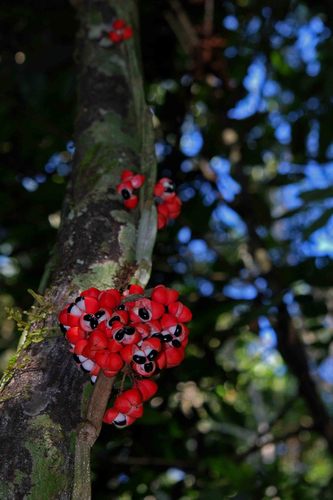
iNaturalist· cc-by-nc
(c) m_el_o, some rights reserved (CC BY-NC)
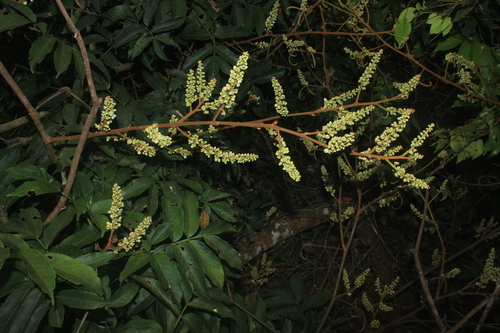
iNaturalist· cc-by
(c) Shaun Swanepoel, some rights reserved (CC BY)
iNaturalist· cc-by
(c) Shaun Swanepoel, some rights reserved (CC BY)
Description
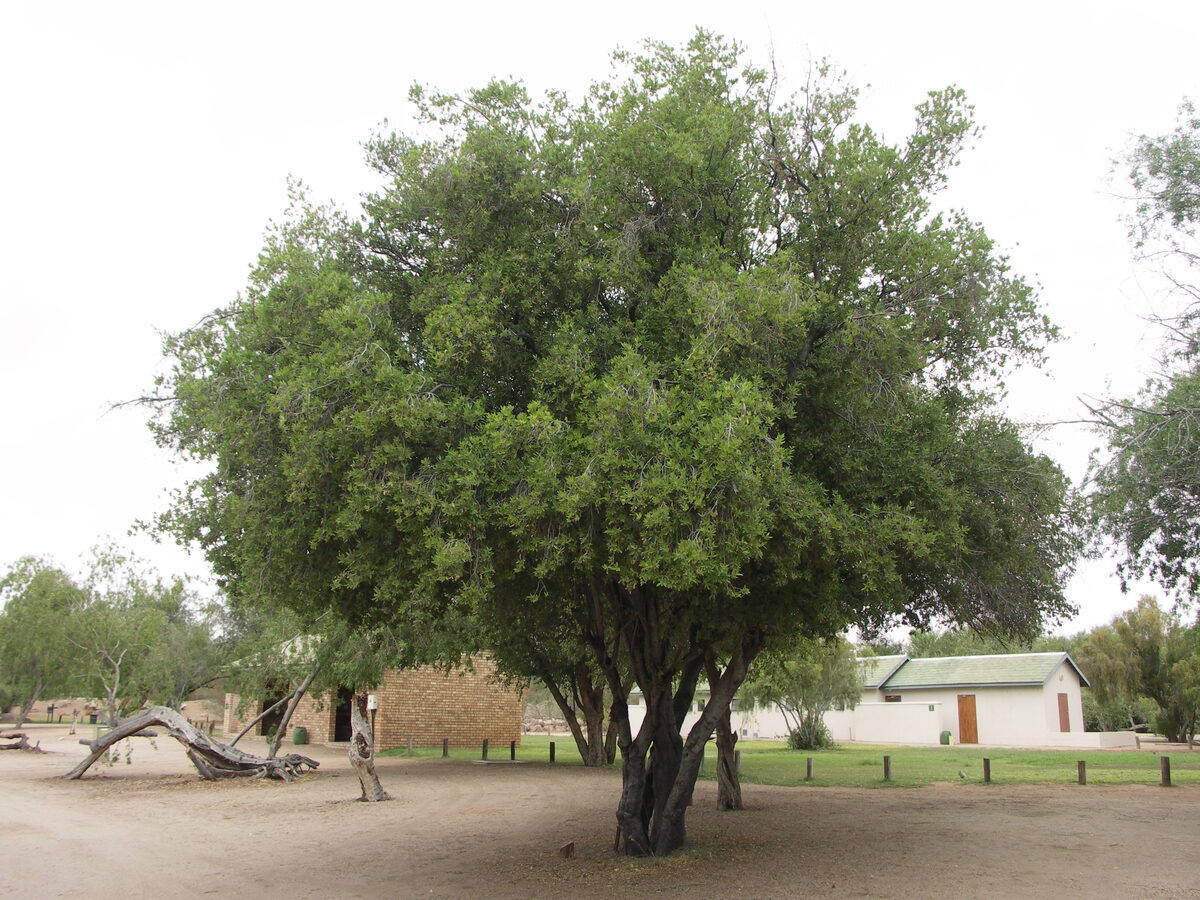
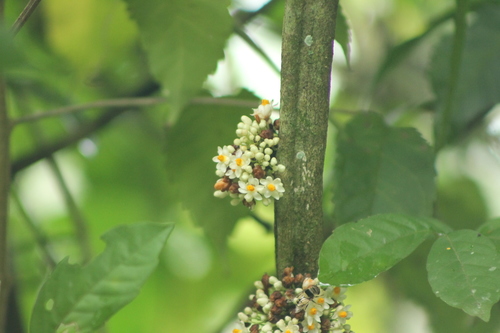
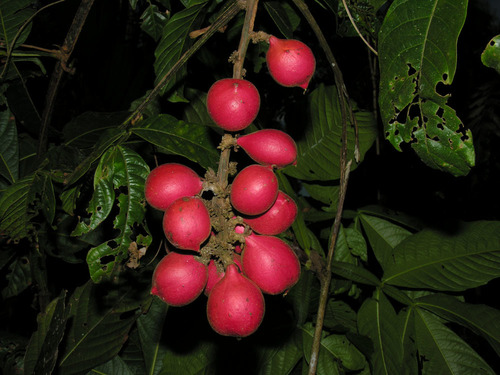
A straggling shrub or small tree. It grows 8-10 m high. It loses its leaves in the dry season. The bark on old trees peels off leaving light coloured patches. The leaves are arranged in spirals or clustered on small spurs. The leaves have leaflets along the stalk. There are 3-16 pairs of small leaflets. These are 2 cm long by 1 cm wide. They are unequal on each side. The flowers are in small clusters in the axils of leaves. They are cream coloured. Male and female flowers are on separate trees. The fruit are orange or red. They are almost round and 15 mm long and wide. They are edible. There is one seed. It has a fleshy layer around it.
Edible Uses
The ripe fruit are eaten raw or boiled and are sometimes sold in local markets.
Traditional Uses
The ripe fruit are eaten raw and also boiled.
This uses section is brief — help expand it
Distribution
It is a tropical plant. It grows in lowland and mid altitude rainforest. It suits humid locations. It can be on termite mounds and rocky places.
Where It Grows
Africa, Angola, Central Africa, Congo DR, East Africa, Ethiopia, Kenya, Malawi, Mozambique, Rwanda, Southern Africa, Sudan, Uganda, Tanzania, Zambia, Zimbabwe,
Other Information
The fruit are sometimes eaten.
Notes
There are a few species of Haplocoelum. They occur in Africa.
Synonyms
Also Known As
Bungwe, Canaa, Cizoro, Imijwiri, Imurguti, Katezi, Malkat, Mhale, M'kalandja, Mumumi, Mukumu, Nakisungu
References (17)
- Bigirimana, C., et al, 2016, Utilisation of Indigenous Fruit Tree Species within the Lake Victoria Basin, Rwanda. Agricultural Science: An International Journal. (AGRIJ) Vol. 1, No. 1
- Demise, S. & Asfaw, Z., 2020, Ethno Botanical Study of Wild Edible Plants in Adola District, Southern, Ethiopia. International Journal of Research and Analytical Reviews (IJRAR) 7(2).
- Emire, A., et al, 2021, Ethnobotanical Study of Wild Edible Fruit Tree and Shrub Species in Adola Rede and Odo Shakiso Midland Districts of Guji Zone, Southern Ethiopia. Int. J. Adv. Res. Biol. Sci. (2021). 8(12): 96-109
- Fowler, D. G., 2007, Zambian Plants: Their Vernacular Names and Uses. Kew. p 59
- Gemedo-Dalle, T., et al, 2005, Plant Biodiversity and Ethnobotany of Borana Pastoralists in Southern Oromia, Ethiopia. Economic Botany 59(1) pp. 43-65
Show all 17 references Hide references
- Ichikawa, M., 1980, The Utilization of Wild Food Plants by the Suiei Dorobo in Northern Kenya. J. Anthrop. Soc. Nippon. 88(1): 25-48
- Lovett, J. C. et al, Field Guide to the Moist Forest Trees of Tanzania. p 155
- Malaisse, F., 1997, Se nourrir en floret claire africaine. Approche ecologique et nutritionnelle. CTA., p 63
- Mutie, F. G., 2020, Conservation of Wild Food Plants and Their Potential for Combatting Food Insecurity in Kenya as Exemplified by the Drylands of Kitui County. Plants 2020, 9, 1017
- Mutie, F. M., et al, 2023, Important Medicinal and Food Taxa (Orders and Families) in Kenya, Based on Three Quantitative Approaches. Plants 2023, 12, 1145
- Newman, 1970,
- Peters, C. R., O'Brien, E. M., and Drummond, R.B., 1992, Edible Wild plants of Sub-saharan Africa. Kew. p 180
- Ruiters-Welcome, A. K., 2019, Food plants of southern Africa. Ph.D. thesis. Univ. of Johannesburg p 100
- Termote, C., et al, 2014, Assessing the potential of wild foods to reduce the cost of a nutritionally adequate diet: An example from eastern Baringo District, Kenya. Food and Nutrition Bulletin, vol. 35, no. 4
- Welcome, A. K. & Van Wyk, B.-E., 2019, An inventory and analysis of the food plants of southern Africa. South African Journal of Botany 122 (2019) 136–179
- White, F., Dowsett-Lemaire, F. and Chapman, J. D., 2001, Evergreen Forest Flora of Malawi. Kew. p 531
- World Checklist of Useful Plant Species 2020. Royal Botanic Gardens, Kew