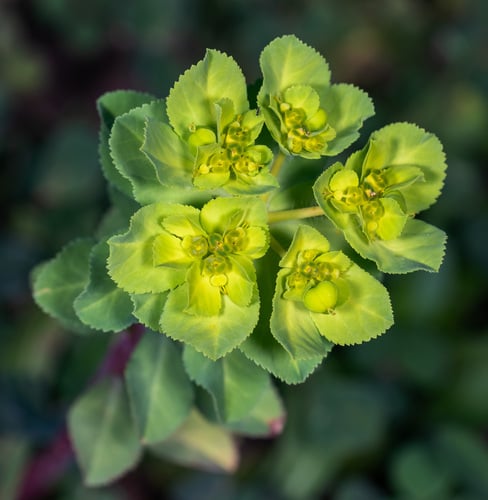
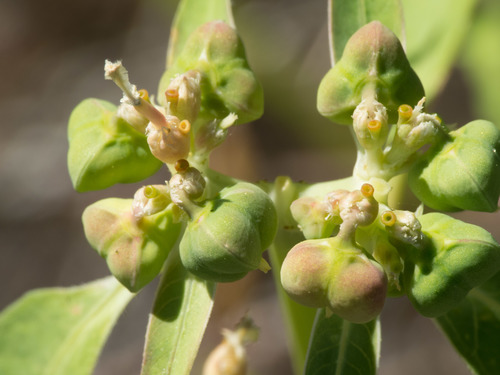
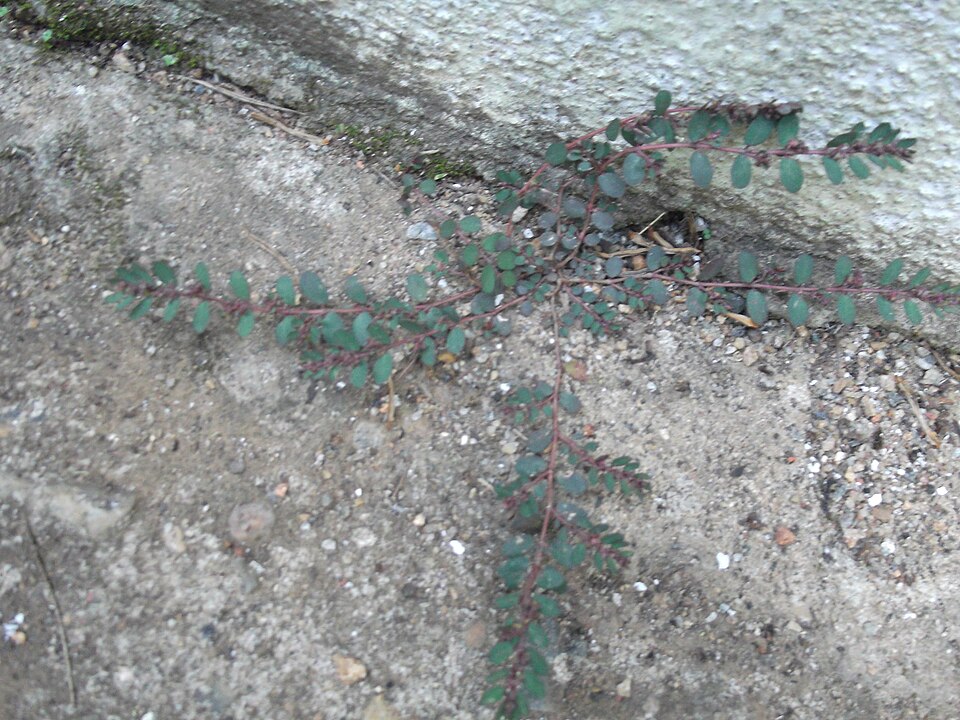
Acalypha wilkesiana
Mull. Arg.
Painted copperleaf
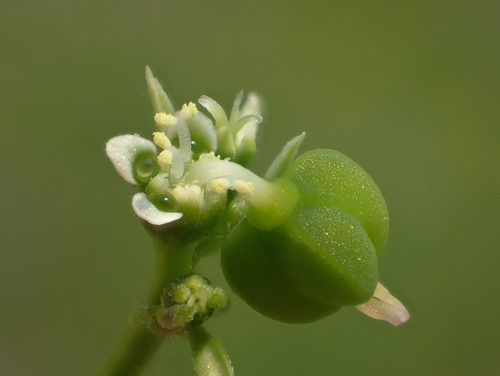
iNaturalist· cc-by-nc
(c) crazybirdy, some rights reserved (CC BY-NC), uploaded by crazybirdy
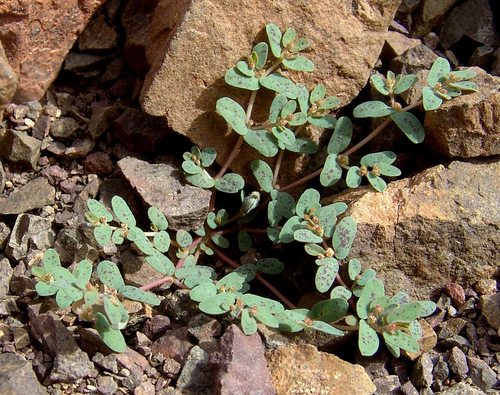
iNaturalist· cc-by-nc
(c) birgittheyer, some rights reserved (CC BY-NC)
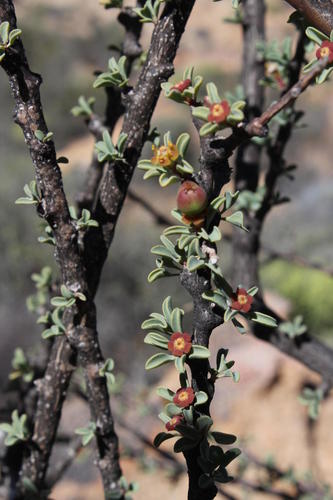
iNaturalist· cc-by-nc
(c) Elavarasan M, some rights reserved (CC BY-NC), uploaded by Elavarasan M
Summary
Source: WikipediaAcalypha wilkesiana, common names copperleaf, Jacob's coat and Flamengueira, is an evergreen shrub growing to 3 metres (9.8 ft) high and 2 metres (6 ft 7 in) across. It has a closely arranged crown, with an erect stem and many branches. Both the branches and the leaves are covered in fine hairs. The leaves, which may be flat or crinkled, are large and broad with teeth around the edge. They can be 10–20 centimetres (3.9–7.9 in) long and 15 centimetres (5.9 in) wide. The leaves are coppery green with red splashes, giving them a mottled appearance. Separate male and female flowers appear on the same plant. The male flowers are in long spikes which hang downwards while the female flowers are in short spikes. The latter do not show up easily as they are often hidden among the leaves. The flower stalks are 10–20 cm long.
Description
A shrub or small tree. It grows 5 m tall. There are prickles along the stem. The leaves are twice divided and there are 8-18 pairs of pinnae. There are up to 50 pairs of pinnules on each pinnae. The flowers are yellow. They are in large clusters at the ends of branches. The pods are flattened.
Edible Uses
The cooked young leaves are eaten in stews and are rich in protein. The leaves can also be used for tea. The flowers are also edible.
Traditional Uses
The cooked young leaves are eaten. The leaves are rich in protein. They are used in stews.
This uses section is brief — help expand it
Medicinal Uses
Acalypha wilkesiana ointment is used to treat fungal skin diseases. Oyelami et al. (2003) carried out a non-comparative study to evaluate the safety and efficiency of Acalypha wilkesiana ointment using 32 Nigerians with mycological as well as clinical evidence of mycoses. The ointment successfully controlled the mycoses in 73.3% of the affected patients. It was very effective in treating Pityriasis versicolor, Tinea pedia and Candida intertrigo, with 100% cure. Oyelami et al. (2003) concluded that Acalypha wilkesiana ointment can be used to treat superficial mycoses. Akinyemi et al. (2005) evaluated crude extracts from six important medicinal plants, namely Phylantus discoideus, Ageratum conyzoides, Terminalia avicennioides, Bridella ferruginea, Acalypha wilkesiana and Ocimum gratissimum, to find activity against Methicillin-resistant Staphylococcus aureus (MRSA. Water and ethanolic extracts of these plants were obtained locally. MRSA strains isolated from patients were used. Both ethanolic and water extracts showed effects on MRSA. Minimum bactericidal concentration (MBC) and minimum inhibition concentration (MIC) of these plants ranged from 30.4-37.0 μg/ml and 18.2-24.0 μg/ml respectively. A high MBS value was found in two plants and the other four contained traceable amounts of anthraquinones. This study provided scientific support for the use of Acalypha wilkesiana, T. avicennioides, O. gratissimum and P. discoidens against MRSA based diseases. A. conyzoides and B. ferruginea were unresponsive against the MRSA strains.
Known Hazards
The bark has been used as a poison.
Distribution
A tropical and subtropical plant. A plant which grows naturally in Vanuatu. It occurs in the Pacific Islands. It prefers light well drained soil. It suits a protected shady position. It is damaged by both drought and frost. It needs a minimum temperature above 10°C. It can grow in arid places. It grows on atolls. It suits hardiness zones 9-12.
Where It Grows
Africa, Asia, Australia, Bermuda, Central Africa, China, Congo DR, East Africa, Fiji, Hawaii, Indochina, Indonesia, Kenya, Kiribati, Malaysia, Marquesas, Mexico, Myanmar, Nauru, Nepal, Nigeria, Niue, Norfolk Island, North America, Pacific*, Pakistan, Papua New Guinea, PNG, Polynesia, Rotuma, Sao Tome and Principe, SE Asia, Sri Lanka, Tanzania, Thailand, Tonga, Tuvalu, Uganda, USA, Vanuatu, Vietnam, West Africa, Zimbabwe,
Cultivation
Plants can be grown from seeds. It can be grown from hardwood cuttings taken when growth is less vigorous. It forms a suitable hedge plant.
Propagation
Seed - Cuttings of young shoots. Rooting takes place within 4 weeks at 22°c.
Other Uses
Plants respond very well to cutting back and can be grown as dense ornamental hedges.
Other Information
It is not known if it is used as food in PNG. It is sold in local markets. It is cultivated.
Notes
There are over 450 Acalypha species. They are tropical. There are 225 in tropical America.
Nutrition
| Part | Moisture | kJ | kcal | Protein | Vit A | Vit C | Iron | Zinc |
|---|---|---|---|---|---|---|---|---|
| Leaves fresh | — | — | 6 | — | — | — | — | — |
Synonyms
Also Known As
Akalifa merah tembaga, Beefsteak Plant, Beaf-tea plant, Daun merah tambaga, Fijian fire plant, Fire Dragon Plant, Hu-ling, Joseph's coat, Hoja de Cobre, Huu-krataai, Làlǐyè, Mexican payasito, Redleaf, Saydan-kya, Tai tuong, Te aronga
References (30)
- Bircher, A. G. & Bircher, W. H., 2000, Encyclopedia of Fruit Trees and Edible Flowering Plants in Egypt and the Subtropics. AUC Press. p 5
- Bodkin, F., 1991, Encyclopedia Botanica. Cornstalk publishing, p 38
- Brickell, C. (Ed.), 1999, The Royal Horticultural Society A-Z Encyclopedia of Garden Plants. Convent Garden Books. p 62
- A. L. P. P. de Candolle, Prodr. 15(2):817. 1866
- Diaz-Betancourt, M., et al, 1999, Weeds as a future source for human consumption. Rev. Biol. Trop. 47(3):329-338
Show all 30 references Hide references
- Engel, D.H., & Phummai, S., 2000, A Field Guide to Tropical Plants of Asia. Timber Press. p 178
- Etherington, K., & Imwold, D., (Eds), 2001, Botanica's Trees & Shrubs. The illustrated A-Z of over 8500 trees and shrubs. Random House, Australia. p 58
- Flora of Australia Volume 49, Oceanic Islands 1, Australian Government Publishing Service, Canberra. (1994) p 231
- Flora of Pakistan. www.eFloras.org
- Latham, P. & Mbuta, A. K., 2017, Plants of Kongo Central Province, Democratic Republic of Congo. 3rd ed p 15
- Li, D. et al, 2017, Ethnobotanical survey of herbal tea plants from the traditional markets in Chaoshan, China. Journal of Ethnopharmacology. 205 (2017) 195-206
- Llamas, K.A., 2003, Tropical Flowering Plants. Timber Press. p 187
- Lord, E.E., & Willis, J.H., 1999, Shrubs and Trees for Australian gardens. Lothian. p 203
- Martin, F.W. & Ruberte, R.M., 1979, Edible Leaves of the Tropics. Antillian College Press, Mayaguez, Puerto Rico. p 48, 191
- McMakin, P.D., 2000, Flowering Plants of Thailand. A Field Guide. White Lotus. p 16
- Ochse, J.J. et al, 1931, Vegetables of the Dutch East Indies. Asher reprint. p 258
- Peekel, P.G., 1984, (Translation E.E.Henty), Flora of the Bismarck Archipelago for Naturalists, Division of Botany, Lae, PNG. p 308
- Royal Botanic Gardens, Kew (1999). Survey of Economic Plants for Arid and Semi-Arid Lands (SEPASAL) database. Published on the Internet; http://www.rbgkew.org.uk/ceb/sepasal/internet [Accessed 16th April 2011] (As Acalypha amentacea subsp. wilkesiana)
- Siemonsma, J. S. & Kasem Piluek, eds. 1993. Vegetables. In: Plant Resources of South-East Asia (PROSEA) 8:311.
- Slik, F., www.asianplant.net
- Smith, A.C., 1981, Flora Vitiensis Nova, Lawaii, Kuai, Hawaii, Volume 2 p 525
- Staples, G.W. and Herbst, D.R., 2005, A tropical Garden Flora. Bishop Museum Press, Honolulu, Hawaii. p 280
- Sukarya, D. G., (Ed.) 2013, 3,500 Plant Species of the Botanic Gardens of Indonesia. LIPI p 577
- Thaman, R. R., 1987, Plants of Kiribati: A listing and analysis of vernacular names. Atoll Research Bulletin No. 296
- Thaman, R. R, 2016, The flora of Tuvalu. Atoll Research Bulletin No. 611. Smithsonian Institute p 83
- Terra, G.J.A., 1973, Tropical Vegetables. Communication 54e Royal Tropical Institute, Amsterdam, p 18
- Wiersema, J. H. & Leon, B., 2013, World Economic Plants. A Standard Reference CRC Press. 2nd Ed. p 8
- World Checklist of Useful Plant Species 2020. Royal Botanic Gardens, Kew
- Young, J., (Ed.), 2001, Botanica's Pocket Trees and Shrubs. Random House. p 52
- Yuncker, T.G., 1959, Plants of Tonga, Bernice P. Bishop Museum, Hawaii, Bulletin 220. p 164