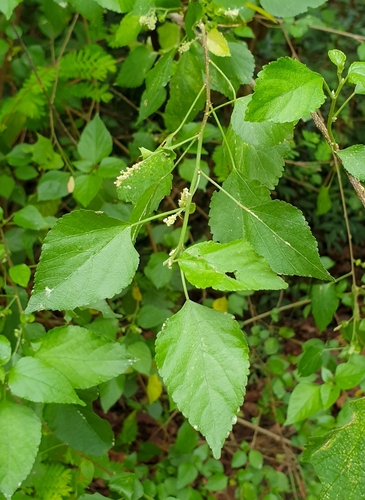
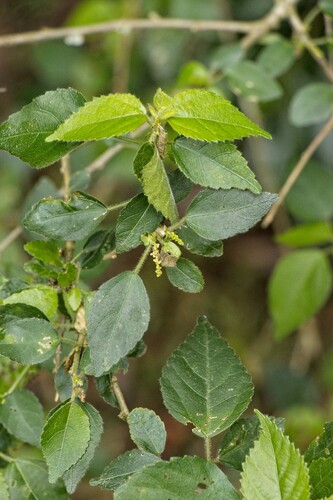
Euphorbia serpyllifolia
Pers.
Thymeleaf sandmat
iNaturalist· cc-by-nc
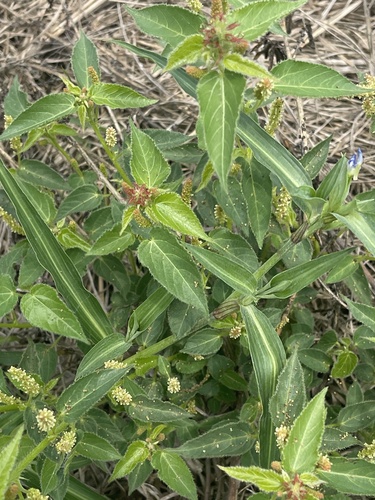
(c) James Mickley, some rights reserved (CC BY-NC)
iNaturalist· cc-by-nc
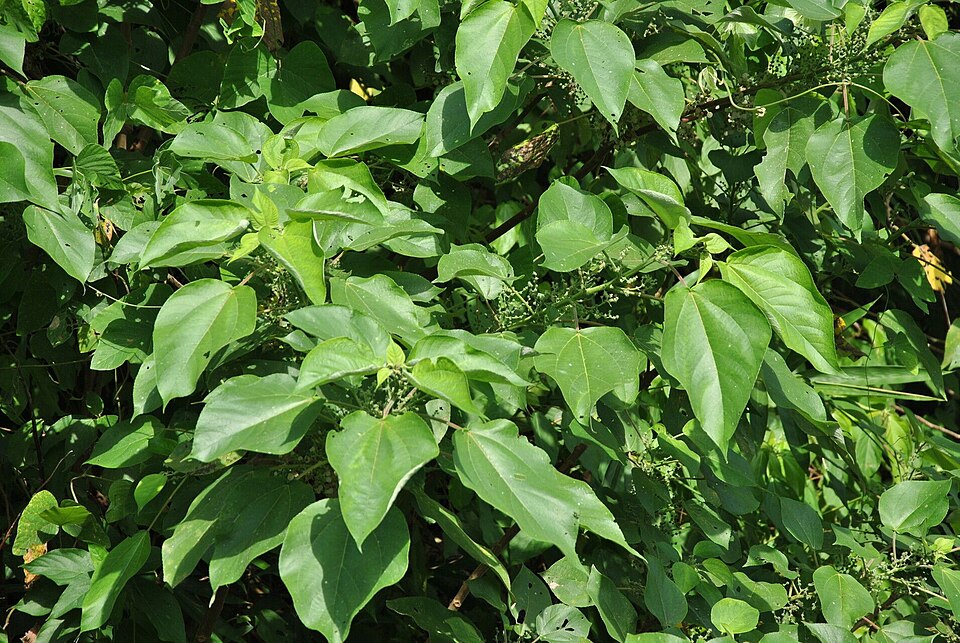
(c) Duncan Bell, some rights reserved (CC BY-NC)
iNaturalist· cc-by-nc
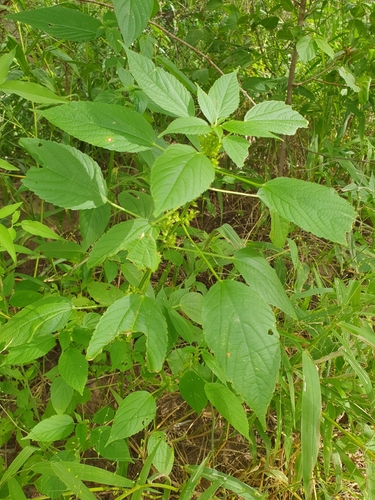
(c) Duncan Bell, some rights reserved (CC BY-NC)
Summary
Source: WikipediaEuphorbia serpyllifolia (Euphorbia serpillifolia) is a species of euphorb known by the common names thymeleaf sandmat or thyme-leafed spurge. It is native to a large part of North America from Canada to Mexico, where it is a common member of the flora in many types of habitat. This is an annual herb growing as a prostrate mat or taking a somewhat erect form. The oblong leaves are up to about 1.5 centimeters long, sometimes hairy and finely toothed along the edges. The tiny inflorescence is a cyathium about a millimeter wide. It bears scalloped white petal-like appendages arranged around the actual flowers. At the center are several male flowers and one female flower, which develops into a lobed, oval fruit up to 2 millimeters wide. This plant had a number of traditional medicinal uses for many Native American groups.
Description
Euphorbia serpyllifolia is a small annual herb growing to 0.3 m tall. Monoecious flowers pollinated by insects. Prefers light sandy or medium loamy, well-drained soils with mildly acidic to mildly alkaline pH. Requires full sun and tolerates dry or moist soil.
Edible Uses
The root is cooked and has a notable traditional use: it is chewed — recorded specifically by women — and mixed with cornmeal to sweeten it. In one account, women kept the root in their mouths for two days, removing it only when eating or sleeping. At the end of that period, as much cornmeal as possible was placed in the mouth and held there without chewing until the build-up of saliva forced ejection of the mass. Saliva enzymes convert starches to sugars, sweetening the cornmeal. The chewed root acts like a yeast preparation and has been used in making cakes. The root can be dried for later use and has also been fermented to make an intoxicating drink. The leaves are used for chewing and have a pleasant taste. All these uses should be approached with caution given the plant's potentially toxic nature.
Traditional Uses
Caution: All Euphorbias or spurges have irritating sap and many have chemicals that can cause cancer.
This uses section is brief — help expand it
Medicinal Uses
Thymeleaf sandmat was used medicinally by a number of Native North American tribes but is not normally used in modern herbalism; any use should be approached with great care due to its potentially toxic nature. A decoction has been used to encourage milk flow in nursing mothers and to treat diarrhoea and stomach aches. Externally, the decoction has been used as a wash for running sores and poison ivy rash. A poultice applied immediately after a rattlesnake bite has been used as a treatment — timing is considered critical to its effectiveness. A poultice of chewed plant has been applied to cuts to stop bleeding, and when heated has been used to treat toothache. Dried leaves rubbed into scratches on the abdomen have been used to treat dysentery and bloating in children. The sap treats warts when applied at least once daily, taking some time to be fully effective.
Known Hazards
The sap contains a latex which is toxic on ingestion and highly irritant externally, causing photosensitive skin reactions and severe inflammation, especially on contact with eyes or open cuts. The toxicity can remain high even in dried plant material. Prolonged and regular contact with the sap is inadvisable because of its carcinogenic nature.
Distribution
It is a subtropical plant. In Argentina it grows below 1,000 m above sea level.
Where It Grows
Argentina, Central America, Mexico, North America, South America, USA,
Cultivation
We have very little information on this species and do not know if it will be hardy in Britain. Other members of the genus prefer a light well-drained moderately rich loam in an open position. Succeeds in dry soils. Hybridizes with other members of this genus. The ripe seed is released explosively from the seed capsules. Members of this genus are rarely if ever troubled by browsing deer or rabbits. This genus has been singled out as a potential source of latex (for making rubber) for the temperate zone, although no individual species has been singled out.
Propagation
Sow seed in spring in situ. Germination usually takes place within 2–3 weeks at 20°C.
Other Uses
None known.
Notes
There are about 2000 Euphorbia species. Most Euphorbias have sap which irritates the skin.
Synonyms
References (2)
- Beckstrom-Sternberg, Stephen M., and James A. Duke. "The Foodplant Database." http://probe.nalusda.gov:8300/cgi-bin/browse/foodplantdb.(ACEDB version 4.0 - data version July 1994)
- Plants for a Future database, The Field, Penpol, Lostwithiel, Cornwall, PL22 0NG, UK. http://www.scs.leeds.ac.uk/pfaf/