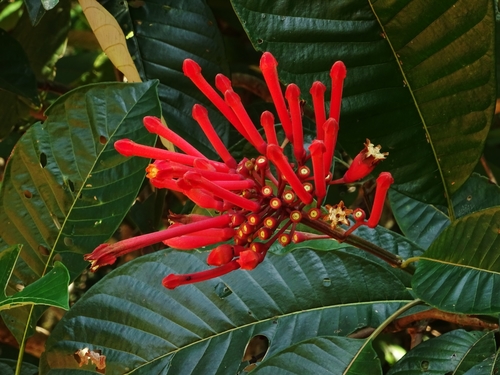
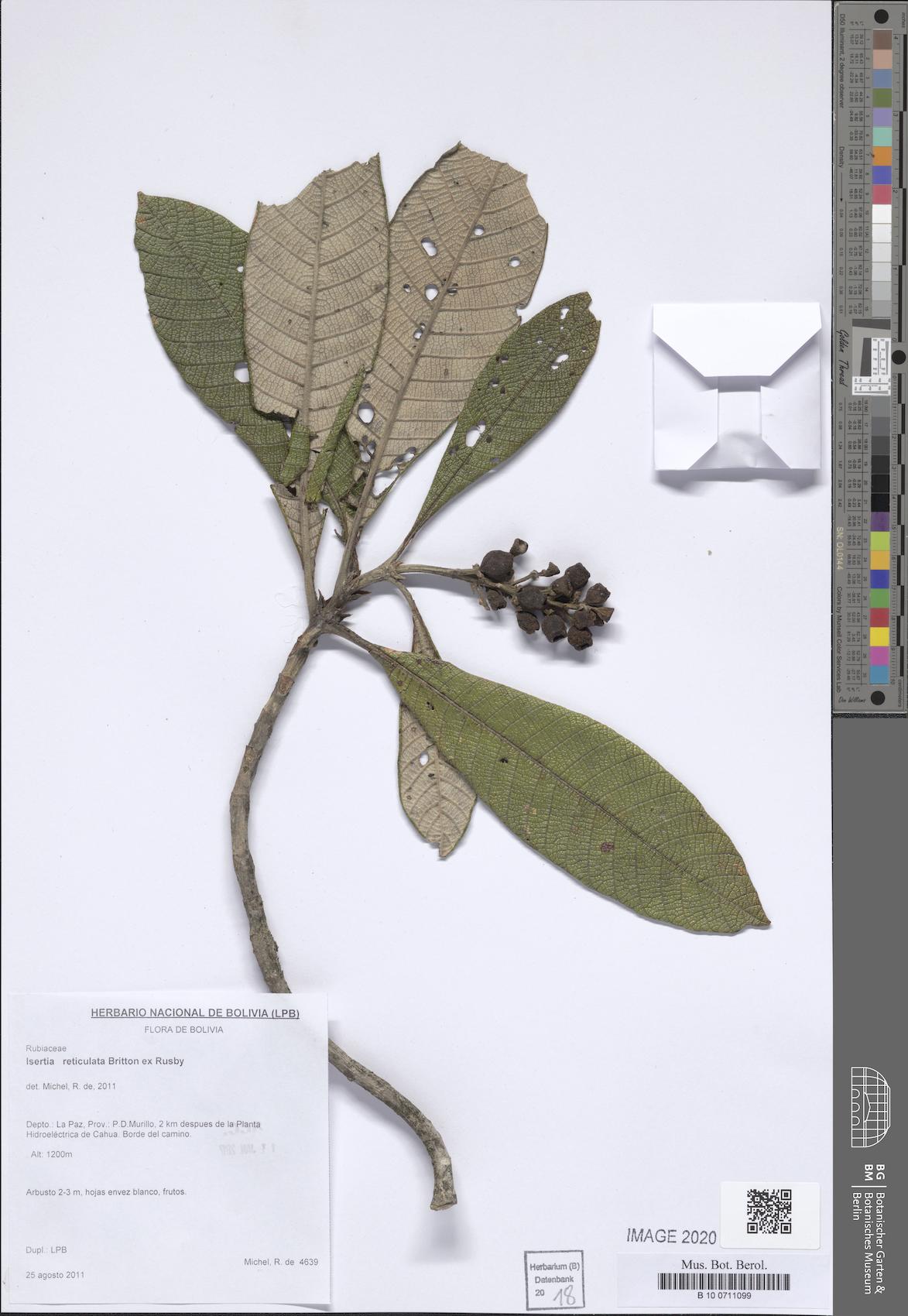
Plectroniella armata
(K. Schum.) Robyns
False turkey berry
iNaturalist· cc-by-nc
(c) setlhare, some rights reserved (CC BY-NC)
iNaturalist· cc-by-nc
(c) setlhare, some rights reserved (CC BY-NC)
iNaturalist· cc-by-nc
(c) setlhare, some rights reserved (CC BY-NC)
Description
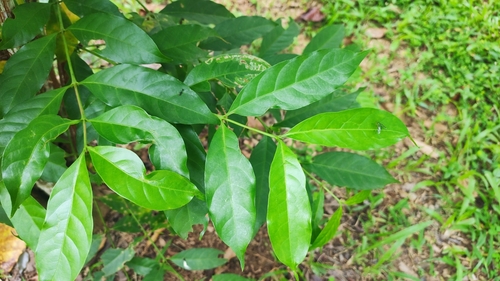
A shrub or small tree. The stems are short and rigid. There are stout spines 1.5 cm long. These are in the axils of leaves and at right angles. The leaves are opposite. The leaf blade is oval or round and 4 cm long and wide. The flowers are in the axils of leaves. They are in loose many flowered clusters. Flowers are bell shaped and white. The fruit are fleshy.
Edible Uses
The fruit is eaten as a snack, and the sap is used for making beer.
Traditional Uses
The sap is used for beer. The fruit is eaten as a snack.
This uses section is brief — help expand it
Distribution
It is a subtropical plant.
Where It Grows
Africa, Botswana, East Africa, Eswatini, Mozambique, South Africa, Southern Africa, Swaziland,
Synonyms
Also Known As
Sangonsango, Umvutfawamini wemahlatsi, Xirole
References (8)
- Cunningham, 1985,
- Long, C., 2005, Swaziland's Flora - siSwati names and Uses http://www.sntc.org.sz/flora/
- Ogle & Grivetti, 1985,
- Peters, C. R., O'Brien, E. M., and Drummond, R.B., 1992, Edible Wild plants of Sub-saharan Africa. Kew. p 173
- Ruiters-Welcome, A. K., 2019, Food plants of southern Africa. Ph.D. thesis. Univ. of Johannesburg p 95
Show all 8 references Hide references
- Schmidt, E., Lotter, M., & McCleland, W., 2007, Trees and shrubs of Mpumalanga and Kruger National Park. Jacana Media p 642
- Swaziland's Flora Database http://www.sntc.org.sz/flora
- Welcome, A. K. & Van Wyk, B.-E., 2019, An inventory and analysis of the food plants of southern Africa. South African Journal of Botany 122 (2019) 136–179