Mussaenda erythrophylla
Schumach. & Thonn.
Red mussaenda
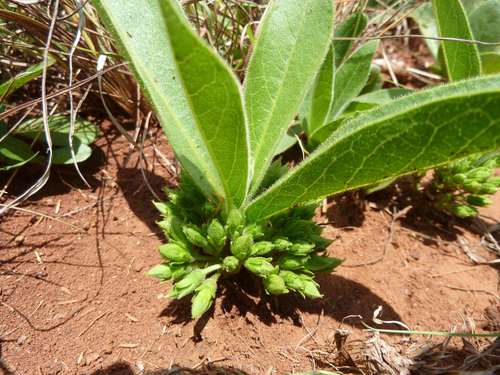
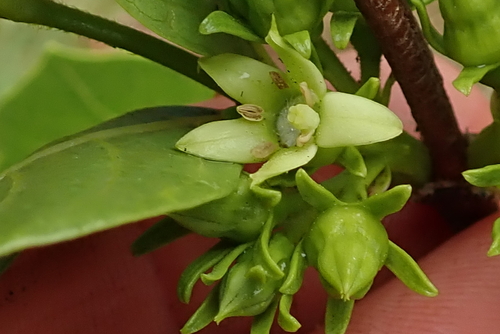
iNaturalist· cc-by-nc
(c) Stefaneakame, some rights reserved (CC BY-NC), uploaded by Stefaneakame
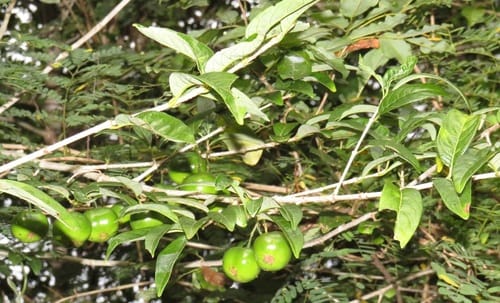
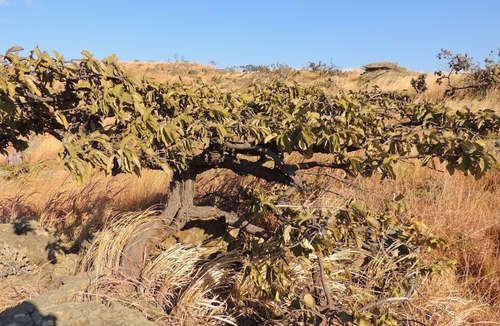
iNaturalist· cc-by-nc-sa
(c) 106611639464075912591, some rights reserved (CC BY-NC-SA), uploaded by 106611639464075912591
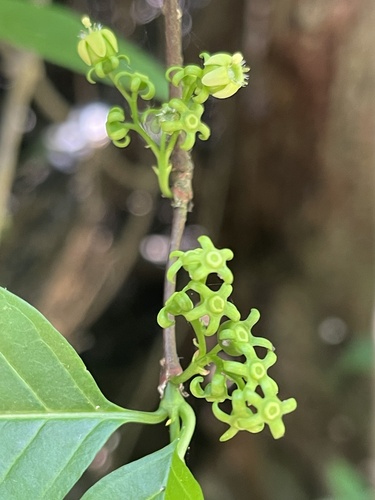
iNaturalist· cc-by-nc-sa
(c) 106611639464075912591, some rights reserved (CC BY-NC-SA), uploaded by 106611639464075912591
Summary
Source: WikipediaMussaenda erythrophylla, commonly known as Ashanti blood, red flag bush and tropical dogwood, is an evergreen West African shrub. The bracts of the shrub may have different shades, including red, rose, white, pale pink or some mixtures. Mussaenda erythrophylla grows best in warmly temperate or subtropical areas and is semideciduous in cooler parts. In its natural habitat the shrub may scramble up to 10 m (33 ft), but is kept compact under cultivation. The star-like flowers of the shrub are 10 mm (0.39 in) in diameter and have a single, modified sepal. The caterpillars of the Commander (Limenitis procris), a brush-footed butterfly, utilize this species as a foodplant.
Description
A straggling shrub or vine. It grows 2-4 m tall. The branches are drooping or climbing. The leaves are narrowly oval. They are 7 cm long by 5 cm wide. The flower petals are yellow to pink with large red sepals. The fruit are oval and hairy.
Edible Uses
The fruit is edible.
Distribution
It is a tropical plant. It grows in light gaps in the forest. In Nigeria it is recorded at 600 and 1,500 m above sea level.
Where It Grows
Africa*, Angola, Asia, Burundi, Cabinda, Central Africa, Central African Republic, CAR, Congo DR, Congo R, Dominican Republic, Equatorial Guinea, Gabon, Ghana, Guinea, Guinée, Haiti, Ivory Coast, Jamaica, Kenya, Liberia, Myanmar, Nauru, Nigeria, Pacific, Puerto Rico, SE Asia, Sierra Leone, Sudan, Tanzania, Togo, Trinidad-Tobago, Uganda, West Africa, West Indies,
Notes
It is probably used in medicine.
Synonyms
Also Known As
Pwintu-ywettu-ahni
References (5)
- Chapman, J. D. & Chapman, H. M., 2001, The Forest Flora of Taraba and Andamawa States, Nigeria. WWF & University of Canterbury. p 198
- Dalziel, 1937,
- Kew Plants of the World Online
- Peters, C. R., O'Brien, E. M., and Drummond, R.B., 1992, Edible Wild plants of Sub-saharan Africa. Kew. p 172
- Plants of Haiti Smithsonian Institute http://botany.si.edu/antilles/West Indies