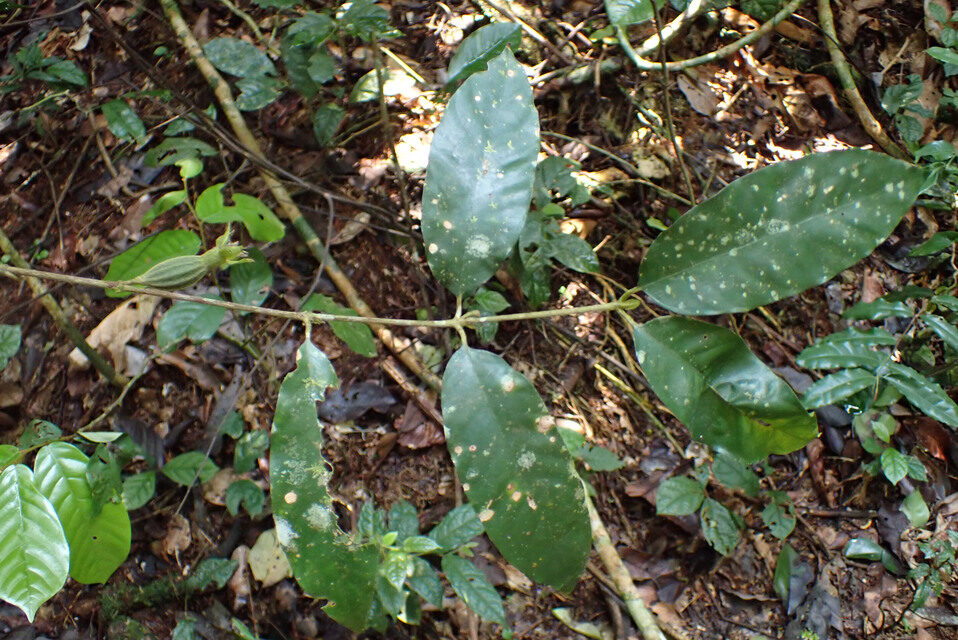
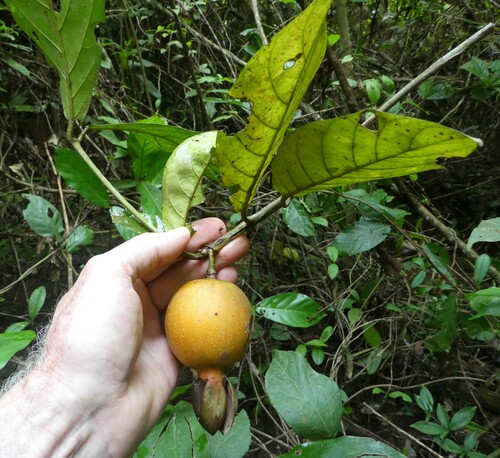
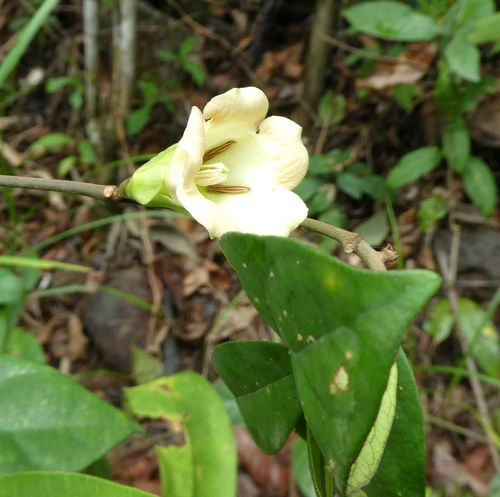
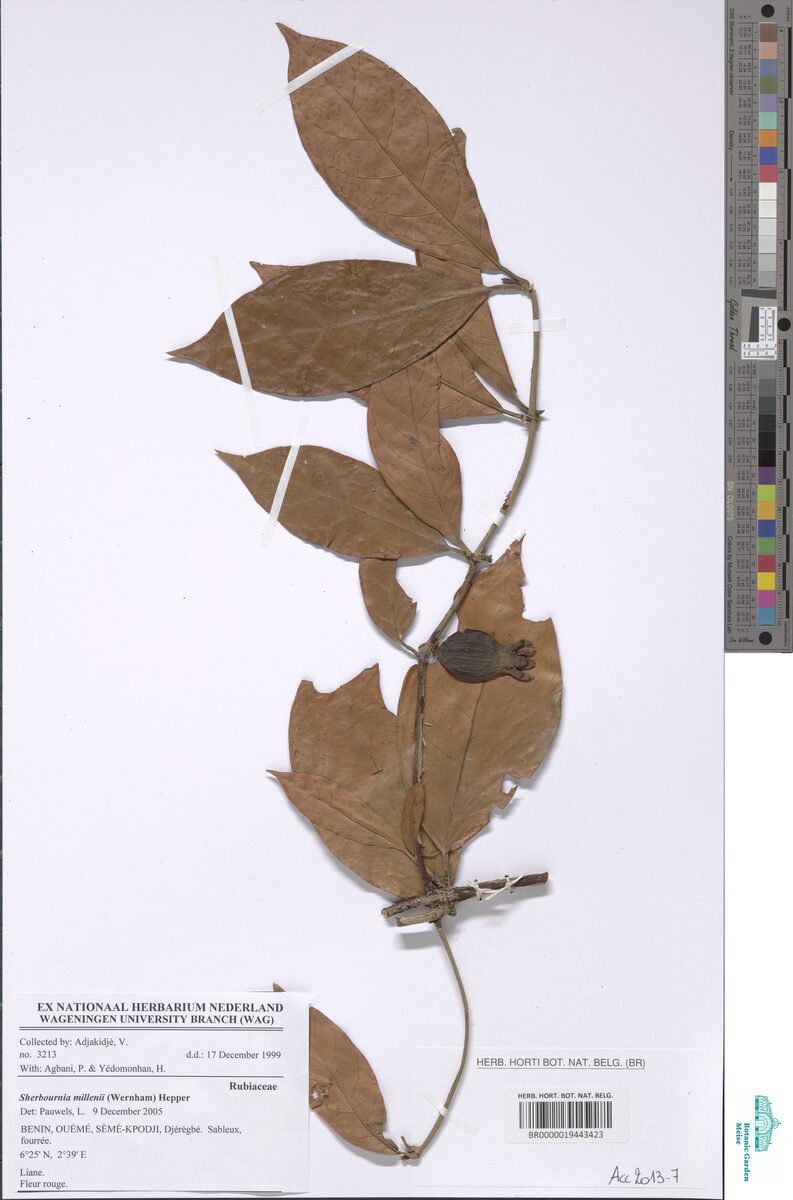
Ceriscoides turgida
(Roxb.) Tirveng
iNaturalist· cc-by-nc
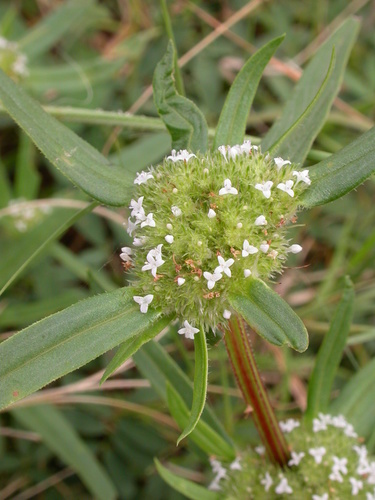
(c) Milind Girdhari, some rights reserved (CC BY-NC), uploaded by Milind Girdhari
iNaturalist· cc-by-nc
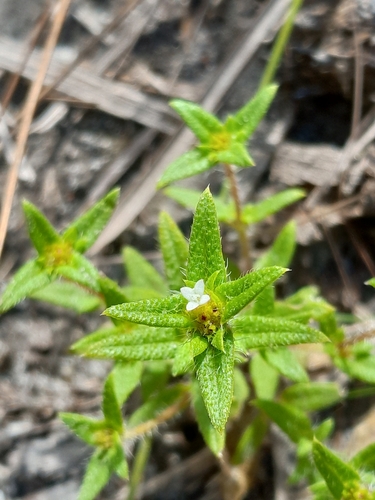
(c) Shiwalee Samant, some rights reserved (CC BY-NC)
Summary
Source: WikipediaCeriscoides turgida (syn. Gardenia turgida), the mountain gardenia, is a species of flowering plant in the family Rubiaceae, native to the Indian Subcontinent and mainland Southeast Asia. A tree reaching 8 m (26 ft), its unripe fruit can be boiled and eaten as a famine food, but its ripe fruit are poisonous.
Description
A shrub or small tree. It grows 8 m tall. It has spines. The leaves are opposite and clasp the stem. The leaves on lower branches are smaller and on higher branches are 4-9 cm long by 2-5 cm wide. They are thick and papery. The flowers have 5 parts. They are white and turn yellow with age. The fruit is a round berry 5 cm long by 4 cm wide. It has many seeds in a fleshy pulp.
Edible Uses
The ripe fruit are eaten fresh or cooked and used as a vegetable.
Traditional Uses
The ripe fruit are eaten. They are cooked and used as a vegetable.
This uses section is brief — help expand it
Medicinal Uses
The plant is used in medicine.
Distribution
A tropical plant. It grows in dry deciduous forests in the Ghats in India.
Where It Grows
Asia, India, Indochina, Laos, Myanmar, SE Asia, Sri Lanka, Thailand,
Production
Plants flower and fruit November to March in India.
Notes
It is used in medicine.
Synonyms
Also Known As
Bengeri, Bomonia, Bootbangari, Dhauuk, Dudri, Ghurgia, Karhar, Karumba, Kharkar, Khurpendra, Madanghanta, Malangarai, Malankara, Manjuda, Pandhara fendra, Peddabikki, Pendra, Tellakokkita, Thanella, Vellakara, Vellakarae, Yerribikki
References (11)
- Ambasta, S.P. (Ed.), 2000, The Useful Plants of India. CSIR India. p 232 (As Gardenia turgida)
- Bull. Mus. Nat. Hist. Nat., Ser. 3, Bot. 35:15. 1978
- Dey, A. & Mukhererjee, A., 2015, Living and Survival Amidst Hunger: Wild Edible Botanicals as a Prime Forestt Productivity in the Rural Purulia District, West Bengal, India from Colonial to Present. Research Journal of Foresttry 9(3): 71-86 (As Gardenia turgida)
- Dobriyal, M. J. R. & Dobriyal, R., 2014, Non Wood Forestt Produce an Option for Ethnic Food and Nutritional Security in India. Int. J. of Usuf. Mngt. 15(1):17-37 (As Gardenia campanulata)
- Fl. ind. 2:557. 1824 (As Gardenia turgida)
Show all 11 references Hide references
- Pandey, K. C. & Pande, N., 2016, Ethnobotanical Documentation of Wild Edible Plants used by Gujjar Community of Tarai West Forest Division Ramnagar, Nainital, India, Current World Environment. Vol. 11(3), 808-818
- Ramachandran, V.S. and Nair, V.J., 1981, Ethnobotanical studies in Cannanore District, Kerala State (India). J Econ. Tax. Bot. Vol 2 pp 65-72
- Reddy, K. N. et al, 2007, Traditional knowledge on wild food plants in Andhra Pradesh. Indian Journal of Traditional Knowledge. Vol. 6(1): 223-229
- Setiya, A. V., et al, 2016, Exploration and documentation of some wild edible plants used by the aboriginals from Gadchiroli District (M.S.) India. International Advanced Research Journal in Science, Engineering and Technology. 3(7)
- Singh, H.B., Arora R.K.,1978, Wild edible Plants of India. Indian Council of Agricultural Research, New Delhi. p 76 (As Gardenia turgida)
- Yadav, D. K., 2011, Study on Biodiversity and Edible Bioresources of Betla National Park, Palamu, Jharkhand (India). The 2011 Las Vegas International Academic Conference.