Milicia regia
(A. Chev.) C. C. Berg
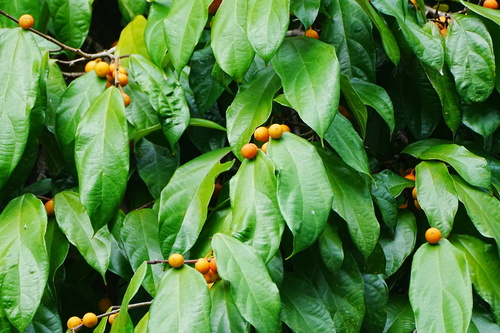
iNaturalist· cc-by-nc
(c) Janet Farnworth, some rights reserved (CC BY-NC), uploaded by Janet Farnworth
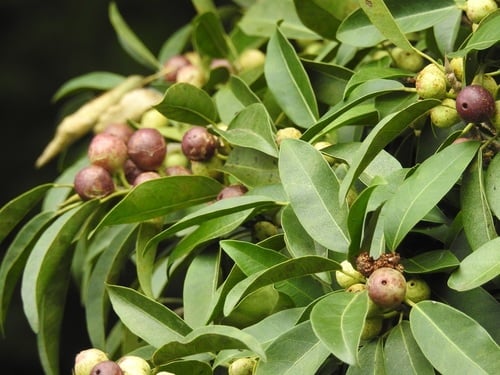
iNaturalist· cc-by-nc
(c) Carel Jongkind, some rights reserved (CC BY-NC)
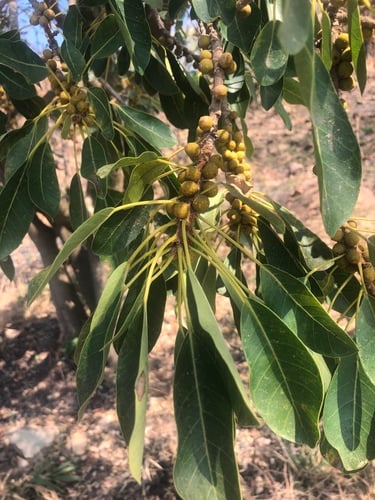
iNaturalist· cc-by-nc
(c) Carel Jongkind, some rights reserved (CC BY-NC)
Summary
Source: WikipediaMilicia regia is a species of tropical tree in the family Moraceae. It grows in a belt on the west coast of Africa that extends from the Gambia to Ghana. It is threatened by habitat loss and logging.
Description
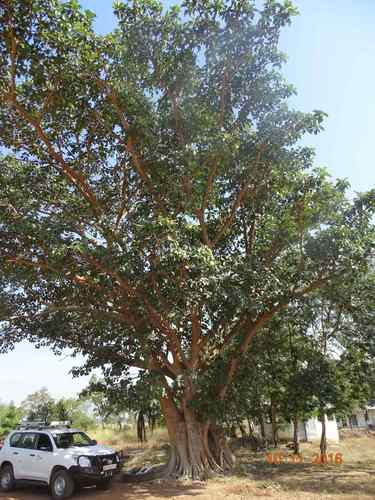
It is fairly similar to Milicia excelsa. It is a large tree. It grows 35 m tall. The trunk is straight and cylinder shaped. It is 2 m across. It loses its leaves during the year. The leaves are arrange in 2 rows and are alternate. The leaf blade is oval and 4-20 cm long by 3-14 cm wide. The leaf base is heart shaped and often unequal. The edges can be wavy and with a few teeth near the tip. There are many flowers in long rows with bracts in rows between them. Male and female flowers are on separate trees. The fruit is dry and has one seed.
Edible Uses
The fruit is eaten raw. It consists of a number of achenes each 2.5–3mm long, arranged in an infructescence 5–8cm long and 1.2–2cm wide, with each achene containing a pale brown seed about 2mm long.
Medicinal Uses
The latex is credited with antiseptic and healing properties and is applied externally to wounds and burns. Other plant parts are believed to have similar medicinal uses to those of Milicia excelsa: a root decoction is taken for female sterility; a decoction of the root and stem bark serves as an aphrodisiac; the bark is aphrodisiac, galactagogue, purgative, and tonic, used for cough, asthma, heart trouble, lumbago, spleen pain, stomach pain, abdominal pain, oedema, ascites, dysmenorrhoea, gonorrhoea, general fatigue, rheumatism, and sprains. Bark preparations applied externally treat scabies, wounds, hair loss, fever, venereal diseases, and sprains, and are also administered as an enema for piles, diarrhoea, and dysentery. The latex is considered galactagogue and is taken for stomach problems, hypertension, tumours, and throat obstructions; externally it treats burns, wounds, sores, eczema, and other skin conditions. The leaves are galactagogue; eaten to treat insanity, and a leaf decoction is taken for gallstones. Externally, leaf preparations treat snakebites and fever, and are used as eye drops for filariasis.
Known Hazards
The wood and sawdust may cause dermatitis, irritation to nose and throat, and asthmatic reactions
Distribution
A tropical plant. It grows in tropical West Africa. It grows in the lowlands in rainforest. It is often in forests along rivers. It suits humid locations.
Where It Grows
Africa, Côte d'Ivoire, Gambia, Ghana, Guinea, Guinée, Guinea-Bissau, Ivory Coast, Liberia, Nigeria, Senegal, Sierra Leone, South Africa, Southern Africa, West Africa,
Cultivation
Plants are grown from seed. Seeds can be planted in a nursery and then transplanted. They are ready for transplanting 4 months after germination. Plants can also be grown from stem cuttings and root cuttings. They can be grown by layering or grafting.
Propagation
Sow seed as soon as it is ripe in a sunny nursery seedbed. High germination rates can be expected, with sprouting occurring within 14–28 days. When seedlings reach 5–6cm tall, pot them into individual containers; they should be ready to plant out around 4 months later. Stem cuttings give a good success rate, as do root cuttings. Layering and grafting are also suitable propagation methods.
Other Uses
The bark is used to dye leather and cloth. A white latex exudes from the bark and is used as a glue; it has also been used as an adulterant in rubber. The heartwood is pale yellow to brown, darkening on exposure, clearly demarcated from a 50–75mm wide band of paler sapwood. The grain is interlocked with a medium to coarse texture; the wood has a strong mint-like odour and a slightly oily feel. It is of medium weight, moderately hard, and durable, being resistant to fungi, dry wood borers, and termites. The wood seasons well without warping or splitting, with little movement in service. It is easy to saw and work with hand and machine tools, though hard calcium carbonate deposits ('iroko stones') can blunt cutting edges, and interlocked grain may cause tearing in planing, which can be avoided by using cutting angles of 15° or less. The wood holds nails well, though nailing may cause some splitting. It finishes well with filler and glues easily. Used for construction, shipbuilding, marine carpentry, sleepers, sluice gates, framework, trucks, draining boards, joinery, stairs, doors, frames, garden furniture, cabinet work, panelling, flooring, and decorative profile boards. Also used for carving, domestic utensils, musical instruments, and toys. Its resistance to acids and bases makes it suitable for food and chemical tanks and barrels and for laboratory benches. Used as sliced veneer but rarely as rotary veneer, and also used for fuel and charcoal production.
Other Information
Fruit are sometimes sold in markets.
Synonyms
Also Known As
Binam-ne, Cunde, Iroko, Kambala, Odum, Odum-nua, Po-de-bicho-amarelo, Po-de-bicho-risso, Po-de-sinsa, Semei, Time, Tumbiro, Tumbu-suro
References (7)
- Abbiw, D.K., 1990, Useful Plants of Ghana. West African uses of wild and cultivated plants. Intermediate Technology Publications and the Royal Botanic Gardens, Kew. p 46 (Also as Chlorophora regia)
- Bull. Soc. Bot. France 58. 1911 (As Chlorophora regia)
- Bull. Jard. Bot. Belg. 52:227. 1982
- Etherington, K., & Imwold, D., (Eds), 2001, Botanica's Trees & Shrubs. The illustrated A-Z of over 8500 trees and shrubs. Random House, Australia. p 480
- Jardin, C., 1970, List of Foods Used In Africa, FAO Nutrition Information Document Series No 2.p 126 (As Chlorophora regia)
Show all 7 references Hide references
- Ofori, D.A., 2007. Milicia regia (A.Chev.) C.C.Berg. [Internet] Record from Protabase. Louppe, D., Oteng-Amoako, A.A. & Brink, M. (Editors). PROTA (Plant Resources of Tropical Africa), Wageningen, Netherlands. < http://database.prota.org/search.htm>. Accessed 19 October 2009.
- World Checklist of Useful Plant Species 2020. Royal Botanic Gardens, Kew