Morus bombycis
Koidz.
Kuwa
gbif· cc-by
Royal Botanic Gardens, Kew
gbif· cc-by
Royal Botanic Gardens, Kew
gbif· cc-by
Royal Botanic Gardens, Kew
Description
Morus bombycis is a deciduous Tree growing to 8 m (26ft) by 6 m (19ft). See above for USDA hardiness. It is hardy to UK zone 6. The species is monoecious (individual flowers are either male or female, but both sexes can be found on the same plant). The plant is self-fertile. Suitable for: light (sandy), medium (loamy) and heavy (clay) soils and prefers well-drained soil. Suitable pH: mildly acid, neutral and basic (mildly alkaline) soils. It can grow in semi-shade (light woodland) or no shade. It prefers moist soil.
Edible Uses
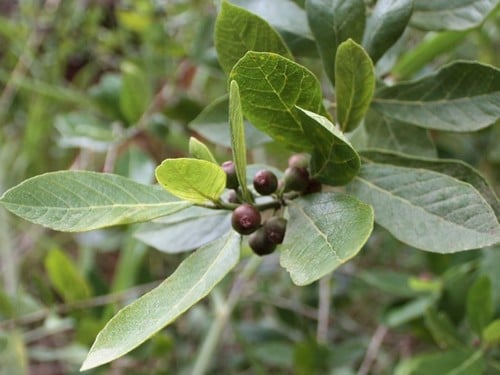
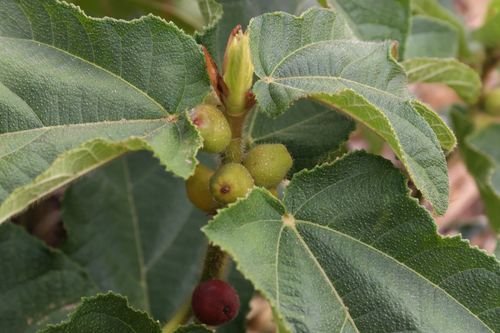
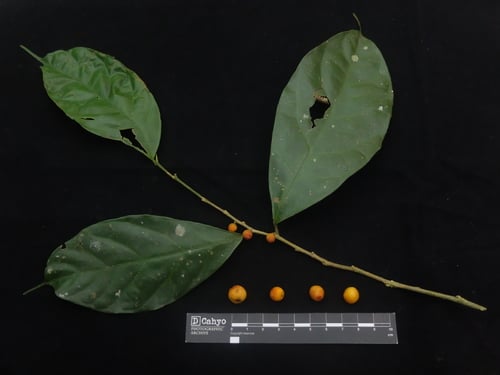
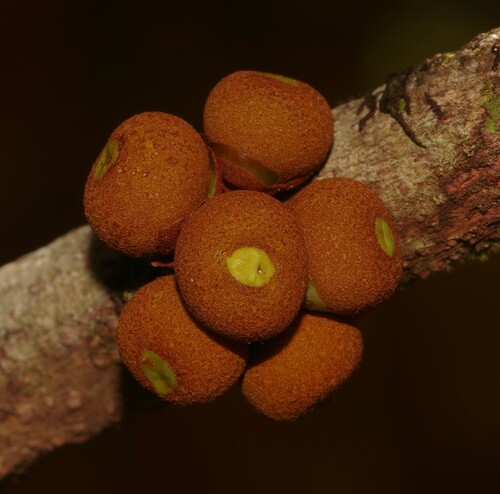
Fruit - raw or used in preserves. The fruit is about 1cm in diameter.
Medicinal Uses
Diuretic Pectoral. The root bark is diuretic and pectoral. A decoction is used in the treatment of 'hot' pulmonary coughing, asthma, excessive sputum production, oedematous face and difficult urination.
Distribution
E. Asia - Japan.
Where It Grows
TEMPERATE ASIA: Russian Federation (Sakhalin (south)), China (Anhui Sheng, Fujian Sheng, Gansu Sheng, Guangdong Sheng, Guangxi Zhuangzu Zizhiqu, Hainan Sheng, Hebei Sheng, Henan Sheng, Hubei Sheng, Hunan Sheng, Jiangsu Sheng, Jiangxi Sheng, Liaoning Sheng, Shaanxi Sheng, Shandong Sheng, Shanxi Sheng, Sichuan Sheng, Xizang Zizhiqu (southeast), Yunnan Sheng, Zhejiang Sheng), Korea, Japan (Hokkaidô, Honshu, Kyushu, Ryukyu Islands, Shikoku), Taiwan TROPICAL ASIA: Bhutan, India (north), Nepal, Myanmar
Cultivation
Prefers a warm well-drained loamy soil in a sunny position. There is some doubt over the validity of this name. lists it as a synonym of M. alba stylosa (which we list as a synonym of M. australis) whilst lists it as a synonym of M. alba. A plant seen at Hilliers Arboretum, Hampshire at the end of October 1996 seemed to be quite distinct from M. alba - it was still clothed in the lush green growth of early summer and was also still making new growth. According to the Flora of China, this name is only a synonym for M. australis, though we are maintaining it as a separate species for the time being because we have seen specimens growing at Hilliers Arboretum that appear to be distinct. Mulberries have brittle roots and so need to be handled with care when planting them out. Any pruning should only be carried out in the winter when the plant is fully dormant because mulberries bleed badly when cut. Ideally prune only badly placed branches and dead wood. Plants in this genus are notably resistant to honey fungus.
Propagation
The seed germinates best if given 2 - 3 months cold stratification. Sow the seed as soon as it is ripe if possible, otherwise in February in a cold frame. The seed usually germinates in the first spring, though it sometimes takes another 12 months. Prick out the seedlings into individual pots when they are large enough to handle and grow them on in the cold frame for their first winter. Plant them out in late spring or early summer after the last expected frosts. Cuttings of half-ripe wood, 7 - 10cm with a heel, July/August in a frame. Plant out in spring. A good percentage take, though they sometimes fail to thrive. Cuttings of mature wood of the current season's growth, 25 - 30cm with a heel of 2 year old wood, autumn or early spring in a cold frame or a shady bed outside. Bury the cuttings to threequarters of their depth. Layering in autumn.
Other Uses
Fibre. The bark fibers are used for making paper.