Erica cerinthoides
L.
iNaturalist· cc-by-nc
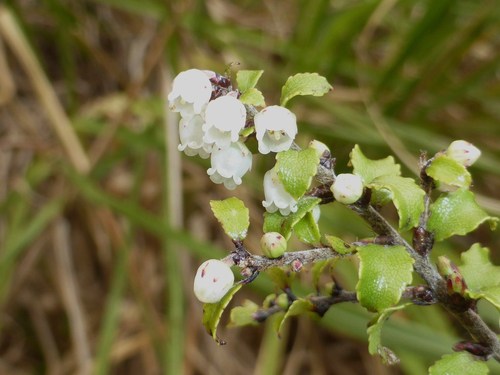
(c) Albertus(Bertie), some rights reserved (CC BY-NC), uploaded by Albertus(Bertie)
iNaturalist· cc-by-nc
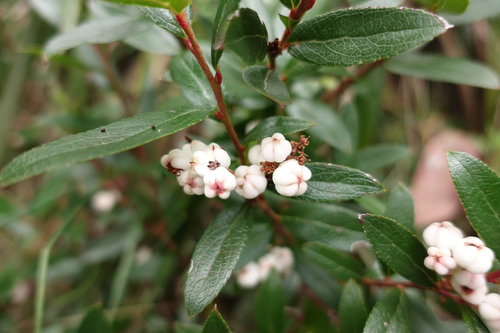
(c) David Maphisa, some rights reserved (CC BY-NC), uploaded by David Maphisa
iNaturalist· cc-by-nc
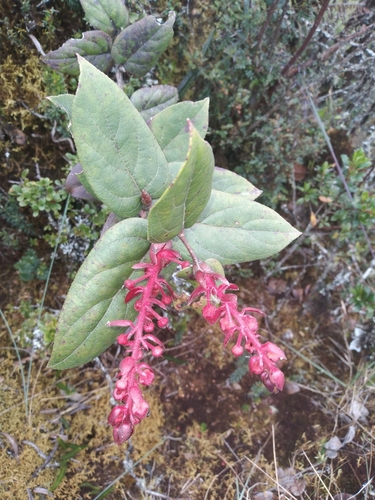
(c) Albertus(Bertie), some rights reserved (CC BY-NC), uploaded by Albertus(Bertie)
Summary
Source: WikipediaErica cerinthoides is a species of heath native to South Africa (the Cape Provinces, the Free State, KwaZulu-Natal, the Northern Provinces), Lesotho and Eswatini. Common names include fire erica, fire heath, red hairy heath, rooihaartjie or klipheide. Throughout its range the species shows marked variation in habit, flower characteristics and hairiness. A form with white flowers is found in Eswatini and the South African province of Mpumalanga while the variety E. cerinthoides var. barbertona has shorter flowers.
Description
A shrub. It has a woody base and stems up to 30 cm high. The leaves are about 5 mm long. The flowers are in close clusters at the ends of the branches. The flower tubes are 3.5 cm long. They are usually white and spread slightly at the ends.
Edible Uses
The flowers produce abundant sweet nectar and can be sucked directly for it.
Traditional Uses
The nectar of the flower is sucked.
This uses section is brief — help expand it
Medicinal Uses
None known.
Distribution
It is a subtropical plant. In Swaziland it is in the high veld only.
Where It Grows
Africa, Eswatini, South Africa, Southern Africa, Swaziland,
Cultivation
Requires a light lime-free loam. A calcifuge plant, requiring a pH below 6. Grows best in a poor soil. Prefers an open situation. This species is unlikely to be hardy in Britain. One report suggests that it can be grown in the milder areas, but another says that it is not frost-tolerant. In the wild the plant is often burnt down in fires, resprouting from the base. Indeed, this regular burning keeps the plant healthy and, in cultivation, it is advisable to prune the plant back hard each year and to dress it with a light dressing of bonfire soil. A good bee plant. Plants in this genus are notably resistant to honey fungus.
Propagation
Seed should be surface-sown in a sandy compost in a cold frame in spring and kept moist. Prick out seedlings as soon as they are large enough to handle and plant them in their permanent positions when 5–8 cm tall. Cuttings of half-ripe wood, 3 cm long, taken from twiggy lateral growths near the base of the plant in July or August, can be rooted in a frame. Remove leaves from the lower stem without damaging the bark. The cuttings root within a few weeks with some bottom heat, and can be planted out in spring. Layering can be done in spring or autumn. Plants can also be dropped — dug up and replanted 15–20 cm deeper to encourage rooting along the stems — then dug up and divided 6–12 months later.
Other Uses
The plant is fire-resistant.
Other Information
It is eaten especially by children.
References (5)
- Guillarmod, J., 1971,
- Peters, C. R., O'Brien, E. M., and Drummond, R.B., 1992, Edible Wild plants of Sub-saharan Africa. Kew. p 105
- Ruiters-Welcome, A. K., 2019, Food plants of southern Africa. Ph.D. thesis. Univ. of Johannesburg p 53
- Swaziland's Flora Database http://www.sntc.org.sz/flora
- Welcome, A. K. & Van Wyk, B.-E., 2019, An inventory and analysis of the food plants of southern Africa. South African Journal of Botany 122 (2019) 136–179