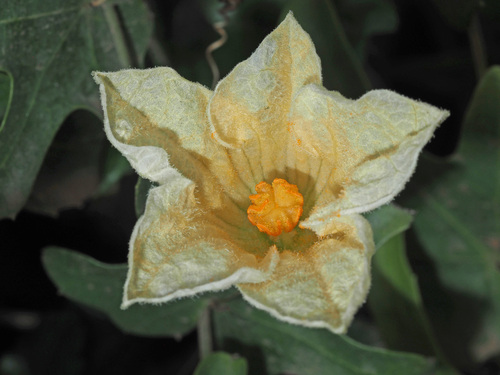
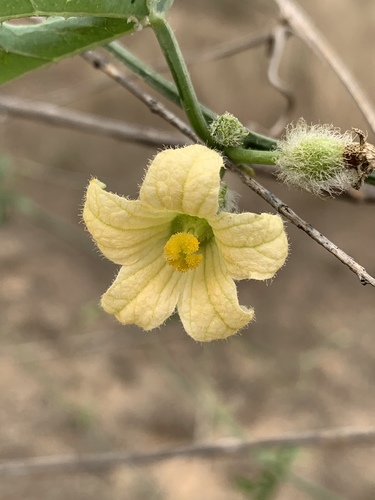
Lagenaria breviflora
(Benth.) G. Roberty
iNaturalist· cc0
no rights reserved
iNaturalist· cc-by-nc
(c) vdeboutte, some rights reserved (CC BY-NC)
Summary
Source: WikipediaLagenaria breviflora is a species of flowering plant. It is a climbing vine that is found across Central Africa, East Africa, and West Africa.
Description
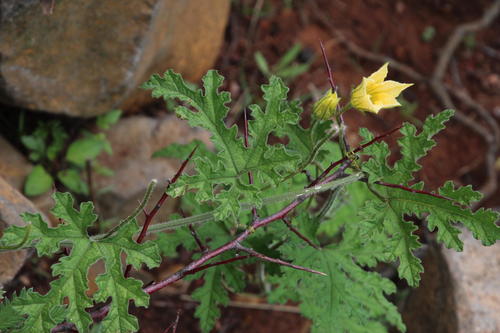
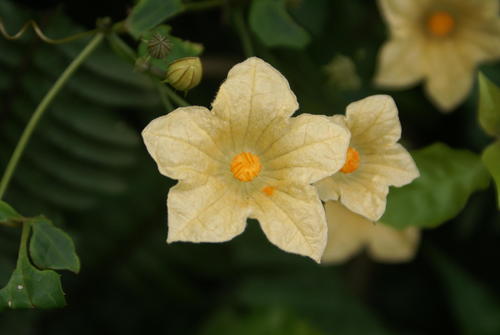
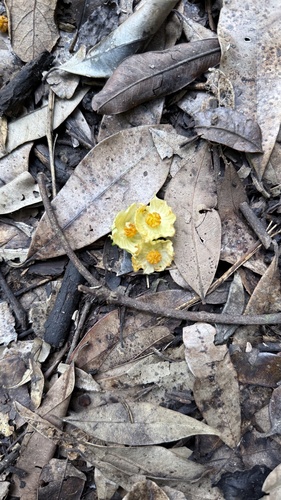
A climbing herb in the pumpkin family. It keeps growing from year to year. It produces stems each year. These are 6 m long. It can have hairs. The leaf blade is 8-20 cm long by 6-23 cm wide. It is broadly oval and heart shaped at the base. It is glossy green above and paler underneath. The leaves have 3-5 lobes. There are teeth along the edge. Male and female flowers are separate. The fruit are 8-10 cm long by 3 cm wide. They are smooth and glossy. They are dark green with white spots. The seeds are 9-12 mm long by 2 mm wide.
Edible Uses
The leaves are eaten as a vegetable.
Medicinal Uses
The stem when broken has an unpleasant smell, and a decoction from it is said to be used in the treatment of headaches. The root is used as a purgative and vermifuge The fruit is extremely bitter and contains a strong amount of alkaloids. It is used as a cathartic.
Distribution
It is a tropical plant. It grows in forest and along rivers. It grows up to 1,200 m altitude.
Where It Grows
Africa, Angola, Benin, Brazil, Central Africa, Congo, East Africa, Guinea, Guinée, Guinea-Bissau, Malawi, Nigeria, Mozambique, Sao Tome and Principe, Sierra Leone, Southern Africa, Sudan, Tanzania, West Africa, Zambia, Zimbabwe,
Notes
This is very similar to Lagenaria sphaerica.
Synonyms
Also Known As
Mamar-di-katur
References (5)
- Dansi, A., et al, 2008, Traditional leafy vegetables and their use in the Benin Republic. Genet Resour Crop Evol (2008) 55:1239–1256
- East African Herbarium records, 1981,
- Flora Zambesiaca. http://apps.kew.org/efloras
- Fowler, D. G., 2007, Zambian Plants: Their Vernacular Names and Uses. Kew. p 79
- Peters, C. R., O'Brien, E. M., and Drummond, R.B., 1992, Edible Wild plants of Sub-saharan Africa. Kew. p 101