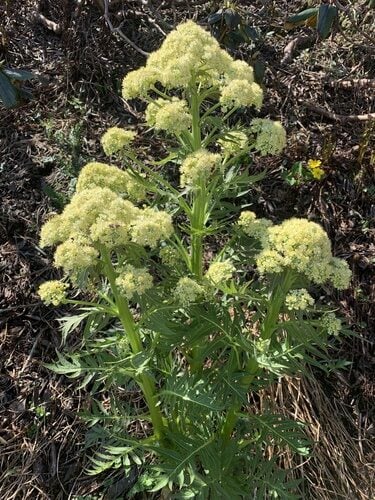
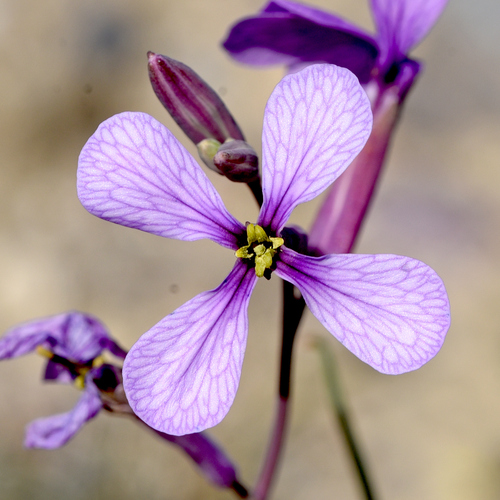
Lepidium latifolium
L.
Dittander, Broadleaved pepperweed
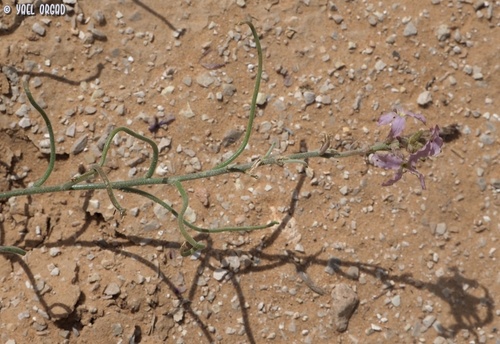
iNaturalist· cc-by-nc
(c) ksenia_gks, some rights reserved (CC BY-NC), uploaded by ksenia_gks
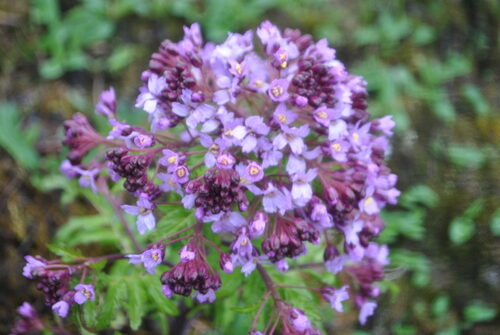
iNaturalist· cc-by-nc
(c) schizotypalvamp, some rights reserved (CC BY-NC), uploaded by schizotypalvamp
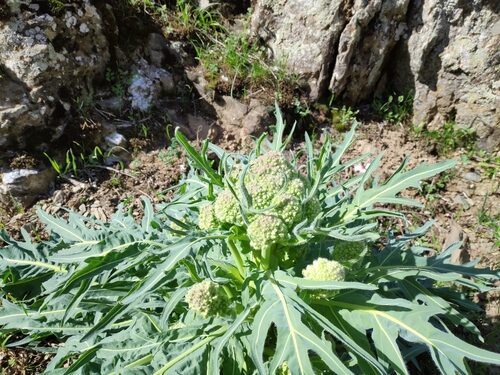
iNaturalist· cc-by-nc-sa
(c) Jenn Forman Orth, some rights reserved (CC BY-NC-SA)
Description
Lepidium latifolium is a PERENNIAL growing to 1.2 m (4ft) by 1 m (3ft 3in). See above for USDA hardiness. It is hardy to UK zone 6 and is not frost tender. It is in flower from June to July, and the seeds ripen from July to August. The species is hermaphrodite (has both male and female organs) and is pollinated by Insects. Suitable for: light (sandy), medium (loamy) and heavy (clay) soils. Suitable pH: mildly acid, neutral and basic (mildly alkaline) soils and can grow in saline soils. It can grow in semi-shade (light woodland) or no shade. It prefers moist soil. The plant can tolerate maritime exposure.
Edible Uses
Condiment. Young leaves - raw or cooked. A very hot cress-like flavour. The leaves are nice when used in small quantities as a flavouring in salads. Some reports also suggest using them as a potherb, though they have always seemed to be too strong for us to want to try this. The leaves are available very early in the year. Root - it can be grated and made into a sauce which is used as a horseradish substitute. It has a pungently hot flavour. Seed - used as a condiment.
Medicinal Uses
Antiscorbutic Depurative Hepatic Kidney Resolvent Stomachic. The plant is antiscorbutic, depurative and stomachic. An infusion of the plant is used in the treatment of liver and kidney diseases, it increases cardiac amplitude, decreases frequency and regulates the rhythm. It is also used as a resolvent in the treatment of skin diseases.
Distribution
Europe, including Britain, from Scandanavia south and east to N. Africa and W. Asia.
Where It Grows
TEMPERATE ASIA: Afghanistan, Cyprus, Iran, Iraq, Israel, Jordan, Lebanon, Syria, Turkey, Russian Federation-Ciscaucasia (Ciscaucasia), Azerbaijan, Russian Federation (Dagestan), Russian Federation (Gorno-Altay, Altay, Krasnoyarsk (south), Irkutsk (south), Kurganskaja oblast, Novosibirsk, Omsk, Tyumen (south)), Kazakhstan, Kyrgyzstan, Tajikistan, Turkmenistan, Uzbekistan, Mongolia, China (Gansu Sheng, Hebei Sheng, Heilongjiang Sheng, Henan Sheng, Liaoning Sheng, Nei Mongol Zizhiqu, Ningxia Huizi Zizhiqu, Qinghai Sheng, Shaanxi Sheng, Shandong Sheng, Shanxi Sheng, Sichuan Sheng, Xinjiang Uygur Zizhiqu, Xizang Zizhiqu) TROPICAL ASIA: India (Himachal Pradesh, Jammu and Kashmir), Pakistan (north) EUROPE: Denmark, United Kingdom, Sweden (south), Russian Federation-European part (European part (south)), Ukraine (incl. Krym), Albania, Bulgaria, Greece, Italy (incl. Sardinia, Sicily), North Macedonia, Romania, Spain, France (incl. Corsica), Portugal AFRICA: Algeria (north), Egypt (north), Morocco
Cultivation
A very easily grown plant, it succeeds in most soils in sun or light shade. Plants have been surviving quite happily with us, and are still spreading freely, in dense grass that is rarely cut. Dittander was formerly cultivated as a food condiment in Britain and in ancient Greece. It is a very invasive plant, capable of spreading more than a metre per year by means of its aggressive root system. It produces new growth early in the year and so can be a useful salad ingredient in late winter.
Propagation
Seed - sow spring in a cold frame. When they are large enough to handle, prick the seedlings out into individual pots and plant them out in the spring. Division in spring. Plant them out direct into their permanent positions. Division is very simple and succeeds at almost any time of the year.
Other Uses
Insecticide. Used as an insecticide. No further details are given, but it is likely to be a strong infusion of the leaves and stems that is used.