Mikania cordata
(Burm. f.) B. L. Robinson
Climbing hemp-weed
iNaturalist· cc-by-nc-sa
(c) 石川 Shihchuan, some rights reserved (CC BY-NC-SA)
iNaturalist· cc-by-nc
(c) Chun-yeh Huang, some rights reserved (CC BY-NC)
Summary
Source: WikipediaMikania cordata, the African mile-a-minute or heartleaf hempvine, is a species of flowering plant in the family Asteraceae, disjunctly distributed across the Old World Tropics. A perennial twining vine reaching 10 m (33 ft) long, it grows in thickets and forests at elevations from 100 to 1,700 m (300 to 5,600 ft), at least in China. It is a rapidly-growing climber that suppresses the growth of other plants (including kudzu) and is considered a more dangerous noxious weed than Mikania micrantha. Local peoples occasionally consume its leaves and use it for erosion control.
Description
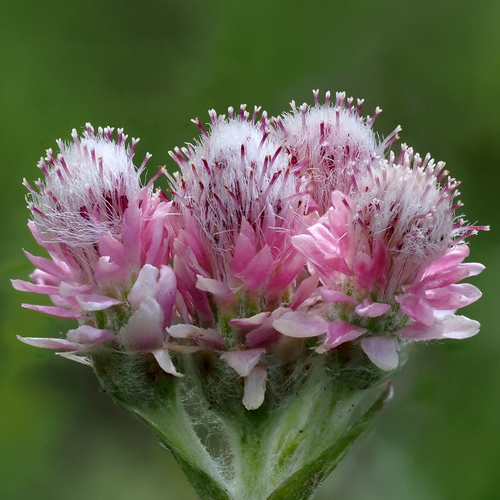
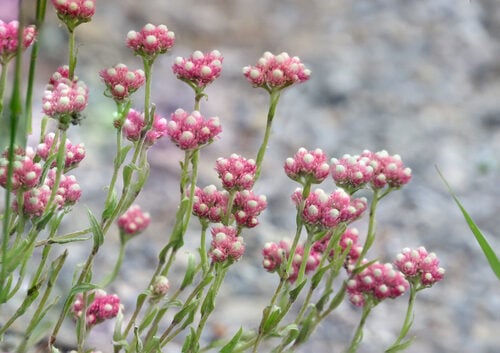
A climber or vine. It grows 8-15 m high. It keeps growing from year to year. The leaves are opposite. The base of the leaf is heart shaped. There can be teeth along the edge of the leaf. The leaves are 8 cm wide. The flowers are pale pink or white. They are in a cluster at a head. The fruit are greenish-white.
Edible Uses
The leaves are cooked in soups.
Traditional Uses
The leaves are cooked in soups.
This uses section is brief — help expand it
Medicinal Uses
A decoction of the leaves is used in the treatment of coughs. The leaves are used as a poultice for swellings, itches and wounds. They are used as a cure for snake and scorpion bites. The leaf juice is used as a remedy for sore eyes. An infusion of plant is used in the treatment of affections of the stomach and intestines, including gastric ulcers. The root is adaptogenic, anti-inflammatory and hepatoprotective.
Distribution
It is a tropical plant. It grows in waste places and old re-growth. In Malawi it grows between 650-1,900 m altitude. It can be in savannah woodland and palm groves. It can be in flooded rice fields. In Yunnan.
Where It Grows
Africa, Asia, Bangladesh, Cambodia, Central Africa, China, Congo DR, Côte d'Ivoire, East Africa, Gambia, Guinea, Guinée, Guinea-Bissau, Indochina, Indonesia, Ivory Coast, Laos, Malawi, Malaysia, New Guinea, Nigeria, Pacific, Philippines, SE Asia, Senegal, Sierra Leone, Solomon Islands, South Africa, Southern Africa, Sri Lanka, Taiwan, Thailand, Vietnam, West Africa,
Cultivation
A plant of the moist tropics, where it is found at elevations up to 2,000 metres. It grows best in areas where annual daytime temperatures are within the range 22 - 28°c, but can tolerate 13 - 38°c. It prefers a mean annual rainfall in the range 2,000 - 2,500mm, but tolerates 1,500 - 3,500mm. Grows best in full sun but tolerates light shade. Succeeds in a range of soils of moderate fertility. Prefers a rich, damp soil. Prefers a pH in the range 4.5 - 5.5, tolerating 4 - 7. The plant can become a devastating weed in crops of tea, coconut, rubber, oil palm, coffee, bananas and sugar cane, and can smother leguminous cover crops. It has been reported from Malaysia that the plant contains phenolic or flavonoid substances that inhibit the growth of rubber, tomato and tropical kudzu (Pueraria phaseoloides (Roxb.) Benth.), and also depress nitrification in soils. It requires an open sunny position, however, and although it may even be found under closed canopies of 4 - 5 year-old rubber and oil palm, it is markedly etiolated with little vigour and is rarely found in 5 - 15 year-old plantations. Plants can flower all year round and large amounts of seed are transported by the wind or by adhering to human clothing or the hair of animals. The flowers are strongly fragrant.
Other Uses
The plant has been used as a cover crop to prevent soil erosion.
Synonyms
Also Known As
Bikas, Bombo, Chibonbwe, Fricoio, Gimbo, Nore, Refugeelata
References (13)
- Burkill, H. M., 1985, The useful plants of west tropical Africa, Vol. 1. Kew.
- Busson, 1965,
- Dalziel, J. M., 1937, The Useful plants of west tropical Africa. Crown Agents for the Colonies London.
- Flora of Solomon Islands
- Hossain, U. & Rahman, A., 2018, Study and quantitative analysis of wild vegetable floral diversity available in Barisal district, Bangladesh. Asian J. Med. Biol. Res. 2018, 4 (4), 362-371
Show all 13 references Hide references
- Peters, C. R., O'Brien, E. M., and Drummond, R.B., 1992, Edible Wild plants of Sub-saharan Africa. Kew. p 91
- Ruiters-Welcome, A. K., 2019, Food plants of southern Africa. Ph.D. thesis. Univ. of Johannesburg p 36
- Slik, F., www.asianplant.net
- Terashima, H., et al, 1992, Ethnobotany of the Lega in the Tropical Rainforest of Eastern Zaire (Congo): Part Two, Zone de Walikale, African Study Monographs, Suppl. 19:1-60
- von Katja Rembold, 2011, Conservation status of the vascular plants in East African rain forests. Dissertation Universitat Koblenz-Landau p 173
- Welcome, A. K. & Van Wyk, B.-E., 2019, An inventory and analysis of the food plants of southern Africa. South African Journal of Botany 122 (2019) 136–179
- White, F., Dowsett-Lemaire, F. and Chapman, J. D., 2001, Evergreen Forest Flora of Malawi. Kew. p 205
- World Checklist of Useful Plant Species 2020. Royal Botanic Gardens, Kew