Cynara cardunculus
L.
Cardoon, Prickly Artichoke
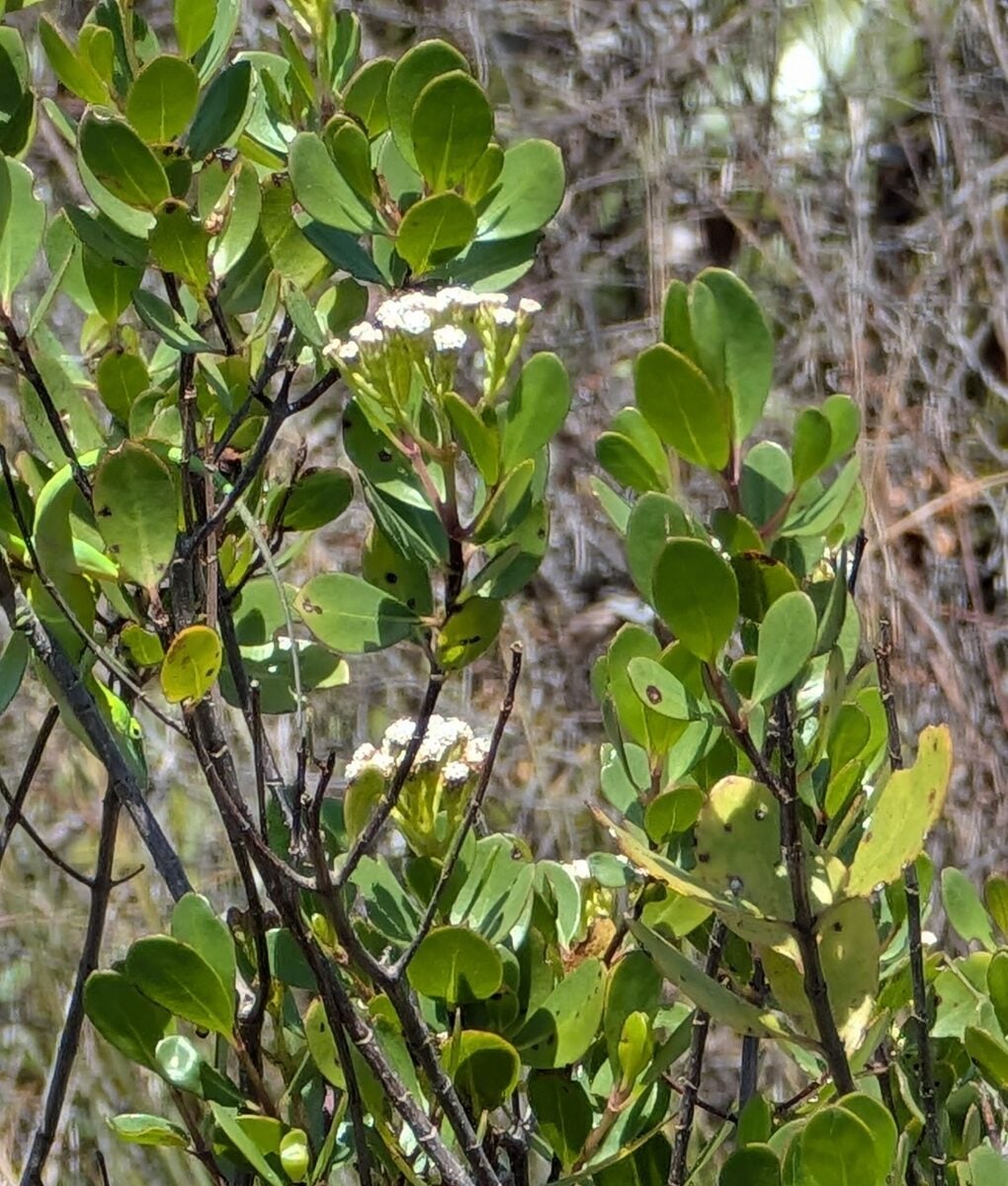
iNaturalist· cc-by-nc
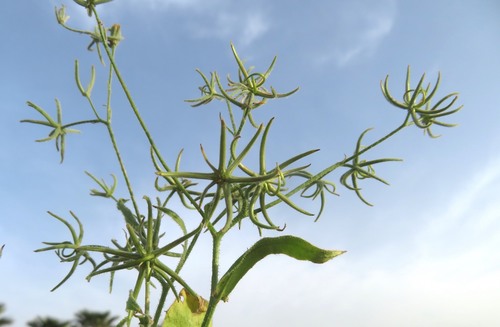
(c) Almut Martens, some rights reserved (CC BY-NC)
iNaturalist· cc-by-nc
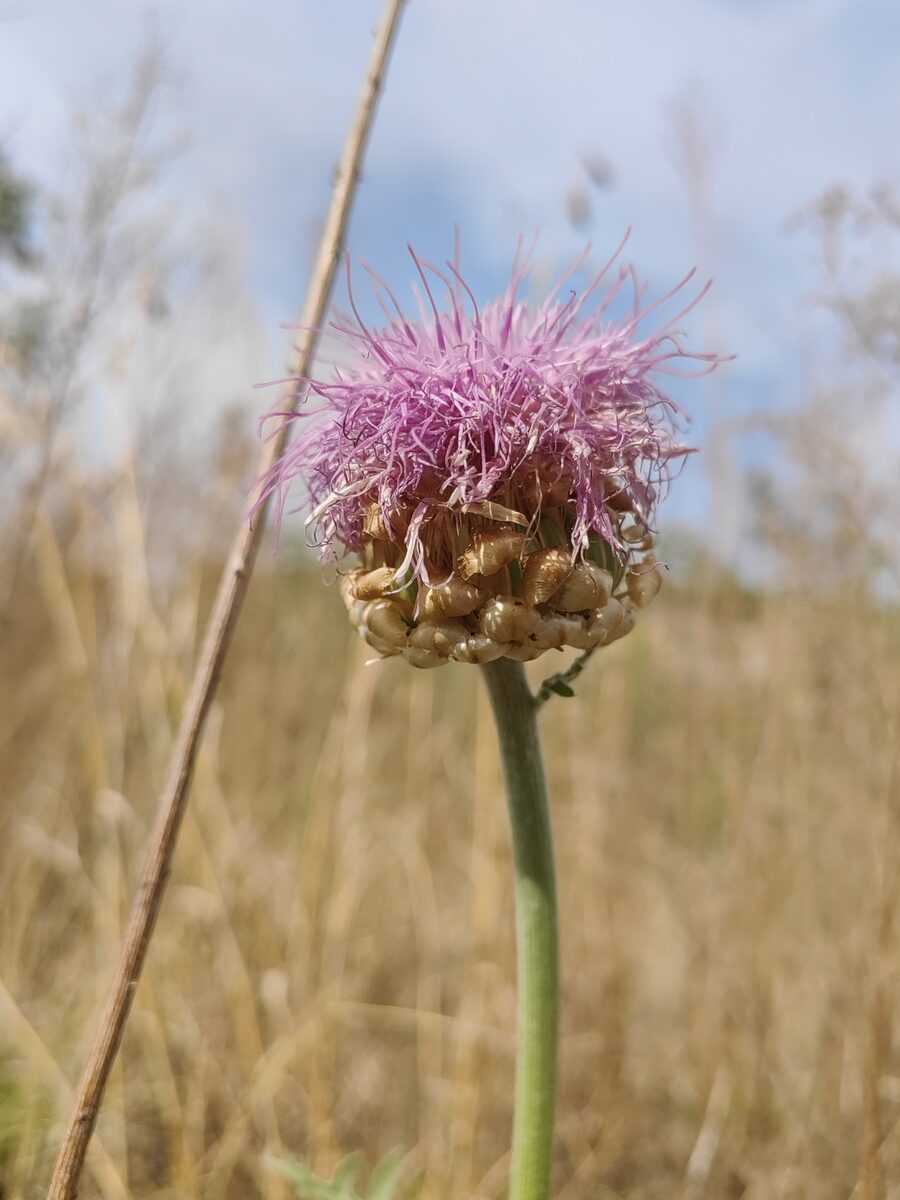
(c) José Antonio Domínguez Llovería, some rights reserved (CC BY-NC), uploaded by José Antonio Domínguez Llovería
iNaturalist· cc-by-nc
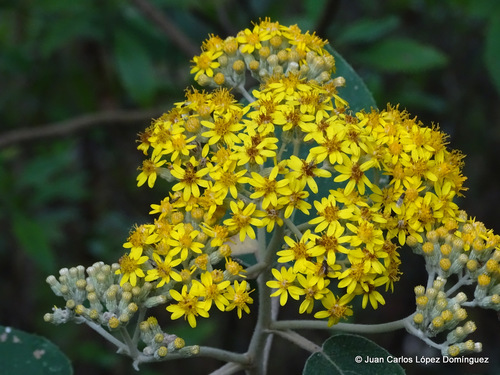
(c) Angus Mossman, some rights reserved (CC BY-NC)
Summary
Source: WikipediaPerennial plant reaching 2 m tall and 1 m wide at moderate growth rate, hardy to UK zone 6. Flowers August to September with seeds ripening September to October. Hermaphrodite and self-fertile, pollinated by bees and butterflies. Tolerates light sandy, medium loamy, and heavy clay soils including poor and saline soils across mildly acidic to basic pH. Requires full light, handles drought and strong winds but not coastal exposure.
Description
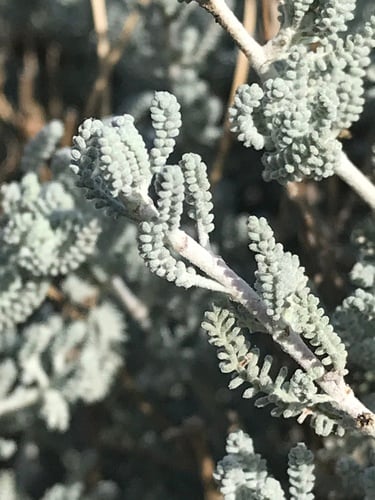
A perennial herb. It grows 1.5-1.8 m high and 1.2-1.5 m across. It has a fleshy taproot. The leaves are large and silvery green. They are woolly and white underneath. They are divided into narrow primary and secondary lobes. The secondary lobes end in a harsh spine. The flowers are thistle flower heads. They can be 8 cm across. The base of the flower head is prickly and the top is purple. There are several cultivated varieties.
Edible Uses
Flower buds are eaten raw or cooked as a globe artichoke substitute. The buds are slightly smaller than globe artichoke, making them even more fiddly to prepare. Harvest just before the flowers open, then usually boil before eating — only the base of each bract and the heart are consumed. The flavour is mild and pleasant, considered by some to be more delicate than globe artichoke. Stems are cooked and used as a celery substitute; earthing them up as they grow blanches them and reduces bitterness, after which they can be eaten cooked or in salads. In Italy, raw strips of stem are dipped into olive oil, though many find them too bitter to enjoy raw. Young leaves can be eaten raw or cooked — the ancient Romans ate them as a salad — though they are rather bitter. The root is cooked like parsnips and is tender, thick, fleshy, and agreeably flavoured. Dried flowers serve as a rennet substitute for curdling plant milks.
Traditional Uses
The leaf ribs are cooked in stews. The flower heads are eaten raw or cooked after removing the spines. They are often eaten in a sauce of olive oil. The dried flower heads are used as rennet for cheese. The young leaf stems and leaves are blanched then cooked and eaten. The roots can be eaten. They are boiled.
Medicinal Uses
The cardoon has gained importance as a medicinal herb following the discovery of cynarin, a bitter compound found in the leaves. Cynarin improves liver and gall bladder function, stimulates secretion of digestive juices (especially bile), and lowers blood cholesterol levels. The leaves are anticholesterolemic, antirheumatic, cholagogue, digestive, diuretic, hypoglycaemic, and lithontripic. They are used internally to treat chronic liver and gall bladder diseases, jaundice, hepatitis, arteriosclerosis, and the early stages of late-onset diabetes. Leaves are best harvested just before flowering and can be used fresh or dried.
Distribution
It can tolerate light frost. It suits a Mediterranean climate. It grows in full sun. It can grow in dry arid areas with a winter rainfall of 100-300 mm. It can grow in arid places. It suits hardiness zones 7-11.
Where It Grows
Africa, Algeria, Andorra, Argentina, Asia, Australia, Balkans, Brazil, Britain, Canada, Canary Islands, Chile, China, Cuba, Cyprus, Ecuador, Europe, France, Georgia, Greece, India, Italy, Libya, Macedonia, Mediterranean*, Morocco, Myanmar, New Zealand, North Africa, North America, Paraguay, Portugal, SE Asia, Sicily, Serbia, Slovenia, South America, Spain, Tasmania, Tunisia, Turkey, Türkiye, Uruguay, USA, West Indies,
Cultivation
Prefers a light warm soil and an open position in full sun. For best results, this plant requires plenty of moisture in the growing season and a good rich soil, though another report says that it is drought tolerant once established. Plants grew very well with us in the hot and very dry summer of 1995, though they were looking very tatty by September. Tolerates most soils including heavy clays of both acid and alkaline nature, especially when grown in heavier or more spartan soils. Plants are reasonably wind resistant. This species is hardy to about -10°c. Plants are more likely to require protection from winter cold when they are grown in a heavy soil. Wet winters can do more harm than cold ones. At one time the cardoon was often grown for its edible stems but it has now fallen into virtual disuse. There are some named varieties. It is a very ornamental foliage plant and makes a very attractive feature in the garden. The leaves are long lasting in water and are often used in flower arrangements. Recent taxonomic revisions (1999) have seen the globe artichoke being merged into this species. However, since from the gardener's point of view it is quite a distinctive plant, we have decided to leave it with its own entry in the database under Cynara scolymus. Plants seem to be immune to the predations of rabbits. In garden design, as well as the above-ground architecture of a plant, root structure considerations help in choosing plants that work together for their optimal soil requirements including nutrients and water. Thick or swollen - fibrous or tap root. Cardoon and Globe Artichoke have moderate growth rates, taking about 2-3 years to establish fully and produce significant yields. Cardoon stalks are typically harvested in late summer to autumn, while Globe Artichokes are harvested in late spring to summer. Both plants flower in late summer to early autumn
Propagation
Sow seed in early spring in a greenhouse; germination is usually quick. Prick seedlings into individual pots as soon as they are large enough to handle and plant out during summer, giving some winter protection in the first year. Seed can also be sown in situ in April, 2cm deep, placing 2–3 seeds at each desired position — protect from mice. Suckers can be divided in November, overwintered in a cold frame, and planted out in April. Division in March/April is also possible, planting straight into permanent positions, though plants will be smaller in their first year.
Other Uses
The plant can be used as a hedge or border plant, and its dense foliage provides habitat for beneficial insects. It is reported to yield a good yellow dye. The large flowers are rich in nectar and pollen, attracting bees, butterflies, and other pollinators. The edible parts also provide food for some wildlife, and the dense foliage offers limited shelter. Leaf litter and the plant's growth habit create habitat for invertebrates and provide some ground cover. There is no significant evidence that it acts as a pest confuser through smell.
Other Information
It is a commercially cultivated vegetable.
Notes
There are about 10 Cynara species. Chemical composition (seeds): high values for the following amino acids - Adenine, Aspartic acid, Glutamic acid, Isoleucine and Leucine. Very high values for Phenylalanine and Valine. The flowers are high in antioxidants. It has anticancer properties.
Nutrition
| Part | Moisture | kJ | kcal | Protein | Vit A | Vit C | Iron | Zinc |
|---|---|---|---|---|---|---|---|---|
| Heart of bud | 93.5 | 92 | 22 | 0.8 | 12 | 2 | 0.7 | 0.2 |
| Heart of bud raw | 94 | 84 | 20 | 0.7 | 12 | 2 | 0.7 | 0.2 |
Synonyms
Also Known As
Ahrdou, Assaouen, Carciofi salvacce, Cardo de castilla, Cardo de comer, Cardo penquero, Cardot, Djenah en nser, Eskanuri artishoki, Gafgarit, Gernina, Herba col, Khorchof, Korchef, Mala artičoka, Presora, Querdoun beldi, Taga, Taredouit, Targhdiout, Tarha, Tindjara
References (66)
- Ben Ismail, H., 2013, Edible Wild Vegetables Used in North West of Tunisia. PARIPEX - Indian Journal of Reearch 2(9) :219-221
- Bianchini, F., Corbetta, F., and Pistoia, M., 1975, Fruits of the Earth. Cassell. p 60
- Biscotti, N. & Pieroni, A., 2015, The hidden Mediterranean diet: wild vegetables traditionally gathered and consumed in the Gargano area, Apulia, SE Italy. Acta Societatis Botanicorum Poloniae 84 (3): 327-338
- Biscotti, N. et al, 2018, The traditional food use of wild vegetables in Apulia (Italy) in the light of Italian ethnobotanical literature. Italian Botanist 5:1-24
- Blamey, M and Grey-Wilson, C., 2005, Wild flowers of the Mediterranean. A & C Black London. p 454
Show all 66 references Hide references
- Blanco-Salas, J., et al, 2019, Wild Plants Potentially Used in Human Food in the Protected Area “Sierra Grande de Hornachos” of Extremadura (Spain). Sustainability 2019, 11, 456
- Bonet, M. A. & Valles, J., 2002, Use of non-crop food vascular plants in Montseny biosphere reserve (Catalonia, Iberian Peninsula). International Journal of Food Sciences and Nutrition (2002) 53, 225–248
- BOUQUET
- Bremness, L., 1994, Herbs. Collins Eyewitness Handbooks. Harper Collins. p 162
- Brickell, C. (Ed.), 1999, The Royal Horticultural Society A-Z Encyclopedia of Garden Plants. Convent Garden Books. p 331
- Brouk, B., 1975, Plants Consumed by Man. Academic Press, London. p 94
- Bussman, R. W., et al, 2021, Unity in diversity—food plants and fungi of Sakartvelo (Republic of Georgia), Caucasus. Journal of Ethnobiology and Ethnomedicine (2021) 17:72 p 6
- Ciftcioglu, C. G., 2015, Sustainable wild-collection of medicinal and edible plants in Lefke region of North Cyprus. Agroforest Syst. Springer
- Cordero, S. E., Abello, L. A., & Galvez, F. L., 2017, Plantas silvestres comestibles y medicinales de Chile y otras partes del mundo. CORMA p 166
- Crawford, M., 2012, How to grow Perennial Vegetables. Green Books. p 83
- Comino, C., et al, 2009, The isolation and mapping of a novel hydroxycinnamoyltransferase in the globe artichoke chlorogenic acid pathway. BMC Plant Biology. 9:30
- Cribb, A.B. & J.W., 1976, Wild Food in Australia, Fontana. p 135
- Cundall, P., (ed.), 2004, Gardening Australia: flora: the gardener's bible. ABC Books. p 457
- Dashorst, G.R.M., and Jessop, J.P., 1998, Plants of the Adelaide Plains & Hills. Botanic Gardens of Adelaide and State Herbarium. p 156
- Della, A., et al, 2006, An ethnobotanical survey of wild edible plants of Paphos and Larnaca countryside of Cyprus. J. Ethnobiol. Ethnomed. 2:34
- Dop, M. C., et al, 2019, Identification and frequency of consumption of wild edible plants over a year in central Tunisia: a mixed-methods approach. Public Health Nutrition: 23(5), 782–794
- Ertug, F., 2004, Wild Edible Plants of the Bodrum Area. (Mugla, Turkey). Turk. J. Bot. 28 (2004): 161-174
- Ertug, F, Yenen Bitkiler. Resimli Türkiye Florası -I- Flora of Turkey - Ethnobotany supplement
- Facciola, S., 1998, Cornucopia 2: a Source Book of Edible Plants. Kampong Publications, p 37
- Geraci, A., et al, 2018, The wild taxa utilized as vegetables in Sicily (Italy): a traditional component of the Mediterranean diet. Journal of Ethnobiology and Ethnomedicine (2018) 14:14
- Ghanimi, R., et al, 2022, Ethnobotanical study on wild edible plants traditionally used by Messiwa people, Morocco. Journal of Ethnobiology and Ethnomedicine. 18:16
- Hedrick, U.P., 1919, (Ed.), Sturtevant's edible plants of the world. p 257
- Hibbert, M., 2002, The Aussie Plant Finder 2002, Florilegium. p 79
- http://cypruswildflowers.com
- Hussey, B.M.J., Keighery, G.J., Cousens, R.D., Dodd, J., Lloyd, S.G., 1997, Western Weeds. A guide to the weeds of Western Australia. Plant Protection Society of Western Australia. p 96
- Jardin, C., 1970, List of Foods Used In Africa, FAO Nutrition Information Document Series No 2.p 73
- Joyce, D., 1998, The Garden Plant Selector. Ryland, Peters and Small. p 219
- Kays, S. J., and Dias, J. C. S., 1995, Common Names of Commercially Cultivated Vegetables of the World in 15 languages. Economic Botany, Vol. 49, No. 2, pp. 115-152
- Kiple, K.F. & Ornelas, K.C., (eds), 2000, The Cambridge World History of Food. CUP p 1745
- Lamp, C & Collet F., 1989, Field Guide to Weeds in Australia. Inkata Press. p 94
- Lazarides, M. & Hince, B., 1993, Handbook of Economic Plants of Australia, CSIRO. p 73
- Lim, T. K., 2015, Edible Medicinal and Non Medicinal Plants. Volume 9, Modified Stems, Roots, Bulbs. Springer p 31
- Low, T., 1992, Bush Tucker. Australia’s Wild Food Harvest. Angus & Robertson. p 174
- Macmillan, H.F. (Revised Barlow, H.S., et al), 1991, Tropical Planting and Gardening. Sixth edition. Malayan Nature Society. Kuala Lumpur. p 362
- Mahklouf, M. H., 2019, Ethnobotanical Study of Edible Wild Plants in Libya. European Journal of Ecology. 5(2): 30-40
- Malezas Comestibles del Cono Sur, INTA, 2009, Buernos Aires
- Martin, F.W. & Ruberte, R.M., 1979, Edible Leaves of the Tropics. Antillian College Press, Mayaguez, Puerto Rico. p 184
- Nassif, F., & Tanji, A., 2013, Gathered food plants in Morocco: The long forgotten species in Ethnobotanical Research. Life Science Leaflets 3:17-54
- Nebel, S., Pieroni, A. & Heinrich, M., 2006, Ta cho`rta: Wild edible greens used in the Graecanic area in Calabria, Southern Italy. Appetite 47 (2006) 333–342
- Paczkowska, G. & Chapman, A.R., 2000, The Western Australian Flora. A Descriptive Catalogue. Western Australian Herbarium. p 161
- Pasta, S., et al, 2020, An Updated Checklist of the Sicilian Native Edible Plants: Preserving the Traditional Ecological Knowledge of Century-Old Agro-Pastoral Landscapes. Frontiers in Plant Science. Volume 11|Article 388
- Pieroni, A., et al, 2005, Food for two seasons: Culinary uses of non-cultivated local vegetables and mushrooms in a south Italian village. International Journal of Food Sciences and Nutrition, 56(4): 245-272
- Plants for a Future database, The Field, Penpol, Lostwithiel, Cornwall, PL22 0NG, UK. http://www.scs.leeds.ac.uk/pfaf/
- Rigat, M et al, 2009, Ethnobotany of Food Plants in the High River Ter Valley (Pyrenees, catalonia, Iberian Peninsula): Non-Crop Food Vascular Plants and Crop Food Plants with medicinal Properties. Ecology of Food and Nutrition, 48:303-327
- Royal Botanic Gardens, Kew (1999). Survey of Economic Plants for Arid and Semi-Arid Lands (SEPASAL) database. Published on the Internet; http://www.rbgkew.org.uk/ceb/sepasal/internet [Accessed 11th April 2011]
- Ruiters-Welcome, A. K., 2019, Food plants of southern Africa. Ph.D. thesis. Univ. of Johannesburg p 34
- Sansanelli, S., et al, 2017, Ethnobotanical survey of wild food plants traditionally collected and consumed in the Middle Agri Valley (Basilicata region, southern Italy). Journal of Ethnobiology and Ethnomedicine (2017) 13:50
- Schneider, E., 2001, Vegetables from Amaranth to Zucchini: The essential reference. HarperCollins. p 143
- Sp. pl. 2:827. 1753
- Tardio, J., et al, 2006, Ethnobotanical review of wild edible plants in Spain. Botanical J. Linnean Soc. 152, 27-71
- Terra, G.J.A., 1973, Tropical Vegetables. Communication 54e Royal Tropical Institute, Amsterdam, p 43
- Torre, de la L., et al, 2008, Enciclopedia de las Plantas Útiles del Ecuador. Herbario QCA. Pontificia Universidad Católica del Ecuador. p 219
- Tronickova, E. & Krejcova, Z., 1987, Ortaggi, Instituto Geografico de Agostini, Cecoslovacchia. p 112
- Turner, N. J. et al, 2011, Edible and Tended Wild Plants, Traditional Ecological Knowledge and Agroecology. Critical Reviews in Plant Sciences, 30:198-225
- USDA, ARS, National Genetic Resources Program. Germplasm Resources Information Network - (GRIN). [Online Database] National Germplasm Resources Laboratory, Beltsville, Maryland. Available: www.ars-grin.gov/cgi-bin/npgs/html/econ.pl (10 April 2000)
- VAN ETTEN et al
- Wiersema, J. H. & Leon, B., 2013, World Economic Plants. A Standard Reference CRC Press. 2nd Ed. p 225
- World Checklist of Useful Plant Species 2020. Royal Botanic Gardens, Kew
- www.chileflora.com
- Yasukawa, K., Medicinal and Edible Plants as Cancer Preventive Agents. Drug Discovery Research in Pharmacognosy. p185 www.intechopen.com
- Zeven, A. C. & de West, J. M. J., 1982, Dictionary of cultivated plants and their regions of diversity. Wageningen. p 105