Salacia kraussii
(Harvey) Harvey
Leatherplum
iNaturalist· cc-by-nc
(c) Francois du Randt, some rights reserved (CC BY-NC), uploaded by Francois du Randt
iNaturalist· cc-by-nc
(c) magdastlucia, some rights reserved (CC BY-NC)
Description
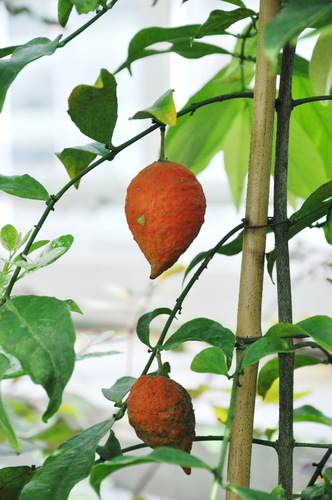
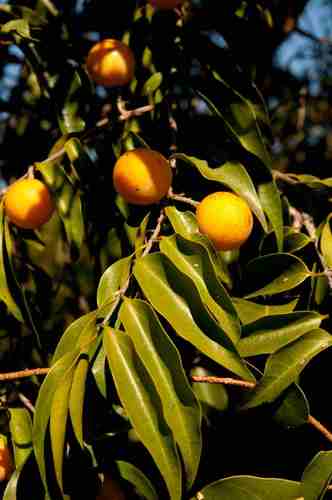
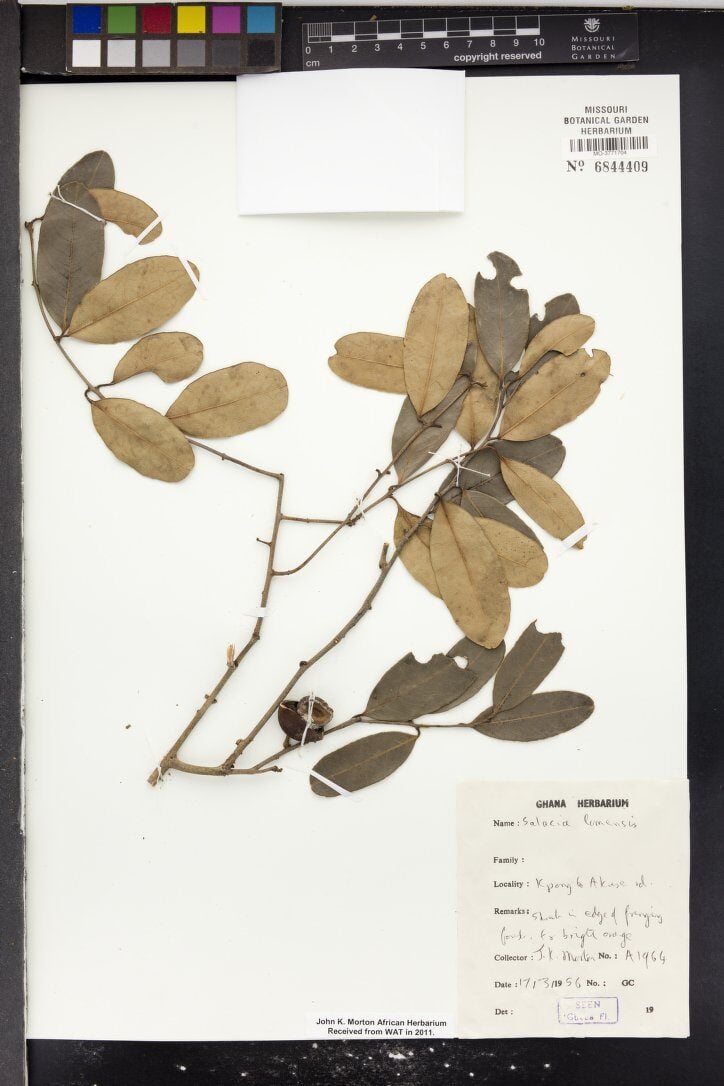
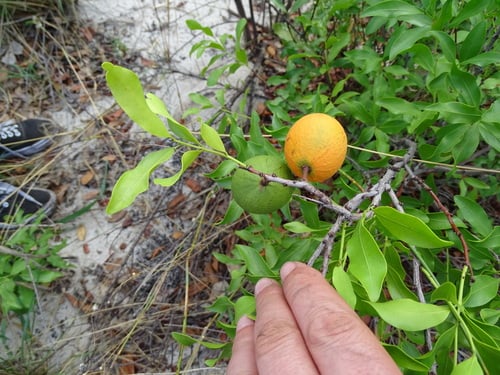
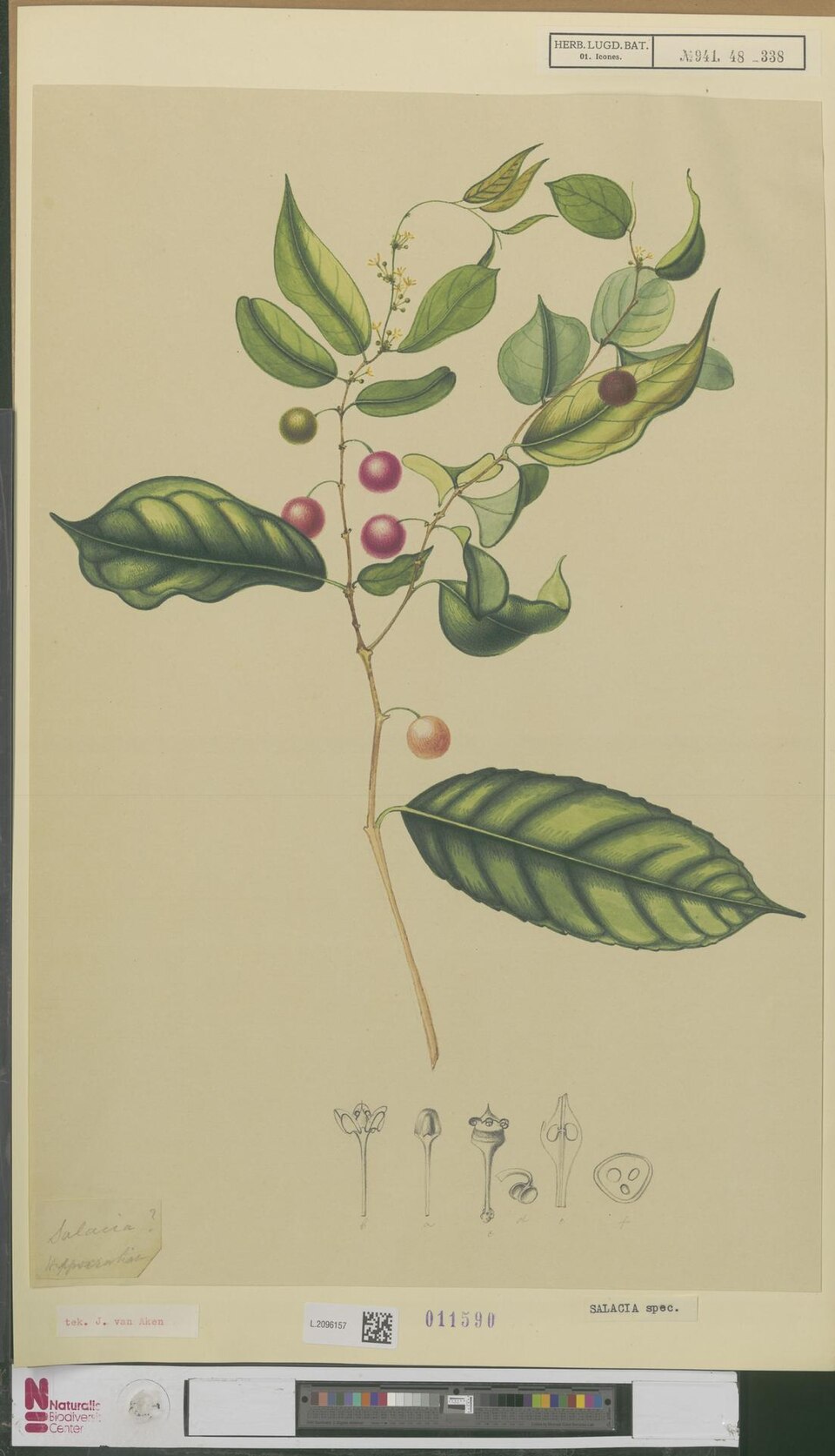
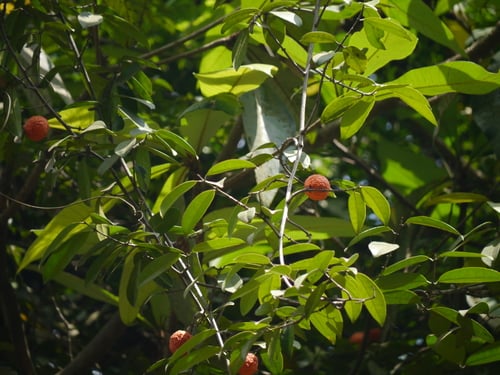
A small shrub. It can be a scrambler. It grows 1-3 m high. It can put up annual shoots from an underground stem or rhizome. The main stem has ridges at first. The leaves are alternate and with short stalks. The leaves are narrowly oval and shiny. The leaves vary in shape. They are 4-6 cm long. The flowers are yellow. The fruit are orange colour. There are several flowers in the axils of leaves. There are 2-16 with short stalks. The fruit is round and fleshy. It is 4-5 cm across. It is orange to yellow. It has a thin leathery skin and 2-3 large seeds. The fruit are edible.
Edible Uses
The orange to yellow fruits are eaten raw or made into jams and jellies, and are especially favored by children.
Traditional Uses
The fruit are eaten raw. They are also used for jams and jellies.
This uses section is brief — help expand it
Distribution
It is a subtropical plant. It grows in dry soil. It grows below 200 m above sea level. It grows in coastal scrub. It can grow in arid places.
Where It Grows
Africa, East Africa, Mozambique, South Africa, Southern Africa, Zimbabwe,
Other Information
The fruit are especially eaten by children.
Notes
The roots have antimalarial properties.
Nutrition
| Part | Moisture | kJ | kcal | Protein | Vit A | Vit C | Iron | Zinc |
|---|---|---|---|---|---|---|---|---|
| Fruit | 83.8 | 256 | 61 | 1.1 | — | 10.7 | 0.6 | 0.2 |
Synonyms
Also Known As
Chipua, Ibontsi, Mbossi, Mphyimsha, M'pshisha, Psixa, Umguguluzane
References (12)
- Cunningham, 1985,
- Fox, F. W. & Young, M. E. N., 1982, Food from the Veld. Delta Books. p 151
- INFOODS:FAO/INFOODS Databases
- Peters, C. R., O'Brien, E. M., and Drummond, R.B., 1992, Edible Wild plants of Sub-saharan Africa. Kew. p 81
- Royal Botanic Gardens, Kew (1999). Survey of Economic Plants for Arid and Semi-Arid Lands (SEPASAL) database. Published on the Internet; http://www.rbgkew.org.uk/ceb/sepasal/internet [Accessed 7th April 2011]
Show all 12 references Hide references
- Ruiters-Welcome, A. K., 2019, Food plants of southern Africa. Ph.D. thesis. Univ. of Johannesburg p 44
- Schmidt, E., Lotter, M., & McCleland, W., 2007, Trees and shrubs of Mpumalanga and Kruger National Park. Jacana Media p 362
- van Wyk, Be., & Gericke, N., 2007, People's plants. A Guide to Useful Plants of Southern Africa. Briza. p 56
- van Wyk, B-E., 2011, The potential of South African plants in the development of new food and beverage products. South African Journal of Botany 77 (2011) 857–868
- Wehmeyer, A. S, 1986, Edible Wild Plants of Southern Africa. Data on the Nutrient Contents of over 300 species
- Welcome, A. K. & Van Wyk, B.-E., 2019, An inventory and analysis of the food plants of southern Africa. South African Journal of Botany 122 (2019) 136–179
- World Checklist of Useful Plant Species 2020. Royal Botanic Gardens, Kew