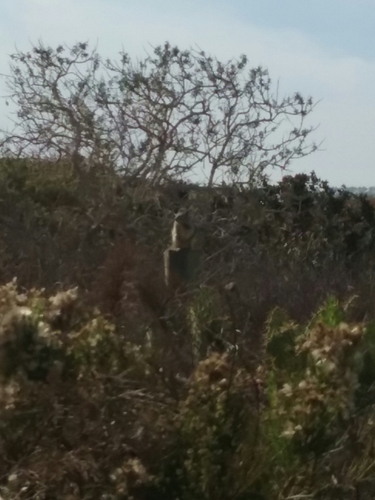
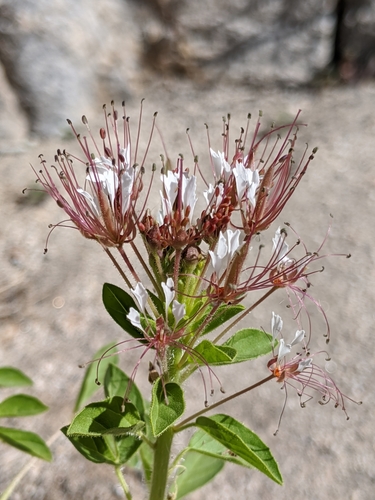
Maerua pseudopetalosa
(Gilg & Benedict) De Wolf
gbif· cc-by-nc-sa
MBG
gbif· cc-by-nc-sa
MBG
gbif· cc-by
Royal Botanic Gardens, Kew
Description
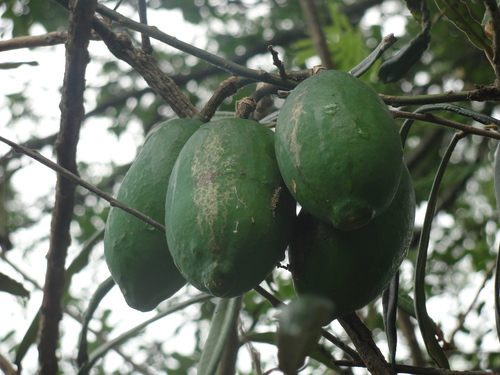
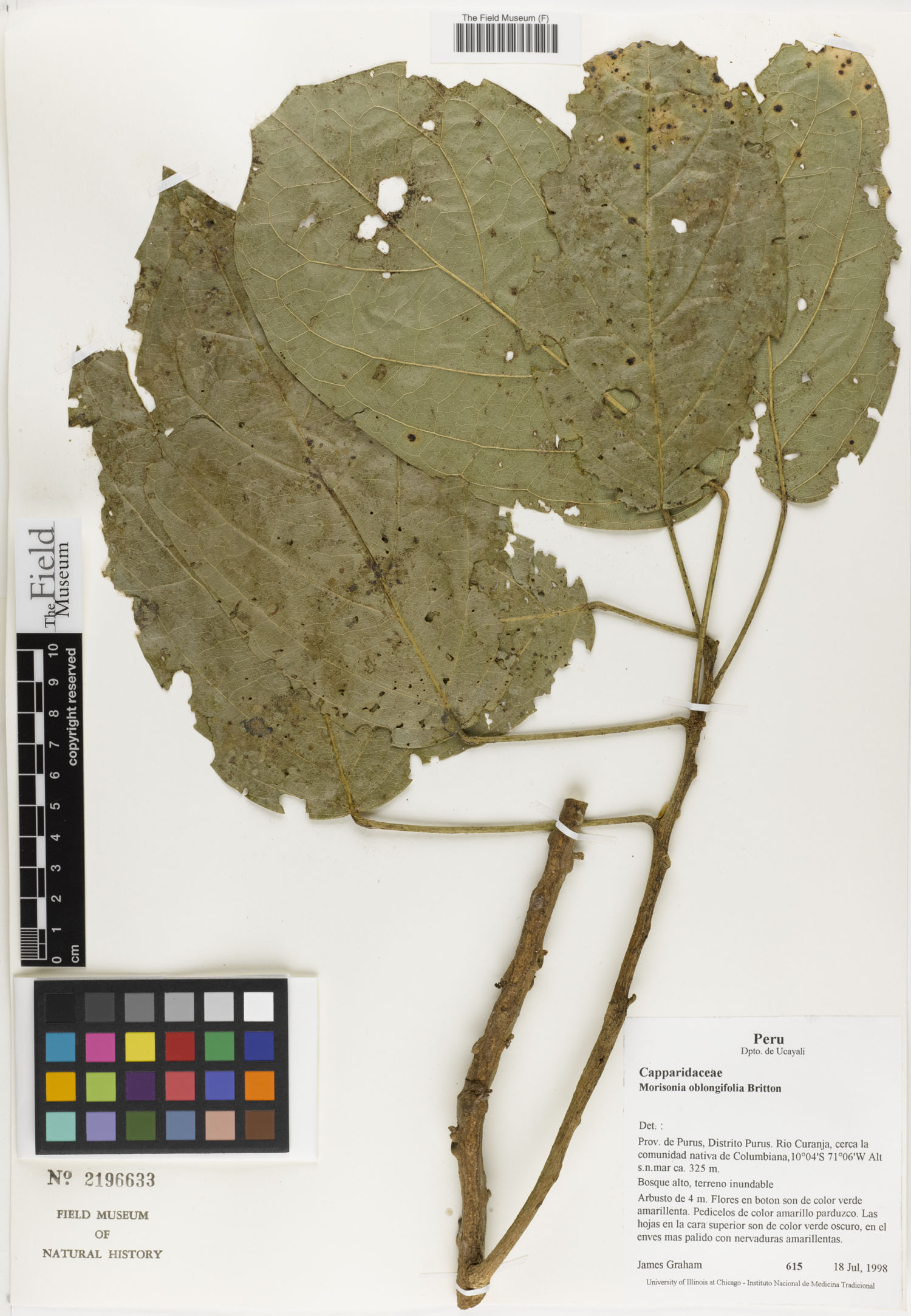
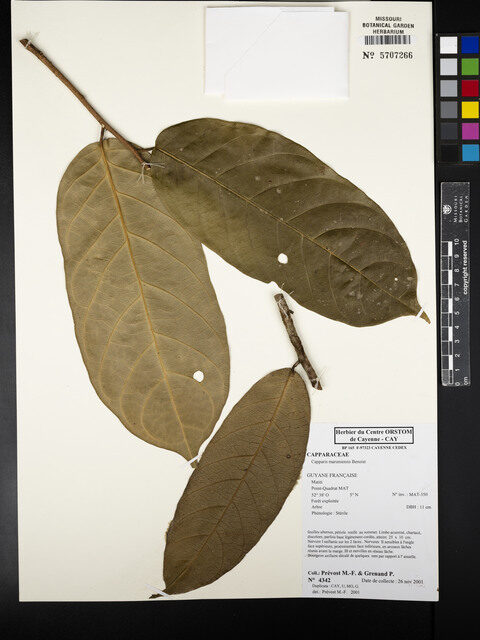
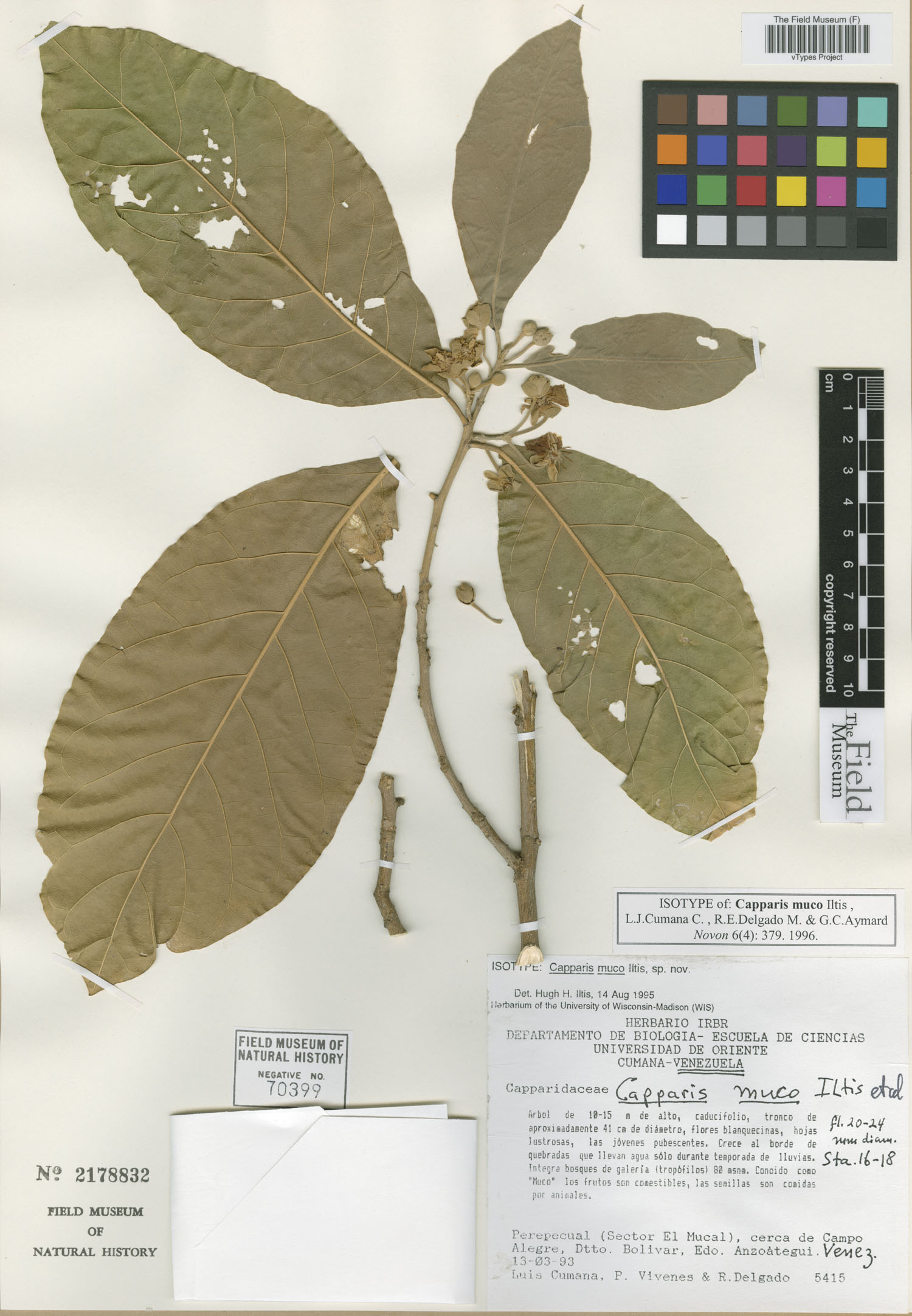
A shrub. It grows up to 60 cm high. It loses its leaves during the year. The leaves are alternate and narrowly oval. They are 3.5 cm long. The fruit is a yellow capsule. It is 2 cm across. It contains 103 seeds.
Edible Uses
The seeds are eaten after being washed multiple times to remove toxins. The fruit is consumed during famines after soaking in running water for several days and boiling with water and soda. The roots are used to make a sweet drink. The stems provide salt, and plant ash from stems and leaves is used as a spice.
Traditional Uses
The seeds are washed several times to process them and remove poison before eating. The fruit is eaten during times of famine, after soaking in running water for several days, and then boiling in water to which a little soda has been added. The roots are used to make a sweet drink. The stems are used for salt. The plant ash from the stems and leaves is used as a spice.
Medicinal Uses
Any internal use of this plant should be viewed with caution, see notes above on toxicity. The fruits and roots are used in a topical application to the chest for treating coughs. The bark is used medicinally by Masai medicine men.
Known Hazards
The root contains powerfully toxic tetramethylammonium nitrate (approximately 0.25 g lethal for adults), and the fruit kernel contains the same toxin in lower concentrations. The fruit husks contain cis- and trans-3-Hydroxystachydrine compounds. Traditional processing methods (washing, soaking, and boiling) are necessary to reduce toxicity before consumption.
Distribution
It is a tropical plant. It grows in dry savannah in flood land. It grows across west and East Africa. It grows in poorly drained sandy loams. It grows between 900-1,400 m above sea level. It can grow in arid places.
Where It Grows
Africa, Burkina Faso, Cameroon, Central Africa, Central African Republic, CAR, Chad, East Africa, Ethiopia, Gambia, Ghana, Kenya, Mali, Niger, Nigeria, Sahel, Senegal, Somalia, Sudan, Uganda, West Africa,
Cultivation
A plant of medium elevations in the drier tropics.
Other Uses
The vegetative parts of the plant contain 14·5% fats. The seed-husk and seed-kernel are also oil-bearing. The root is said to be an efficient precipitant of suspensions in water and is used in water purification and storage in rural areas. The related plants, M. subcordata and M. glauca are said to be used in E Africa for clearing water muddied by cattle. The roots are chopped up and thrown into the water. The chemicals in them carry a heavy charge of ions.
Other Information
It is a famine food.
Notes
Chemical composition: the root of this plant contains powerfully toxic tetramethylammonium nitrate - ca. 0.25g of the base taken orally being lethal for adult humans. The kernel of the fruit contains the same toxic element as the root but in lower proportions. The leaching practices described above may reflect local awareness of the toxic properties of the root as well as possible reactions to ingestion of the fruit. The fruit also contains two crystalline, water-soluble, isomeric compounds: cis- and trans-3-Hydroxystachydrine. These compounds form approximately 10% of the dry weight of the husks of the fruit.
Synonyms
Also Known As
Amyok, Kordala, Kordale, Kumkum, Mayook
References (12)
- Burkill, H. M., 1985, The useful plants of west tropical Africa, Vol. 1. Kew.
- CORNFORTH & HENRY, (As Courbonia virgata)
- East African Herbarium records, 1981,
- Grubben, G. J. H. and Denton, O. A. (eds), 2004, Plant Resources of Tropical Africa 2. Vegetables. PROTA, Wageningen, Netherlands. p 563
- HENRY, (As Courbonia virgata)
Show all 12 references Hide references
- HENRY & GRINDLEY, (As Courbonia virgata)
- HENRY & KING, (As Courbonia virgata)
- Jardin, C., 1970, List of Foods Used In Africa, FAO Nutrition Information Document Series No 2.p 131 (As Courbonia virgata)
- Peters, C. R., O'Brien, E. M., and Drummond, R.B., 1992, Edible Wild plants of Sub-saharan Africa. Kew. p 78
- Royal Botanic Gardens, Kew (1999). Survey of Economic Plants for Arid and Semi-Arid Lands (SEPASAL) database. Published on the Internet; http://www.rbgkew.org.uk/ceb/sepasal/internet [Accessed 7th April 2011]
- Seidemann J., 2005, World Spice Plants. Economic Usage, Botany, Taxonomy. Springer. p 119 (As Courbonia virgata)
- World Checklist of Useful Plant Species 2020. Royal Botanic Gardens, Kew