Tecoma capensis
(Thunb.) Lindl.
Cape-honeysuckle
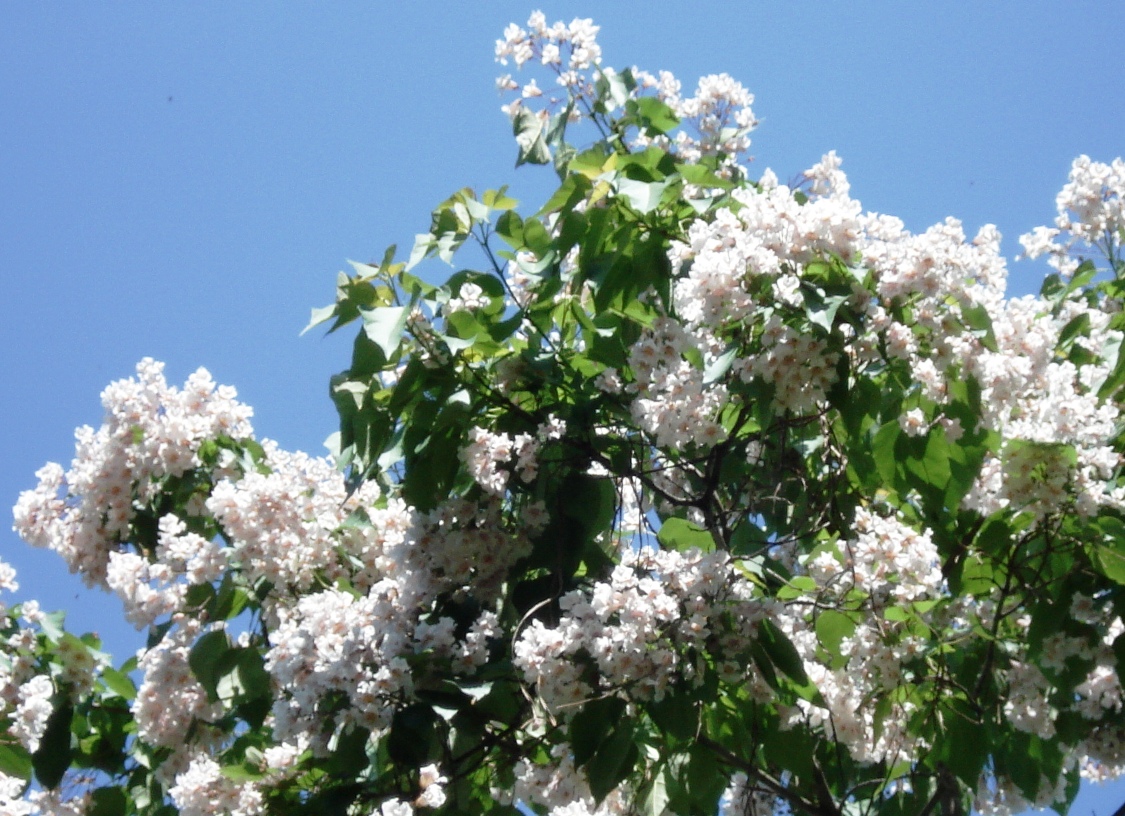
iNaturalist· cc-by-nc
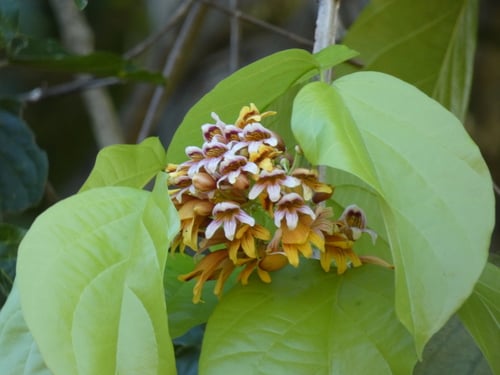
(c) Colin Ralston, some rights reserved (CC BY-NC)
iNaturalist· cc-by-nc
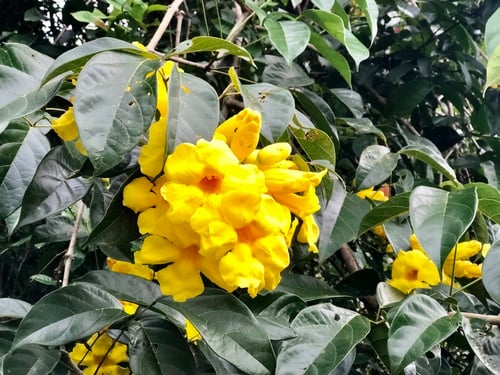
(c) Colin Ralston, some rights reserved (CC BY-NC)
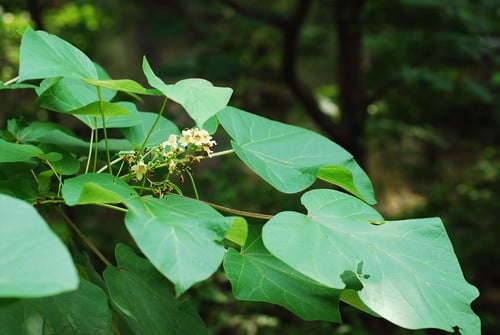
iNaturalist· cc-by
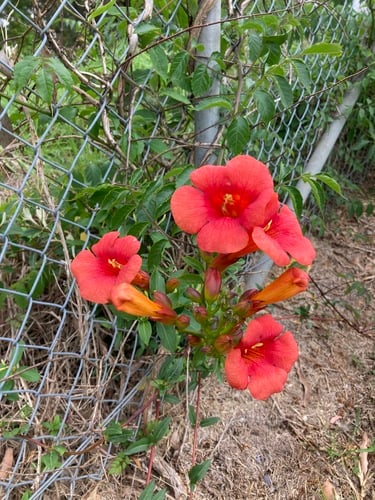
(c) Leon Perrie, some rights reserved (CC BY)
Description
A climber. It is a scrambling shrub. It grows 4 m high. The leaflets are in 2-4 pairs. There is a larger leaflet at the end. The leaflets are 2.5 cm long by 1.5 cm wide. The flowers are tube shaped and in clusters. They are bright orange-red.
Edible Uses
The nectar is eaten as a snack.
Traditional Uses
The nectar is eaten as a snack.
This uses section is brief — help expand it
Medicinal Uses
The powdered bark is used in the treatment of fevers, pneumonia and stomach troubles. The powdered bark is rubbed on bleeding gums to promote blood clotting. A leaf decoction is used in the treatment of diarrhoea and for intestinal inflammation. It is believed to ease pain and produce sleep.
Distribution
It is a tropical plant. It grows in the edges of mountain rainforest and in open places amongst rocks. It suits humid locations. In Malawi it grows from about 1,000-2,450 m altitude.
Where It Grows
Africa, Angola, Argentina, Asia, Brazil, Burundi, Central Africa, Congo, Dominican Republic, East Africa, Eswatini, Hawaii, India, Indonesia, Malawi, Mozambique*, Pacific, Paraguay, SE Asia, South Africa*, Southern Africa, South America, Swaziland, Tanzania, West Indies, Zambia,
Cultivation
Plants can be grown from seeds and cuttings. It re-grows quickly after fires.
Propagation
Seed - Cuttings of young wood. Cuttings of half-ripe wood. Layering. The branches often root where they touch the ground/
Other Uses
The wood is used for fuel. The cape honeysuckle is a wonderful hedging plant with good regrowth ability after pruning and normally dense and colourful foliage over a long time. It protects the surrounding soil from erosion, whilst its leaf litter improves soil fertility as it decomposes. The flowers are a rich source of sugar for bees.
Synonyms
Also Known As
Bopu, Malangula, Melangula, Umsilingi
References (6)
- Peters, C. R., O'Brien, E. M., and Drummond, R.B., 1992, Edible Wild plants of Sub-saharan Africa. Kew. p 69
- Ruiters-Welcome, A. K., 2019, Food plants of southern Africa. Ph.D. thesis. Univ. of Johannesburg p 38 (As Tecomaria capensis)
- Sukarya, D. G., (Ed.) 2013, 3,500 Plant Species of the Botanic Gardens of Indonesia. LIPI p 723
- Swaziland's Flora Database http://www.sntc.org.sz/flora
- Welcome, A. K. & Van Wyk, B.-E., 2019, An inventory and analysis of the food plants of southern Africa. South African Journal of Botany 122 (2019) 136–179 (As Tecomaria capensis)
Show all 6 references Hide references
- White, F., Dowsett-Lemaire, F. and Chapman, J. D., 2001, Evergreen Forest Flora of Malawi. Kew. p 171 (As Tecomaria capensis)