Uvaria scheffleri
Diels
gbif· cc-by-nc-sa
MBG
gbif· cc-by-sa
GBIF
gbif· cc-by-nc-sa
MBG
Description
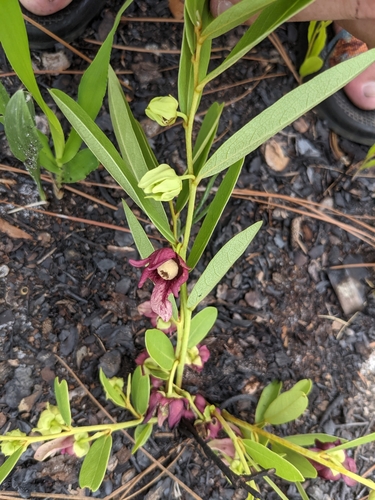
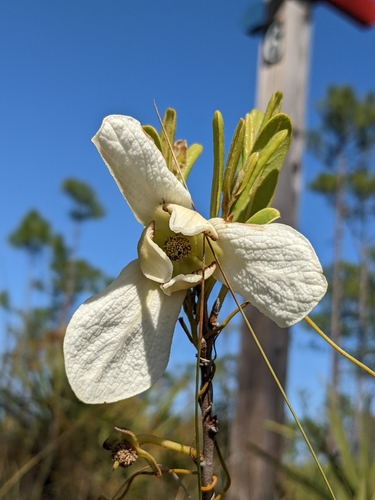
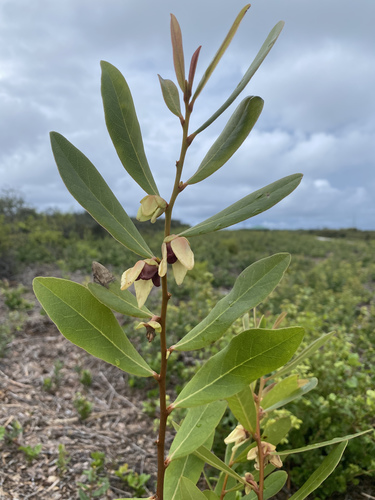
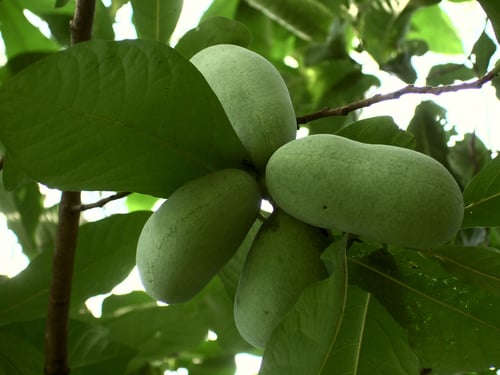
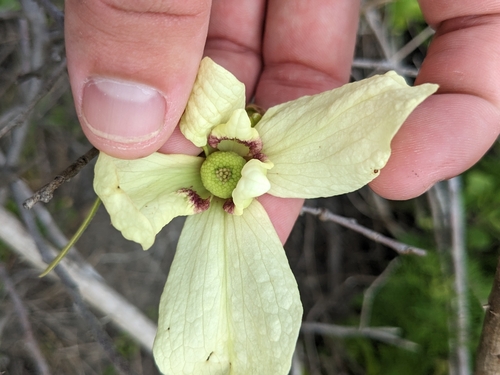
A scrambling shrub or creeper. It can grow 5 m high. It has long shoots. The leaves are long, narrow and glossy. The flowers are produced singly. They can be green, brown or yellow. The fruit are divided into finger like sections. These are 5 cm long. They are green but ripen to yellow then red. The seeds are shiny and brown.
Edible Uses
Fruit - raw. The fully ripe fruit is sweet with an appealing acid taste. The seeds, which are enclosed in pulp, are sucked clean then discarded. The soft outer skin may also be eaten.
Traditional Uses
The ripe fruit are eaten and the seeds discarded.
This uses section is brief — help expand it
Medicinal Uses
The fruit is used in Tanzania for the treatment of fevers.
Distribution
It is a tropical plant.
Where It Grows
Africa, East Africa, Kenya, Tanzania,
Cultivation
Plants are grown from seeds. It is best with a fence or support to climb.
Also Known As
Erisa, Lkemojik, Mukukuma, Mukuru, Nsilimbu
References (10)
- Herb., E. A., 1981,
- Ichikawa, M., 1980, The Utilization of Wild Food Plants by the Suiei Dorobo in Northern Kenya. J. Anthrop. Soc. Nippon. 88(1): 25-48
- Johns, T., Mhoro, E. B. and Sanaya, P., 1996, Food Plants and Masticants of the Batemi of Ngorongoro District, Tanzania. Economic Botany, Vol. 50, No. 1, pp. 115-121
- Maundu, P. et al, 1999, Traditional Food Plants of Kenya. National Museum of Kenya. 288p
- Mbuvi, M. T. E., et al, 2019, Annonated checklist of plant species of Loita Forest Narok County, Kenya. Int. J. Adv. Res. Biol. Sci. (2019). 6(3): 54-110
Show all 10 references Hide references
- Mutie, F. G., 2020, Conservation of Wild Food Plants and Their Potential for Combatting Food Insecurity in Kenya as Exemplified by the Drylands of Kitui County. Plants 2020, 9, 1017
- Mutie, F. M., et al, 2023, Important Medicinal and Food Taxa (Orders and Families) in Kenya, Based on Three Quantitative Approaches. Plants 2023, 12, 1145
- Peters, C. R., O'Brien, E. M., and Drummond, R.B., 1992, Edible Wild plants of Sub-saharan Africa. Kew. p 56
- Shumsky, S., et al, 2014, Institutional factors affecting wild edible plant (WEP) harvest and consumption in semi-arid Kenya. Land Use Policy 38(2014) 48-69
- World Checklist of Useful Plant Species 2020. Royal Botanic Gardens, Kew