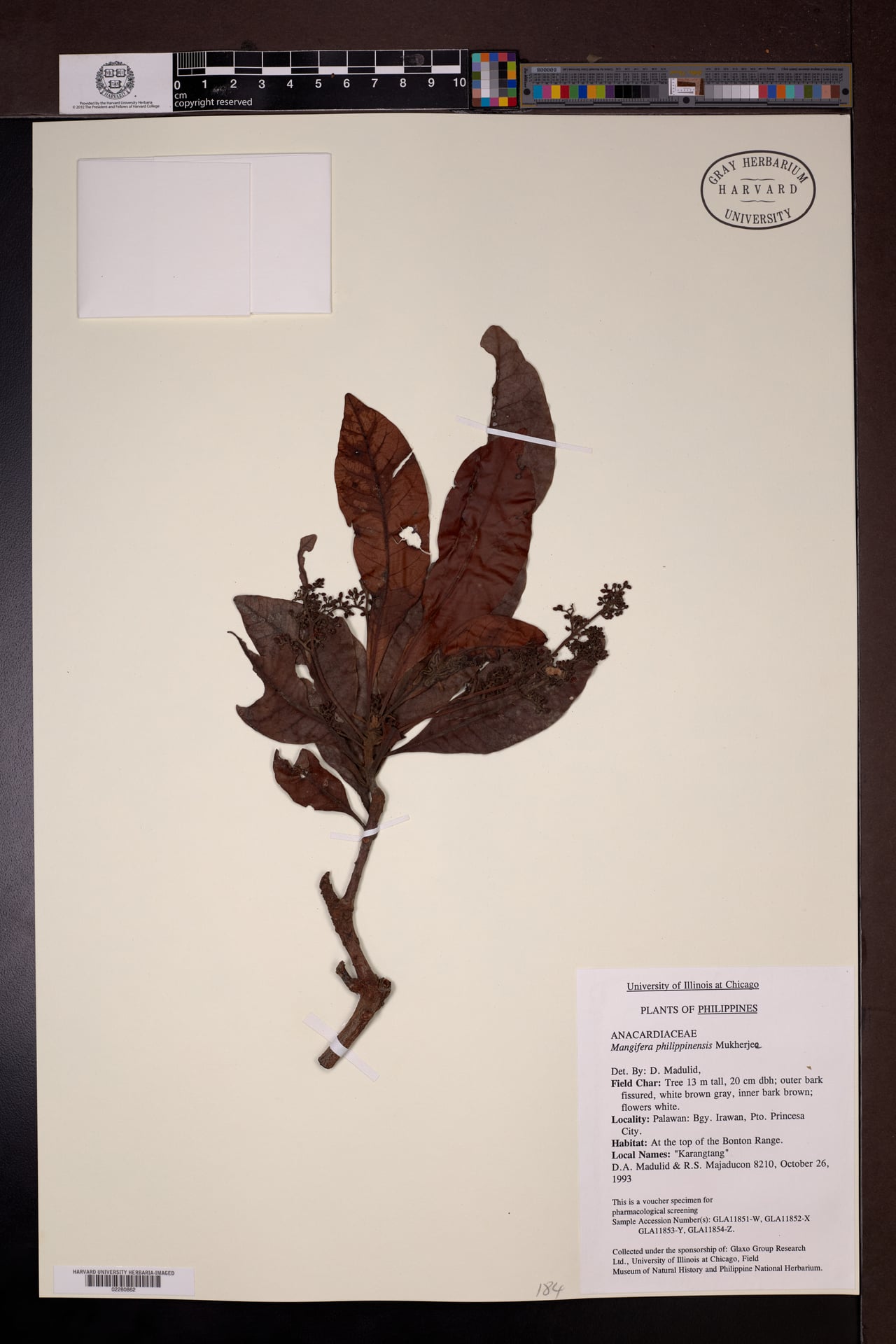
Searsia rehmanniana
(Engl.) Moffett
Blunt-leaved currant
iNaturalist· cc0
no rights reserved, uploaded by Klaus Wehrlin
iNaturalist· cc-by-nc
(c) galpinmd, some rights reserved (CC BY-NC)
Description
An erect shrub or small tree. It keeps growing from year to year. The fruit are yellow and 4 mm across.
This description is brief — help expand it
Edible Uses
The yellow fruits are eaten as a snack.
Traditional Uses
The fruit are eaten as a snack.
This uses section is brief — help expand it
Distribution
It is a subtropical plant. It grows in dry soils. It can grow in arid places.
Where It Grows
Africa, East Africa, Eswatini, Mozambique, South Africa, Southern Africa, Swaziland,
Synonyms
Rhus macowanii SchonlandRhus pubescens var. uitenhagensis Eckl. & Zeyh.Rhus rehmanniana Engl.
Also Known As
Stompblaartaaibos
References (12)
- Fox, F. W. & Young, M. E. N., 1982, Food from the Veld. Delta Books. p 78 (As Rhus macowanii)
- INFOODS:FAO/INFOODS Databases (As Rhus macowanii)
- Moffett, R. O., 2007, Name changes in the Old World Rhus and recognition of Searsia (Anacardiaceae). Bothalia 37,2: 165-175 (2007)
- Ogle and Grivetti, 1985, (As Rhus rehmanniana)
- Peters, C. R., O'Brien, E. M., and Drummond, R.B., 1992, Edible Wild plants of Sub-saharan Africa. Kew. p 52 (As Rhus rehmanniana)
Show all 12 references Hide references
- Royal Botanic Gardens, Kew (1999). Survey of Economic Plants for Arid and Semi-Arid Lands (SEPASAL) database. Published on the Internet; http://www.rbgkew.org.uk/ceb/sepasal/internet [Accessed 28th March 2011] (As Rhus rehmanniana)
- Ruiters-Welcome, A. K., 2019, Food plants of southern Africa. Ph.D. thesis. Univ. of Johannesburg p 16
- Shava, S., 2000, The Use of Indigenous Plants as Food by a Rural Community in the Eastern Cape: an Educational Exploration. Masters Thesis Rhodes University. p 66 (As Rhus rehmanniana)
- Wehmeyer, A. S, 1986, Edible Wild Plants of Southern Africa. Data on the Nutrient Contents of over 300 species. (As Rhus macowanii)
- Welcome, A. K. & Van Wyk, B.-E., 2019, An inventory and analysis of the food plants of southern Africa. South African Journal of Botany 122 (2019) 136–179
- Wilson, A. L. & Downs, C. T., 2012, Fruit nutritional composition and non-nutritive traits of indigenous South African tree species. South African Journal of Botany. 78:30-36
- World Checklist of Useful Plant Species 2020. Royal Botanic Gardens, Kew