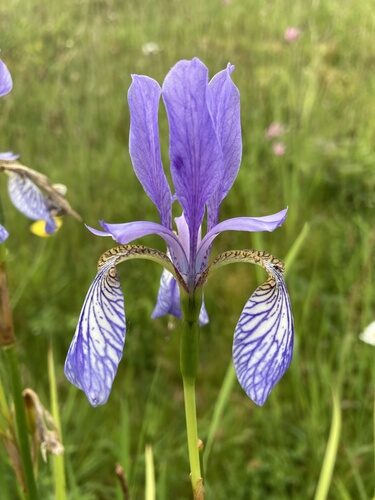
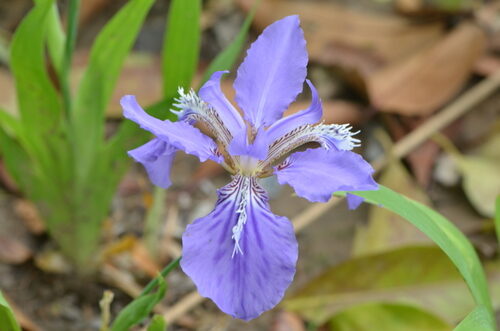
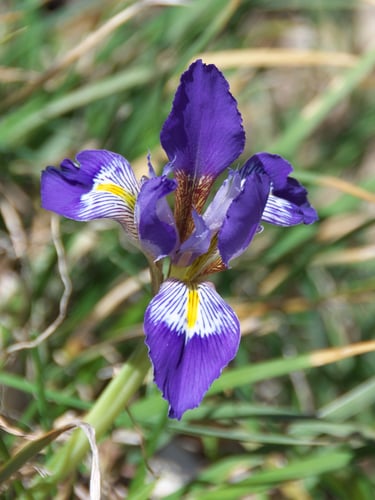
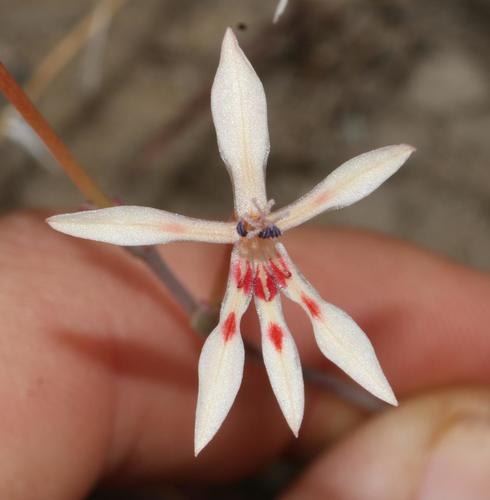
Afrosolen schimperi
(Aschers. & Klatt) Goldblatt & Manning
iNaturalist· cc-by-nc
(c) Grant Reed, some rights reserved (CC BY-NC)
gbif· cc-by-nc
Pedro Beja
iNaturalist· cc-by-nc
(c) frasergear, some rights reserved (CC BY-NC)
iNaturalist· cc-by-nc
(c) frasergear, some rights reserved (CC BY-NC)
Description
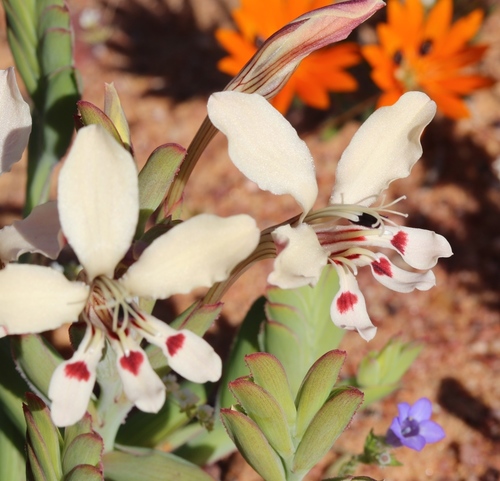
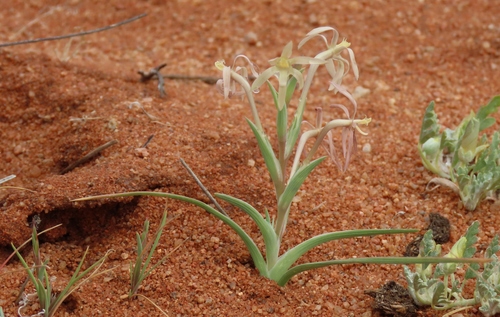
A herb. It grows 30-80 cm high. It has a bulb and keeps growing from year to year. The bulb can be 18-22 mm across. It has a netlike covering. It is dark brown. It can be 25 cm deep. The stems are angled. It has about 3 leaves. The flower has as a scent. The flower tube can be 12 cm long. It is white.
Edible Uses
The corm (bulb) is the edible portion and can be eaten raw or baked after removing the brittle netted covering, or pounded for use in stews.
Traditional Uses
The corm is eaten raw or baked. The brittle covering is removed. The corms are also pounded and used in stews.
This uses section is brief — help expand it
Distribution
It is a tropical plant. It grows in seasonally water logged soils. The soils can be sandy loams or clays. It grows in locally moist sites in arid country. It can grow in arid places.
Where It Grows
Africa, Angola, Botswana, Cameroon, Central Africa, East Africa, Ethiopia, Kenya, Malawi, Namibia, Somalia, Southern Africa, Sudan, Tanzania, Uganda, Zambia, Zimbabwe,
Synonyms
Also Known As
Onjenguluske
References (7)
- Flora Somalia Vol. 1, 1993, http://plants.jstor.org (As Lapeirousia schimperi)
- Marshall, 1976, (As Lapeirousia cyanescens)
- Peters, C. R., O'Brien, E. M., and Drummond, R.B., 1992, Edible Wild plants of Sub-saharan Africa. Kew. p 33 (As Lapeirousia schimperi)
- Rodin, 1985, (As Lapeirousia schimperi)
- Royal Botanic Gardens, Kew (1999). Survey of Economic Plants for Arid and Semi-Arid Lands (SEPASAL) database. Published on the Internet; http://www.rbgkew.org.uk/ceb/sepasal/internet [Accessed 19th April 2011] (As Lapeirousia schimperi)
Show all 7 references Hide references
- Sabonet report No. 31 Plants Nyika plateau Part 4. p 69 (As Lapeirousia schimperi)
- World Checklist of Useful Plant Species 2020. Royal Botanic Gardens, Kew