Lapeirousia odoratissima
Baker
African spider lily
iNaturalist· cc-by
(c) i_c_riddell, some rights reserved (CC BY), uploaded by i_c_riddell
iNaturalist· cc-by
(c) i_c_riddell, some rights reserved (CC BY), uploaded by i_c_riddell
iNaturalist· cc-by
(c) i_c_riddell, some rights reserved (CC BY), uploaded by i_c_riddell
Summary
Source: WikipediaLapeirousia odoratissima is a perennial geophyte belonging to the genus Lapeirousia. The species is native to Angola, Botswana, Democratic Republic of the Congo, Malawi, Namibia, Tanzania, Zambia and Zimbabwe.
Description
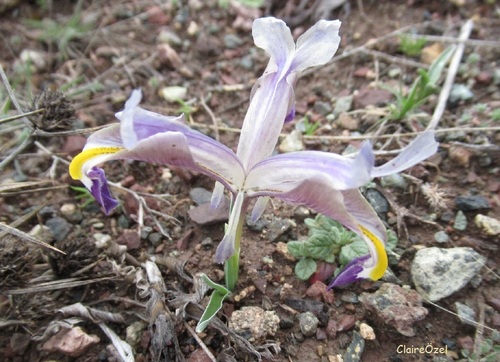
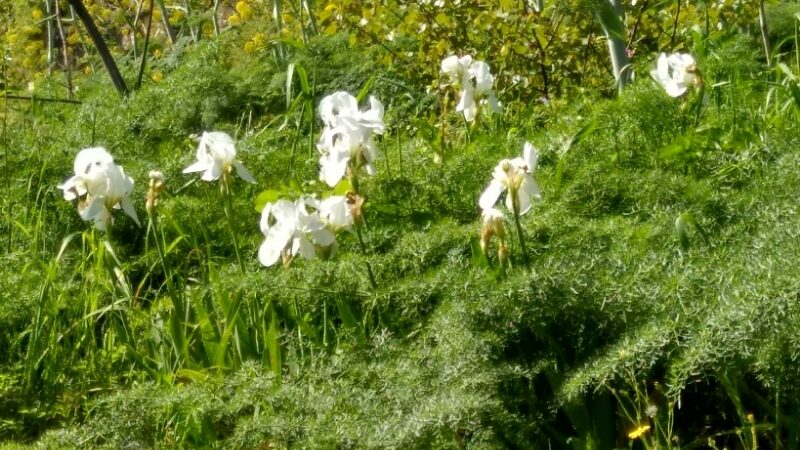
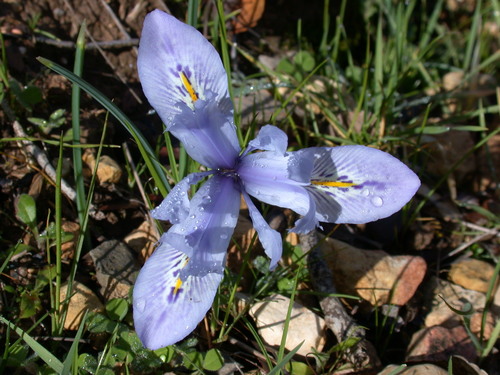
A small herb. It grows 20 cm tall. The corm or tuber is 1.5 cm across. It is round but flattened at the bottom. It is covered with white scales. There are only a few leaves and 30 cm long by 3-5 mm wide. The flowers are like creamy white stars. They have a scent.
Edible Uses
The corms are a valued food, eaten after roasting in hot ashes. Eaten for their water content. The corms are 15 - 20mm in diameter.
Traditional Uses
The tuber is eaten raw. It is also roasted and eaten.
This uses section is brief — help expand it
Distribution
It is a tropical plant. It grows in deep sand. It can grow in arid places. In Zimbabwe it grows above 1,200 m above sea level.
Where It Grows
Africa, Angola, Botswana, Central Africa, Congo, East Africa, Malawi, Namibia, Southern Africa, Tanzania, Zambia, Zimbabwe,
Cultivation
The flowers open toward sunset, at which time they are creamy white. By morning the perianth has turned ivory to buff, and the tepals droop slightly below the horizontal; they wilt by the end of the day. The flowers are most intensely fragrant when they first open but maintain their scent through the following day. Ample nectar is produced in the perianth tube.
Other Information
The tuber is eaten especially by children.
Synonyms
Also Known As
Karukuku, Nolokuku, Rhodesian spider-lily
References (7)
- Leger, S., 1997, A Description of Today's Use of Plants in West Bushmanland (Namibia). German Development Service. PO Box 220035, 14061 Berlin, Germany. http://www.sigridleger.de/book/
- Marshall, 1976,
- Peters, C. R., O'Brien, E. M., and Drummond, R.B., 1992, Edible Wild plants of Sub-saharan Africa. Kew. p 33
- Royal Botanic Gardens, Kew (1999). Survey of Economic Plants for Arid and Semi-Arid Lands (SEPASAL) database. Published on the Internet; http://www.rbgkew.org.uk/ceb/sepasal/internet [Accessed 19th April 2011]
- Ruiters-Welcome, A. K., 2019, Food plants of southern Africa. Ph.D. thesis. Univ. of Johannesburg p 67
Show all 7 references Hide references
- Welcome, A. K. & Van Wyk, B.-E., 2019, An inventory and analysis of the food plants of southern Africa. South African Journal of Botany 122 (2019) 136–179
- World Checklist of Useful Plant Species 2020. Royal Botanic Gardens, Kew