Afrosolen coeruleus
(Schinz) Goldblatt & Manning
gbif· cc0
President and Fellows of Harvard College
gbif· cc0
President and Fellows of Harvard College
Description
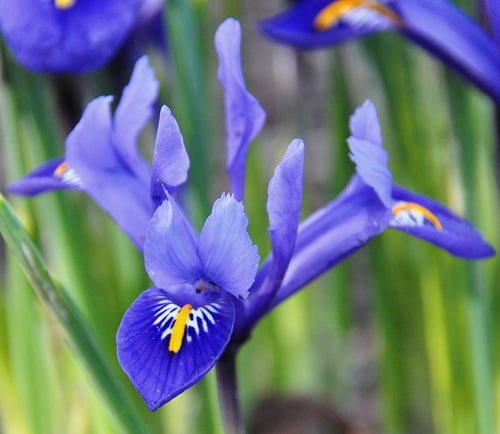
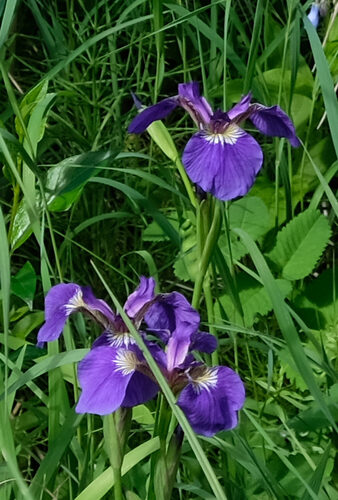
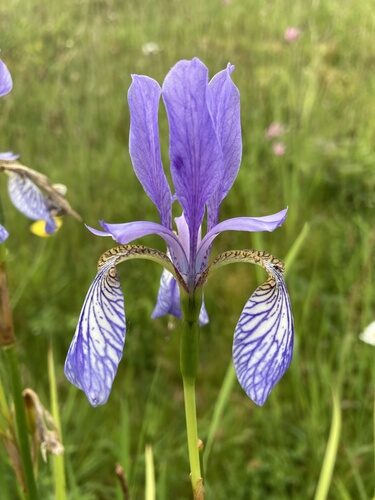
A herb. It has a bulb or corm. The corm is cone shaped with a flat bottom. It has a covering of net like fibres. It is 12-16 mm across at the base. It is an erect plant and keeps growing from year to year. It can grow 40 cm high. It can form stands of one plant. Their are 2-4 leaves and they re 2-4 mm wide. The upper leaves get smaller. The leaves are corrugated. The flowers are blue with a yellow throat. They are in a loose group with 3-5 flowers on each branch.
Edible Uses
The corm is an appreciated food eaten raw, used in vegetable dishes, pounded and cooked with water, fat or milk, or roasted in ashes.
Traditional Uses
The corm is eaten raw. It is also used in vegetable dishes. They can be pounded and cooked with water, fat or milk. It is popular roasted in the ashes.
Medicinal Uses
The corm has traditional food and medicinal applications in African cultures.
Distribution
It is a subtropical plant. It is often in seasonally waterlogged and poorly drained locations. It can be in sandy, loam or clay soils. It grows between sea level and 1,800 m above sea level. It can grow in arid places.
Where It Grows
Africa, Botswana, Namibia, Southern Africa,
Other Information
It is an appreciated food.
Synonyms
Also Known As
Onduvi, Onyengulushe
References (5)
- Lee, 1979, (As Lapeirousia coerulea)
- Peters, C. R., O'Brien, E. M., and Drummond, R.B., 1992, Edible Wild plants of Sub-saharan Africa. Kew. p 33 (As Lapeirousia coerulea)
- Rodin, 1985, (As Lapeirousia coerulea)
- Royal Botanic Gardens, Kew (1999). Survey of Economic Plants for Arid and Semi-Arid Lands (SEPASAL) database. Published on the Internet; http://www.rbgkew.org.uk/ceb/sepasal/internet [Accessed 19th April 2011] (As Lapeirousia coerulea)
- World Checklist of Useful Plant Species 2020. Royal Botanic Gardens, Kew