Panicum novemnerve
Stapf
Black seed panicum
gbif· cc-by
Royal Botanic Gardens, Kew
gbif· cc-by
Royal Botanic Gardens, Kew
gbif· cc0
Conveyor Belt
Description
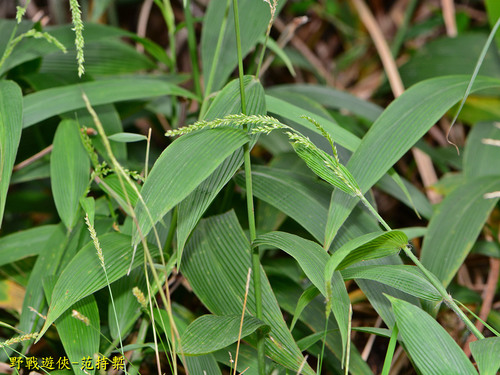
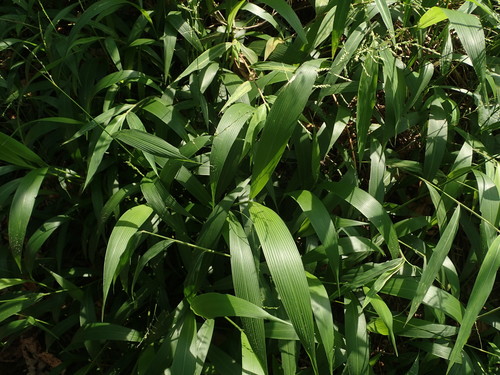
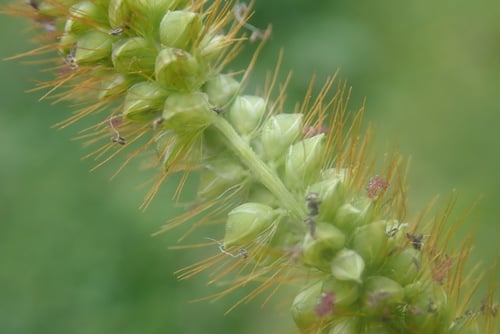
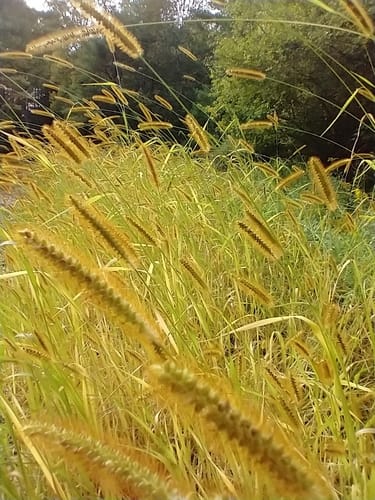
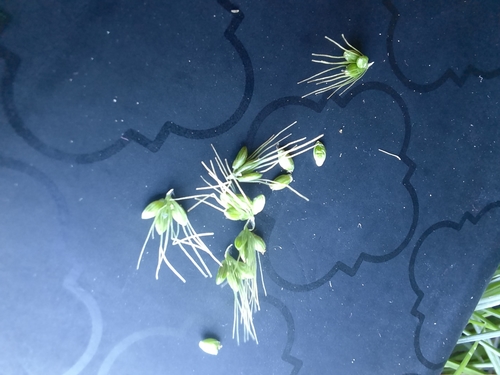
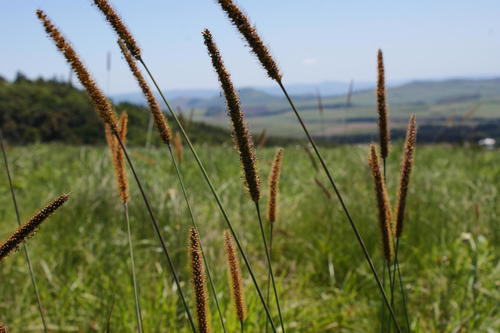
An annual grass. It has stiff rough hairs. It grows 30-60 cm high. The leaf blade is 6-20 cm long. It is narrow and tapers to the tip. The flowering panicle is 10-20 cm long. It has many branches. The spikelets are about 2 mm long. They are narrowly oval.
Edible Uses
The seeds are used as a cereal grain.
Distribution
It is a tropical plant. It grows in disturbed open places. It grows between 1,080-1,400 m altitude. It grows in areas with an annual rainfall between 300-400 mm. It can grow in arid places.
Where It Grows
Africa, Botswana, East Africa, Malawi, Namibia, South Africa, Southern Africa, Tanzania, Zambia, Zimbabwe,
Also Known As
Kalya-nkanga, Koka-nkoka
References (6)
- Flora Zambesiaca. http://apps.kew.org/efloras
- Fowler, D. G., 2007, Zambian Plants: Their Vernacular Names and Uses. Kew. p 71
- Grivetti, L. E., 1980, Agricultural development: present and potential role of edible wild plants. Part 2: Sub-Saharan Africa, Report to the Department of State Agency for International Development. p 73
- Peters, C. R., O'Brien, E. M., and Drummond, R.B., 1992, Edible Wild plants of Sub-saharan Africa. Kew. p 25
- Royal Botanic Gardens, Kew (1999). Survey of Economic Plants for Arid and Semi-Arid Lands (SEPASAL) database. Published on the Internet; http://www.rbgkew.org.uk/ceb/sepasal/internet [Accessed 3rd June 2011]
Show all 6 references Hide references
- Scudder, 1962,