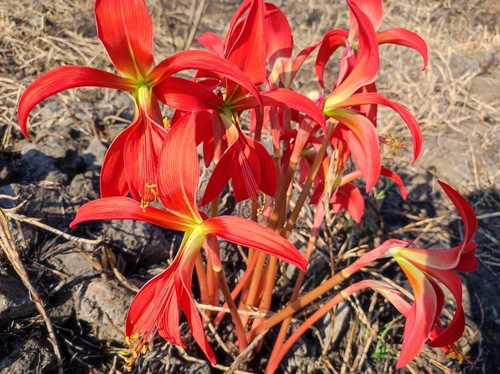
Ammocharis tinneana
(Kotschy & Peyr.) Milne-Redh. & Schweick.
iNaturalist· cc-by
(c) Robert Taylor, some rights reserved (CC BY), uploaded by Robert Taylor
iNaturalist· cc-by-nc
(c) Riana Fourie, some rights reserved (CC BY-NC), uploaded by Riana Fourie
Description
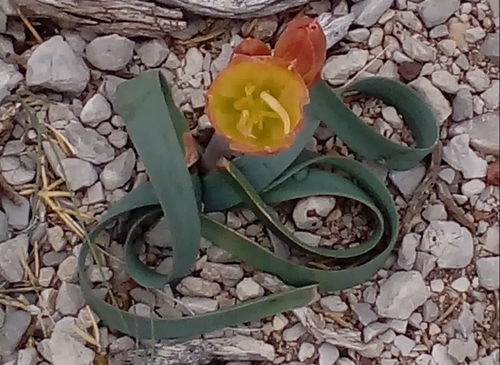
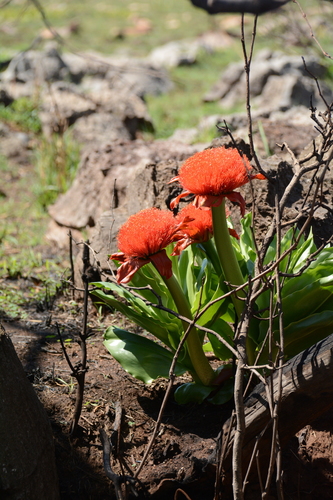
A bulb plant. The bulb can be 13 cm across. It is a herb that keeps growing from year to year. The leaves are in a ring at the base. They grow 50 cm long. The flowers are pink to red and in a large flat topped group at the top of the plant.
Edible Uses
The flowers are used in sauce, and the leaves are also edible.
Traditional Uses
The flower is used in sauce.
This uses section is brief — help expand it
Medicinal Uses
The flowers are traditionally used in sauce preparations.
Distribution
It is a tropical plant. It grows in the savannah steppe.
Where It Grows
Africa, Angola, Botswana, Central Africa, Chad, Congo, East Africa, Ethiopia, Hawaii, Kenya, Malawi, Mozambique, Namibia, Rwanda, Somalia, Southern Africa, Sudan, Tanzania, Uganda, Zambia, Zimbabwe,
Cultivation
It can be grown from seeds.
Production
Plants flower after a good rainstorm.
Synonyms
References (4)
- Grivetti, L. E., 1980, Agricultural development: present and potential role of edible wild plants. Part 2: Sub-Saharan Africa, Report to the Department of State Agency for International Development. p 70
- Malaisse, F., 1997, Se nourrir en floret claire africaine. Approche ecologique et nutritionnelle. CTA., p 91.
- Peters, C. R., O'Brien, E. M., and Drummond, R.B., 1992, Edible Wild plants of Sub-saharan Africa. Kew. p 10
- Scudder, 1971,