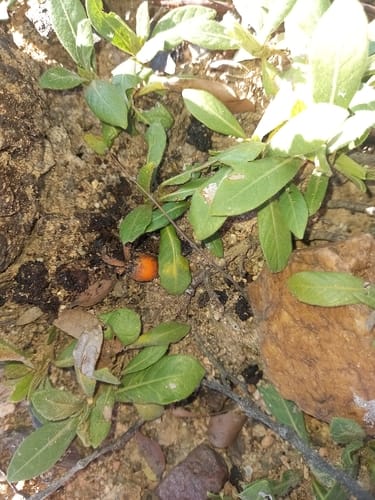
Neolamarckia cadamba
(Roxb.) Bosser
Kadam tree, Philippine Wonder Tree
iNaturalist· cc0
no rights reserved, uploaded by 葉子
iNaturalist· cc-by-nc
(c) Rujuta Vinod, some rights reserved (CC BY-NC)
Summary
Source: WikipediaNeolamarckia cadamba, with English common names burflower-tree, laran, and Leichhardt pine, and called kadamba or kadam or cadamba locally, is an evergreen, tropical tree native to South and Southeast Asia. The genus name honours French naturalist Jean-Baptiste Lamarck. It has scented orange flowers in dense globe-shaped clusters. The flowers are used in perfumes. The tree is grown as an ornamental plant and for timber and paper-making. Kadamba features in Indian religions.
Description
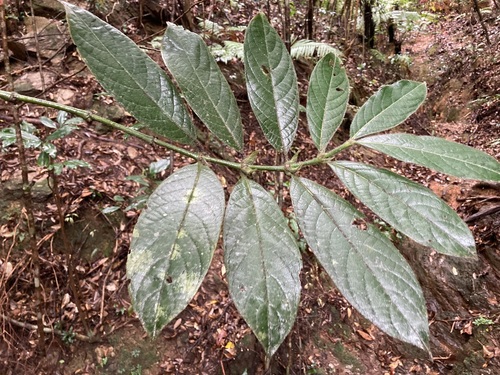
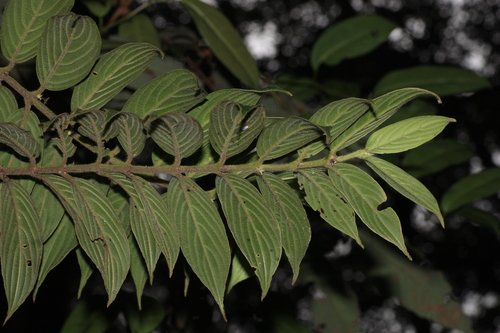
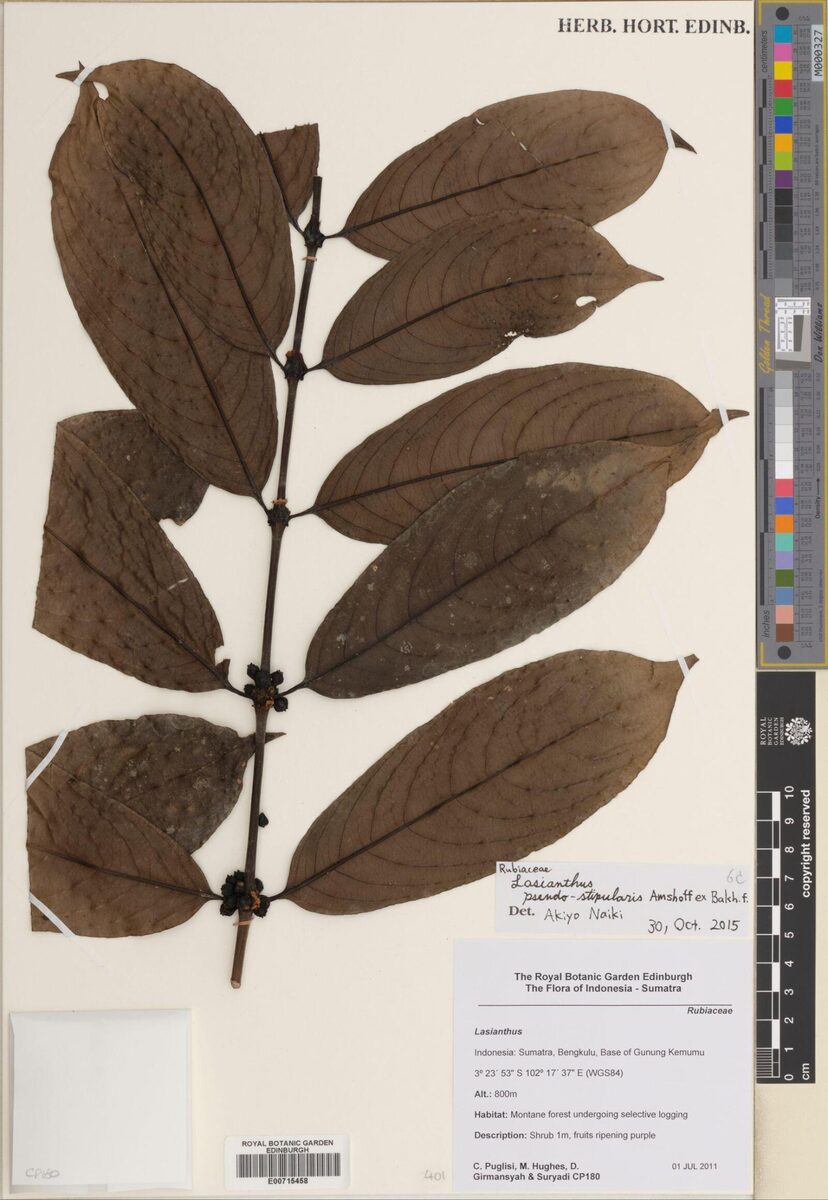
A large tree up to 15 to 30 m high and 40 to 60 cm across the trunk. It spreads 5-10 m wide. It has stiff spreading branches. It loses its leaves during the year. It can have buttresses. The branches are stiff and spread outwards. The bark is thin and slightly rough and grey to light brown. It is flaky. The bark of old trees is dark, rough and cracked. The leaves are simple, opposite, leather like, dark green above and pale green beneath. They are broad being 20 to 25 cm long and 11 to 15 cm wide. They droop downwards. Young leaves are much larger. The base is rounded and the tip tapering and with a point. The leaf edges are entire and the leaf stalk is robust and 4 to 5 cm long. The leaf like appendage at the base of the leaf stem is slightly flattened and tapering and remains on the twigs. The flowers have both both sexes together and they are numerous. They occur in yellowish round heads 3-4 cm across. These occur singly at the ends of branches. The fruit is made up of the ovaries of several flowers joined together. This multiple fruit is fleshy, round and about 3 to 5 cm across. They are yellow when ripe.
Edible Uses
The fruit and inflorescences are reportedly edible.
Traditional Uses
The ripe fruit are eaten with salt or cooked as a vegetable. A spirit drink is distilled from the flowers. Flower heads are eaten raw or pickled. The seeds are roasted and the oil is eaten.
Medicinal Uses
The dried bark is used to relieve fever and as a tonic. A leaf extract serves as a mouth gargle.
Distribution
A tropical plant. It suits tropical and subtropical places. It grows in rainforests and along streams. It needs a warm sunny position and a well-drained soil. In Nepal it grows up to 1000 m altitude. They occur in the Philippines in Mindanao, particularly in the provinces of Bukidnon and Cotabato. They are also growing in Makiling Forest, Laguna. In Yunnan.
Where It Grows
Andamans, Asia, Australia, Bangladesh, Bhutan, Cambodia, Central America, China, Costa Rica, Fiji, Himalayas, India, Indochina, Indonesia, Laos, Malaysia, Myanmar, Nepal, Northeastern India, Pacific, Papua New Guinea, PNG, Philippines, SE Asia, Sri Lanka, Thailand, Vietnam,
Cultivation
Plants can be grown from seed. The seed are very small. The fruit split and the seeds are spread by wind. Plants can be grown by cuttings of the shoots.
Propagation
Seed is best sown in a nursery, as direct sowing is unreliable due to the small seed size and sensitivity to drought, excess moisture, and direct sun. Germination begins around 10–14 days after sowing during the rainy season. Seedlings are transplanted to nursery beds or plastic bags at 8–12 weeks old, using a growing medium enriched with organic matter. After 6–7 months, when seedlings reach about 30cm tall, they are ready for field planting and can be transplanted bare-rooted with little loss of survival. Young seedlings are highly susceptible to weed competition and should be weeded regularly. Two-month-old seedlings can be moved to nursery beds or polythene bags and held until the start of the monsoon rains. For best establishment, seedlings should be planted with their balls of earth intact. Extracting seed from ripe fruit involves air drying, crushing, and sieving through a No. 35 US Standard sieve; alternatively, fruits can be soaked until rotted, ground by hand into a thick slurry, air dried, and passed through a series of sieves ending with a No. 35, which improves seed purity to up to 98% and improves germination success. Air layering is also possible.
Other Uses
Amboina is a typical pioneer species suited to reforestation programmes, including watershed restoration, erosion-prone areas, and windbreaks in agroforestry systems. It also works well as a shade tree for dipterocarp line planting. Trees shed large quantities of leaf and non-leaf litter that, on decomposition, improves soil organic carbon, cation exchange capacity, available plant nutrients, and exchangeable bases beneath the canopy. Fresh leaves are sometimes used as plates or serviettes. A yellow dye can be obtained from the root bark. The flowers yield an essential oil and are an important raw material in producing Indian 'attar' perfumes, in which the essence is absorbed into a sandalwood base by hydro-distillation. Flower extracts also exhibit nematicidal effects on Meloidogyne incognita. The wood is white with a light yellow tinge, becoming creamy yellow on exposure; sapwood and heartwood are not clearly differentiated. It has a density of 290–560 kg/m³ at 15% moisture content, a fine to medium texture, straight grain, low lustre, and no characteristic odour or taste. It works easily with hand and machine tools, cuts cleanly, takes nails well, and produces a very good surface finish. However, the wood is non-durable — graveyard tests in Indonesia recorded an average lifespan in ground contact of under 1.5 years. It air dries rapidly with little or no degrade and is very easy to preserve using open tank or pressure-vacuum systems. Impregnation with synthetic resins increases its density and compressive strength. Uses include plywood, light construction, pulp and paper, boxes and crates, dug-out canoes, and furniture components.
Production
It is fast growing. The trees flower and fruit after 5 years.
Other Information
The fruit are especially eaten by children.
Notes
There are 2 Neolamarckia species. Another tree Mitragyna is also called kadamb.
Synonyms
Also Known As
Burr-flower Tree, Gao trung hoa, Jabon, Kaatoan-bangkal, Kadam ba, Kadambe, Kelempayan, Kisalo, Kodam, Kwdwm, Kra-thum, Labula, Laran, Leichhardt pine, Mau, Roghu, Thkow
References (42)
- Ambasta S.P. (Ed.), 2000, The Useful Plants of India. CSIR India. p 44 (As Anthocephalus cadamba)
- Bandyopadhyay, S. et al, 2009, Wild edible plants of Koch Bihar district, West Bengal. Natural Products Radiance 8(1) 64-72
- Bandyopadhyay, S., et al, 2012, A Census of Wild Edible Plants from Howrah District, West Bengal, India. Proceedings of UGC sponsored National Seminar 2012
- Bhardwaj, J. & Seth, M. K., 2017, Edible wild plant resources of Bilaspur, Hamirpur and Una districts of Himachal Pradesh, India. International Journal of Botany Studies. Volume 2; Issue 6; p 09-17 (As Anthocephalus cadamba)
- Bircher, A. G. & Bircher, W. H., 2000, Encyclopedia of Fruit Trees and Edible Flowering Plants in Egypt and the Subtropics. AUC Press. p 33 (As Anthocephalus cadamba)
Show all 42 references Hide references
- Bole, P.V., & Yaghani, Y., 1985, Field Guide to the Common Trees of India. OUP p 65 (As Anthocephalus cadamba)
- Brahma, S., et al, 2013, Wild edible fruits of Kokrajhar district of Assam, North-East India, Asian Journal of Plant Science and Research 3(6):95-100 (As Anthocephalus cadamba)
- Bull. Mus. Natl. Hist. Nat., B, Adansonia 6:247. 1984 (As (Roxb.) Mosser)
- Burkill, I.H., 1966, A Dictionary of the Economic Products of the Malay Peninsula. Ministry of Agriculture and Cooperatives, Kuala Lumpur, Malaysia. Vol 1 (A-H) p 173 (As Anthocephalus cadamba)
- Burkill, I.H., 1966, A Dictionary of the Economic Products of the Malay Peninsula. Ministry of Agriculture and Cooperatives, Kuala Lumpur, Malaysia. Vol 1 (A-H) p 173 (As Anthocephalus chinensis)
- Chowdery, T., et al, 2014, Wild edible plants of Uttar Dinajpur District, West Bengal. Life Science Leaflets. 47:pp 20-36 http://lifesciencesleaflets.ning.com
- Chowdhury, M. & Mukherjee, R., 2012, Wild Edible Plants Consumed by Local Communities of Maldah of West Bengal, India. Indian J.Sci.Res.3(2) : 163-170
- Cooper, W. and Cooper, W., 2004, Fruits of the Australian Tropical Rainforest. Nokomis Editions, Victoria, Australia. p 447
- Dangol, D. R. et al, 2017, Wild Edible Plants in Nepal. Proceedings of 2nd National Workshop on CUAOGR, 2017.
- Dey, A. & Mukhererjee, A., 2015, Living and Survival Amidst Hunger: Wild Edible Botanicals as a Prime Forest Productivity in the Rural Purulia District, West Bengal, India from Colonial to Present. Research Journal of Forestry 9(3): 71-86
- Elliot, W.R., & Jones, D.L., 1982, Encyclopedia of Australian Plants suitable for cultivation. Vol 2. Lothian. p 204 (As Anthocephalus chinensis)
- Engel, D.H., & Phummai, S., 2000, A Field Guide to Tropical Plants of Asia. Timber Press. p 69 (As Anthocephalus chinensis)
- Gautam, R. S., et al, 2020, Wild Edible Fruits of Nepal. Int. J. Appl. Sci. Biotechnol. Vol 8(3): 289-304 (Also as Anthocephalus cadamba)
- Ghimeray, A. K., Lamsal, K., et al, 2010, Wild edible angiospermic plants of the Illam Hills (Eastern Nepal) and their mode of use by local community. Korean J. Pl. Taxon. 40(1) (As Anthocephalus cadamba)
- Ghosh, C. & Das A. P., 2011, Some useful and poisonous tea garden weeds from the Darjiling District of West Bengal, India. Pleione 5(1): 91 - 114
- Hariyadi, B., 2008, The Entwined Tree: Traditional Natural Resource Management of Serampas, Jambi, Indonesia. Ph. D thesis. Univ. or Hawaii. p 401 (As Anthocephalus cadamba)
- Hearne, D.A., & Rance, S.J., 1975, Trees for Darwin and Northern Australia. AGPS, Canberra p 22, Pl 5 (As Anthocephalus cadamba)
- Hedrick, U.P., 1919, (Ed.), Sturtevant's edible plants of the world. p 59 (As Anthocephalus morindaefolius)
- Hibbert, M., 2002, The Aussie Plant Finder 2002, Florilegium. p 30 (As Anthocephalus chinensis)
- Kahlon, L. K. & Singh, R., 2019, Traditional knowledge & Dynamics of edible plants of primitive tribal group ‘Paudi Bhuyan’ with changing demography migration patterns in Northern Odisha. Indian Journal of Traditional Knowledge Vol 18(1), pp 7-15
- Krishen P., 2006, Trees of Delhi, A Field Guide. DK Books. p 80
- Manandhar, N.P., 2002, Plants and People of Nepal. Timber Press. Portland, Oregon. p 332
- McMakin, P.D., 2000, Flowering Plants of Thailand. A Field Guide. White Lotus. p 34 (As Anthocephalus cadamba)
- Milow, P., et al, 2013, Malaysian species of plants with edible fruits or seeds and their evaluation. International Journal of Fruit Science. 14:1, 1-27 (As Anthocephalus cadamba)
- Miya, M. S. & Gautum, D., 2021, Checklist of floral species at the Institute of Forestry, Pokhara Campus, Pokhara, Nepal. Journal of Institute of Forestry, Nepal 18 (2021) 133-177 (As Anthocephalus cadamba)
- Monsalud, M.R., Tongacan, A.L., Lopez, F.R., & Lagrimas, M.Q., 1966, Edible Wild Plants in Philippine Forests. Philippine Journal of Science. p 535 (As Anthocephalus cadamba)
- Mozhui, R., et al, 2011, Wild edible fruits used by the tribals of Dimapur district of Nagaland, India. Pleione 5(1): 56 - 64.
- Pasha, M. K. & Uddin, S. B., 2019, Minor Edible Fruits of Bangladesh. Bangladesh J. Plant Taxon. 26(2): 299–313 (As Anthocephalus cadamba)
- Phon, P., 2000, Plants used in Cambodia. © Pauline Dy Phon, Phnom Penh, Cambodia. p 41 (As Anthocephalus chinensis)
- Sahni, K.C., 2000, The Book of Indian Trees. Bombay Natural History Society. Oxford. p 113 (As Anthocephalus sinensis)
- Singh, H.B., Arora R.K.,1978, Wild edible Plants of India. Indian Council of Agricultural Research, New Delhi. p 49 (As Anthocephalus indica)
- Smith, A.C., 1988, Flora Vitiensis Nova, Lawaii, Kuai, Hawaii, Volume 4 p 160
- Swaminathan, M.S., and Kochnar, S.L., 2007, An Atlas of Major Flowering Trees in India. Macmillan. p 162
- Townsend, K., 1994, Across the Top. Gardening with Australian Plants in the tropics. Society for Growing Australian Plants, Townsville Branch Inc. p 82 (As Anthocephalus chinensis)
- WATT (As Anthocephalus cadamba)
- World Checklist of Useful Plant Species 2020. Royal Botanic Gardens, Kew
- www.worldagroforestrycentre.org/treedb/ (As Anthocephalus cadamba)