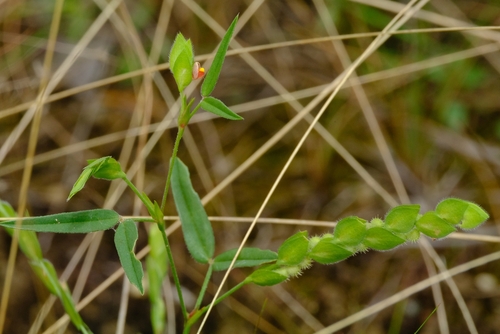
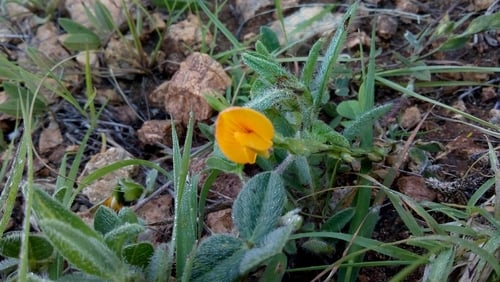
Trifolium wormskioldii
Lehm.
Springhead clover, Springbank clover
iNaturalist· cc-by-nc
(c) Mike Patterson, some rights reserved (CC BY-NC), uploaded by Mike Patterson
iNaturalist· cc-by-nc
(c) alesio_carello, some rights reserved (CC BY-NC)
Summary
Source: WikipediaTrifolium wormskioldii is a species of clover native to the western half of North America. Its common names include cows clover, coast clover, sand clover, seaside clover, springbank clover, and Wormskjold's clover.
Description
A herb. It has long underground stems or rhizomes. There are fine roots at the nodes on these stems. There are few stems and these can be upright or lie along the ground. The leaves have 3 leaflets. These vary is shape and size. The central leaflet is 2.4 cm long. There are fine teeth along the edge. The flower heads are almost round. There are 50 flowers in a group. The flowers are purple often with white tips. The fruit is a pod with 1-5 seeds.
Edible Uses
The long, fleshy, white rhizomes were a highly important food for several Native American tribes, who semi-cultivated the plant to ensure reliable yields. Rhizomes can be harvested at any time of year and were typically dried before cooking, though they were occasionally eaten raw. Dried roots store well in a cool place for a considerable time. The long horizontal rhizomes were considered superior to shorter taproots, and roots grown in soft sandy soils were regarded as the best. Rhizomes were often harvested alongside the long brown roots of Pacific silverweed (Potentilla anserina ssp. pacifica), usually in autumn after the leaves began to die back. They were dug with long pointed wooden sticks, cleaned, and tied in fist-sized bundles using one rhizome as a tie, then traditionally cooked in underground pits. Leaves and flowers can be eaten raw, usually with salt, and were often consumed in quantity since this species produces tender leaves later in the season than most other clovers. Wilted dry leaves have been soaked and stirred in cold water to make a sour drink.
Traditional Uses
The rhizomes are harvested after the leaves have been killed by frost and then roasted in ashes or boiled.
This uses section is brief — help expand it
Medicinal Uses
None known
Known Hazards
Green plant parts contain harmful compounds including nitrates, slaframine, cyanogenic glycosides, phytoestrogens, and saponins that are especially dangerous to livestock. Wilted or discolored plants must never be eaten. Larger servings should always be cooked to reduce toxin levels.
Distribution
It is a temperate plant. It grows in wet places. It is often on salty flats and the edges of streams.
Where It Grows
Alaska, Canada, North America, USA,
Cultivation
It is a perennial and grows primarily in the temperate biome. Succeeds in moist, well-drained, circum-neutral soil in full sun. Succeeds in poor soils. Dividing the plant every 3 - 4 years maintains vigour and promotes new growth of roots. Its native habitat is beaches to mountain meadows, growing in wet and periodically inundated places, such as high salt and brackish marshes, coastal dunes, wet meadows, and stream banks, generally in open, moist or marshy places; at elevations up to 3,200 metres. This species produces fresh, tender leaves later into the summer than other edible species of Trifolium in western N. America This species has a symbiotic relationship with certain soil bacteria, which form nodules on the roots and fix atmospheric nitrogen. Some of this nitrogen is utilised by the growing plant but some can also be used by other plants growing nearby. Buttercups growing nearby depress the growth of the nitrogen bacteria by means of a root exudate. USDA Hardiness Zones: Generally thrives in Zones 5–9, especially in mountain meadow habitats. Weed/Invasiveness: Native to North America and considered a prime forage species rather than an invasive threat.
Propagation
Pre-soak seed for 12 hours in warm water, then sow in spring in situ. If seed is scarce, sow in pots in a cold frame instead. Prick seedlings out into individual pots when large enough to handle, and plant out after the last expected frosts. Division is straightforward and is best done in spring, though careful division at other times of year generally also succeeds.
Other Uses
Functions as a nitrogen fixer.
Other Information
It has been an important food.
Nutrition
| Part | Moisture | kJ | kcal | Protein | Vit A | Vit C | Iron | Zinc |
|---|---|---|---|---|---|---|---|---|
| Rhizome | 81 | 308 | 75 | 0.7 | 0.3 | — | 4.5 | 0.3 |
Synonyms
Also Known As
Springbank Clover, Cow clover (Trifolium wormskioldii), Slender clover
References (7)
- Kuhnlein, H. V. & Turner, N. J., 1991, Traditional Plant Foods of Canadian Indigebous Peoples. Nutrition, Botany and Use. Gordon and Breach Publishers.
- MacKinnon, A., et al, 2009, Edible & Medicinal Plants of Canada. Lone Pine. p 259
- Moerman, D. F., 2010, Native American Ethnobotany. Timber Press. p 567
- Sem. hort. bot. Hamburg 17. 1825
- Turner, N. J. and Kuhlein, H. V., 1982, Two Important "Root" Foods of the Northwest Coast Indians: Springbank Clover (Trifolium wormskioldii) and Pacific Silverweed (Potentilla anserina ssp. pacifica). Economic Botany 36(4) pp 411-432
Show all 7 references Hide references
- Turner, N., 1995, Food Plants of Coastal First Peoples. Royal BC Museum Handbook p 94
- Turner, N. J. et al, 2011, Edible and Tended Wild Plants, Traditional Ecological Knowledge and Agroecology. Critical Reviews in Plant Sciences, 30:198-225