Vachellia kirkii
(Oliver) Kyal. & Boatwr.
Kirk's acacia, Flood plain thorn
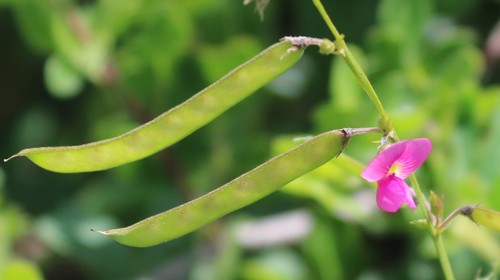
iNaturalist· cc-by-nc
(c) Rujuta Vinod, some rights reserved (CC BY-NC), uploaded by Rujuta Vinod
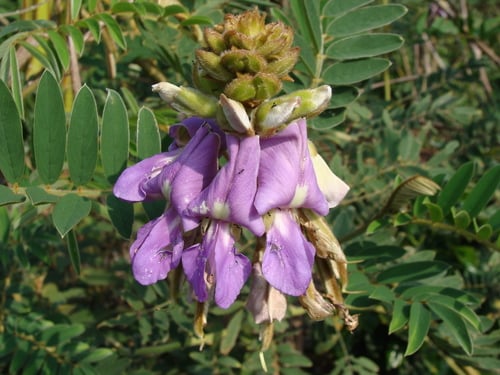
iNaturalist· cc-by-nc
(c) Craig Peter, some rights reserved (CC BY-NC)
Summary
Source: WikipediaVachellia kirkii, formerly classified as Acacia kirkii, is a tree species native to tropical Africa, but now attributed to the genus Vachellia, It is commonly known as the flood plain acacia. This species is a multi-trunked shrub or tree with a spreading, flat-topped crown. it typically grows from 2.5 to 15 meters in height, but can occasionally reach up to 18 meters. Vachellia kirkii is distributed across tropical Africa, from Guinea and Mali to the Democratic Republic Congo, Uganda, Kenya, Burundi, Rwanda, Tanzania, Angola, Zambia, and Zimbabwe. It thrives in various habitats including woodlands, savannas, and mixed scrublands, often in seasonally-flooded areas near rivers and lakes. These environment includes groundwater forests, swamp forests, and flooded savannas, on nutrient-rich silty and clay soils. The is found at elevations ranging from sea level to 1,980 metres. The species is named in honor of John Kirk, who accompanied David Livingstone on his Zambezi expedition in 1858.
Description
A flat topped shrub or small tree. It grows 2-15 m high. It can have one or many stems. It loses its leaves during the year. The bark is yellow to brown. It peels off showing green to yellow bark underneath. There are spines in pairs. They are 4-8 mm long. The leaves are made up of 6-14 pairs of larger leaflets and 7-20 pairs of small leaflets. These are narrow. The flowers are in heads and are yellow or white. The fruit are straight pods. They are 2-10 cm long by 0.8-2 cm wide. There are 2 seeds. There is a small point on the top.
Edible Uses
The gum or resin is edible. The bark is used to make tea and to curdle milk.
Traditional Uses
The bark is used to make tea. It is also used to curdle milk. The gum or resin is edible.
This uses section is brief — help expand it
Medicinal Uses
The bark is used to make tea.
Known Hazards
Especially in times of drought, many Acacia species can concentrate high levels of the toxin Hydrogen cyanide in their foliage, making them dangerous for herbivores to eat.
Distribution
It is a tropical plant. It grows in woodland, grassland and lower hills. It is often in areas with seasonal drainage. It grows from 1,500-1,900 m altitude. It grows in areas with a rainfall above 100 mm per year. It can grow in arid places.
Where It Grows
Africa, Angola, Botswana, Central Africa, Congo, East Africa, Kenya, Mali, Mozambique, Namibia, Rwanda, Southern Africa, Tanzania, Uganda, West Africa, Zambia, Zimbabwe,
Cultivation
It can be cut back and will re-grow.
Propagation
The seed of most, if not all, members of this genus has a hard seedcoat and may benefit from scarification before sowing to speed up germination. This can usually be done by pouring a small amount of nearly boiling water on the seeds (being careful not to cook them!) and then soaking them for 12 - 24 hours in warm water. By this time they should have imbibed moisture and swollen - if they have not, then carefully make a nick in the seedcoat (being careful not to damage the embryo) and soak for a further 12 hours before sowing. Acacia seeds that have matured fully on the bush and have been properly dried have a hard seed coat and can be stored in closed containers without deterioration for 5 - 10 years or more in dry conditions at ambient temperatures. It is best to remove the aril, which attracts weevils and can lead to moulds forming. The arils are easilyremoved by placing the seeds in water and rubbing them between the hands, then drying the seeds and winnowing them.
Other Uses
A gum exudes from the trunk and branches. The wood is not durable. It is used for firewood and for construction of cattle and farm enclosures.
Notes
There are about 1,350 Acacia species. Over 1,000 occur in Australia. Also as Mimosaceae.
Synonyms
Also Known As
Kimwea, Makota, Mnara, Msese, Olerai, Ol-lerai
References (15)
- Burkill, H. M., 1985, The useful plants of west tropical Africa, Vol. 3. Kew. (As Acacia kirkii)
- Dalziel, 1937, (As Acacia kirkii)
- Dharani, N., 2002, Field Guide to common trees and Shrubs of East Africa. Struik. p 29 (As Acacia kirkii)
- Fl. trop. Afr. 2:350. 1871 (As Acacia kirkii)
- Glover, et al, 1966b, (As Acacia kirkii)
Show all 15 references Hide references
- Grivetti, L. E., 1980, Agricultural development: present and potential role of edible wild plants. Part 2: Sub-Saharan Africa, Report to the Department of State Agency for International Development. p 45 (var. intermedia) (As Acacia kirkii)
- ILDIS Legumes of the World http:www;ildis.org/Legume/Web (As Acacia kirkii)
- Mannheimer, C. A. & Curtis. B.A. (eds), 2009, Le Roux and Muller's Field Guide to the Trees and Shrubs of Namibia. Windhoek: Macmillan Education Namibia. p 104 (As Acacia kirkii)
- Mutie, F. M., et al, 2023, Important Medicinal and Food Taxa (Orders and Families) in Kenya, Based on Three Quantitative Approaches. Plants 2023, 12, 1145
- Peters, C. R., O'Brien, E. M., and Drummond, R.B., 1992, Edible Wild plants of Sub-saharan Africa. Kew. p 127 (As Acacia kirkii)
- Royal Botanic Gardens, Kew (1999). Survey of Economic Plants for Arid and Semi-Arid Lands (SEPASAL) database. Published on the Internet; http://www.rbgkew.org.uk/ceb/sepasal/internet [Accessed 26th April 2011] (As Acacia kirkii)
- Ruiters-Welcome, A. K., 2019, Food plants of southern Africa. Ph.D. thesis. Univ. of Johannesburg p 62
- van Wyk, Ben-Erik, 2019, The diversity and multiple uses of southern African legumes. Australian Systematic Botany, 2019, 32, 519–546
- Welcome, A. K. & Van Wyk, B.-E., 2019, An inventory and analysis of the food plants of southern Africa. South African Journal of Botany 122 (2019) 136–179
- World Checklist of Useful Plant Species 2020. Royal Botanic Gardens, Kew