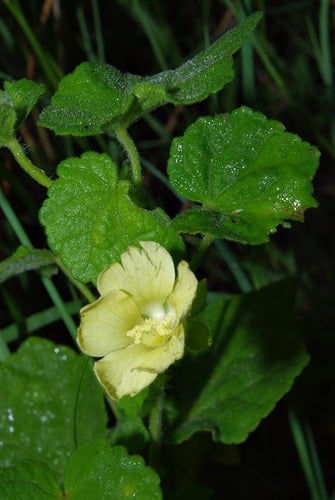
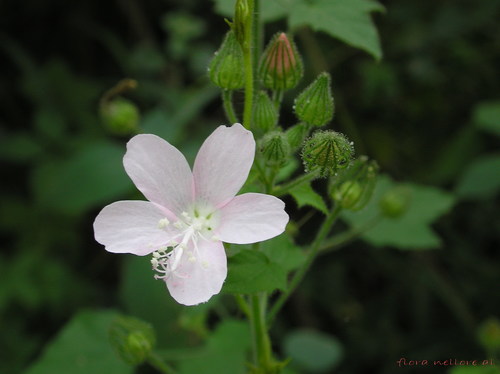
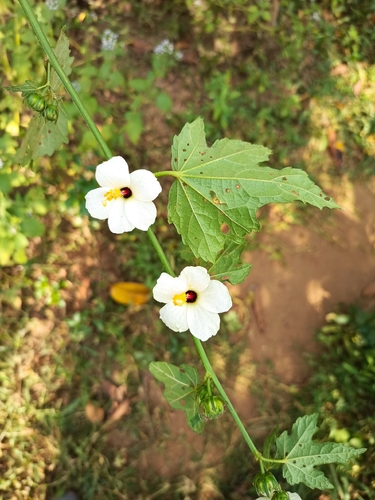
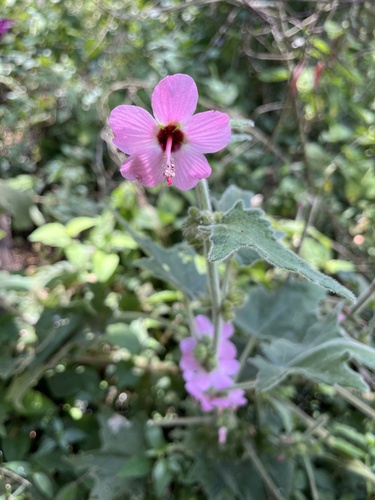
Christiana africana
DC.
iNaturalist· cc-by-nc
(c) merveille, some rights reserved (CC BY-NC)
iNaturalist· cc-by-nc
(c) merveille, some rights reserved (CC BY-NC)
iNaturalist· cc-by-nc
(c) merveille, some rights reserved (CC BY-NC)
Description
A low spreading tree. It grows to 12 m high. The trunk is 1 m across. The crown is spreading. The bark is grey and cracked. The small branches are reddish-brown. They have short hairs. The leaves are large and heart shaped. They are 12-30 cm long by 8-32 cm wide. They are broadly oval. They are heart shaped at the base and taper to the tip. The leaf stalk is 3.5-12 cm long. The flowers are white and have a scent. The occur in stalked clusters in the axils of leaves. The fruit consist of 1-5 separate parts. These are brown and velvety. The fruit splits into 2 boat shaped pieces. The seed is marbled.
Edible Uses
The leaves are eaten.
Medicinal Uses
A maceration of the leaf is used in washings against diarrhoea and palpitations, and an infusion of young leaves is drunk hot to treat dysentery. Bark preparations are used to treat stomach problems and gonorrhoea. Three compounds that have cardiotonic activity have been isolated from the bark and wood: the polyphenol scopoletol, the triterpene taraxerol and the peptide alkaloid frangulanine.
Distribution
It is a tropical plant. It grows along the edges of streams. It is often in the drier parts of the forest zone. It can be on the edges of mangroves. It can be in seasonally flooded forest.
Where It Grows
Africa, Angola, Benin, Burkina Faso, Cameroon, Central Africa, Central African Republic, CAR, Congo R, Côte d'Ivoire, Ghana, Guinea, Guinée, Guinea-Bissau, Guyana, Ivory Coast, Liberia, Madagascar, Nigeria, Senegal, Sierra Leone, South America, Sudan, Togo, Venezuela, West Africa,
Cultivation
A dioecious species, both male and female forms need to be grown if fruit and seed are required.
Propagation
Seed - when sown fresh it germinates within 15 - 20 days.
Other Uses
The leaves are used for wrapping cola nuts and foods to be sold in the market. The heartwood is light brown with purplish blue ripple marks; the sapwood whitish yellow to pale brown. The wood is hard, heavy, resilient, durable, with a handsome grain. It is made into axe-handles, stools and basins.
Notes
There is only one (five) Christiana species. It has also been put in the family Tiliaceae. Also put in the family Brownlowiaceae.
Also Known As
Asa, Aviavavy, Boroboka, Sesedula
References (4)
- Abbiw, D.K., 1990, Useful Plants of Ghana. West African uses of wild and cultivated plants. Intermediate Technology Publications and the Royal Botanic Gardens, Kew. p 41
- Koni, J. M. & Bostein, K., 2008, Noms et usages des plantes utiles chez les Nsong, DR Congo. University of Gothenburg. Department of Oriental and African Languages. p 32
- Heywood, V.H., Brummitt, R.K., Culham, A., and Seberg, O. 2007, Flowering Plant Families of the World. Royal Botanical Gardens, Kew. p 71
- Keay, R.W.J., 1989, Trees of Nigeria. Clarendon Press, Oxford. p 112