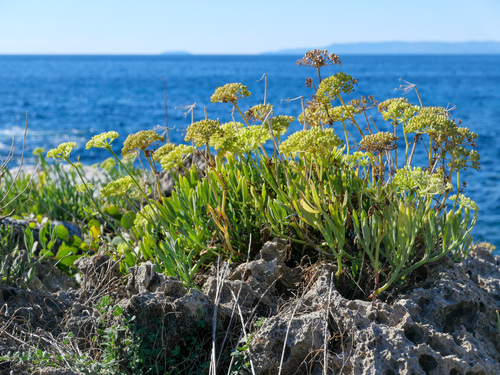
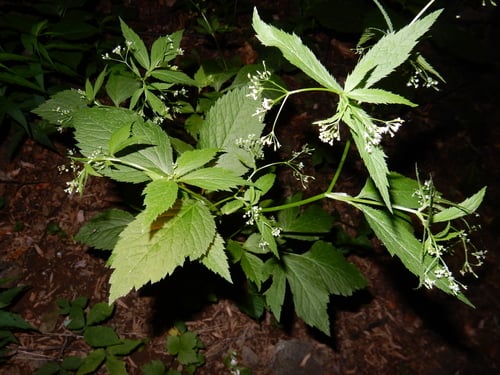
Apium graveolens
L.
Smallage, Wild celery
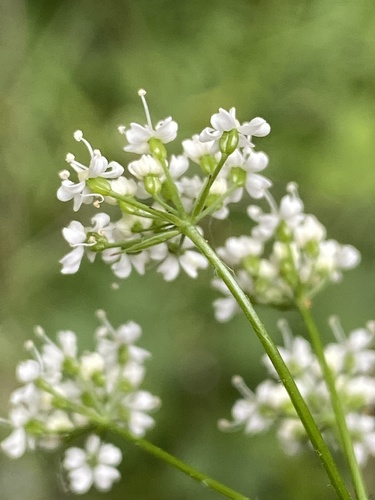
iNaturalist· cc-by-nc
(c) Stephen Thorpe, some rights reserved (CC BY-NC), uploaded by Stephen Thorpe
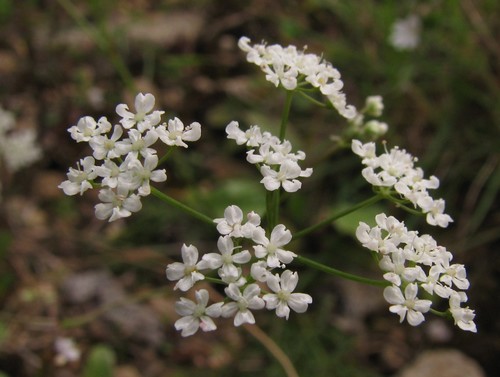
iNaturalist· cc0
no rights reserved, uploaded by John Cowles
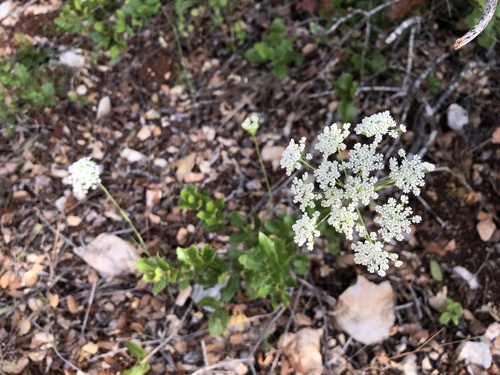
iNaturalist· cc-by-nc
(c) Schlenni, some rights reserved (CC BY-NC), uploaded by Schlenni
Summary
Source: WikipediaApium graveolens, known in English as celery, is an Old World species of flowering plant in the family Apiaceae. It was first described by Carl Linnaeus in 1753. The species is widely naturalised outside of its natural range and is used as a vegetable; modern cultivars have been selected for their leaf stalks (celery), a large bulb-like hypocotyl (celeriac), and their leaves (leaf celery).
Description
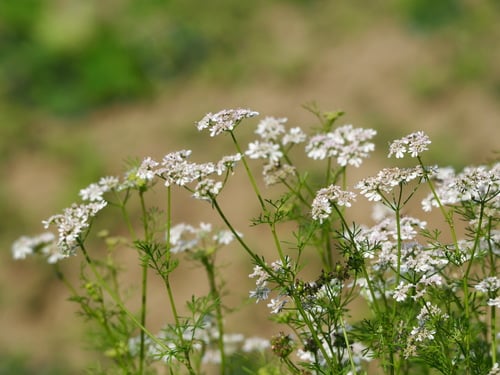
A herb that grows over 2 years. It has a strong smell. It grows 30-100 cm high and spreads 15-30 cm wide. The root is bulbous and fleshy. The stems have strong grooves. The leaves are finely divided. They are 50 cm long. The flowers are in small flat heads. They are green-white. The seeds are small and grey-brown. The seeds have ridges on them.
Edible Uses
Edible Parts: Leaves Root Seed Edible Uses: Condiment Leaves - raw or cooked. Mainly used as a flavouring in soups etc. They can be eaten raw but have a very strong flavour. They are toxic if consumed in large amounts. Seed - a flavouring. Used in small quantities to flavour soups and stews. An essential oil from the seed is also used as a flavouring. Root - cooked.
Traditional Uses
Caution: It is bitter and toxic in large amounts. The seeds are used in small amounts to flavour soups and stews. The leaves are used as a vegetable. They are used in soups and stews.
Medicinal Uses
Antianxiety Antirheumatic Aperient Appetizer Carminative Diuretic Emmenagogue Galactogogue Nervine Stimulant Tonic Wild celery has a long history of medicinal and food use. it is an aromatic bitter tonic herb that reduces blood pressure, relieves indigestion, stimulates the uterus and is anti-inflammatory. The ripe seeds, herb and root are aperient, carminative, diuretic, emmenagogue, galactogogue, nervine, stimulant and tonic. Wild celery is said to be useful in cases of hysteria, promoting restfulness and sleep and diffusing through the system a mild sustaining influence. The herb should not be prescribed for pregnant women. Seeds purchased for cultivation purposes are often dressed with a fungicide, they should not be used for medicinal purposes. The root is harvested in the autumn and can be used fresh or dried. The whole plant is harvested when fruiting and is usually liquidized to extract the juice. The seeds are harvested as they ripen and are dried for later use. An essential oil obtained from the plant has a calming effect on the central nervous system. Some of its constituents have antispasmodic, sedative and anticonvulsant actions. It has been shown to be of value in treating high blood pressure. A homeopathic remedy is made from the herb. It is used in treating rheumatism and kidney complaints.
Known Hazards
If the plant is infected with the fungus Sclerotinia sclerotiorum, skin contact with the sap can cause dermatitis in sensitive people. This is more likely to happen to Caucasians. Allergic responses include anaphylaxis in sensitive individuals. Cross-allergenicity between celery, cucumber, carrot, watermelon and possibly apples. Avoid during pregnancy as emmenagogue, abortifacient and uterine stimulant activity reported.
Distribution
A Mediterranean plant. It is hardy to frost. It can grow in salty soil. It is often in poorly drained waterlogged soil. It grows below 2,750 m above sea level. It can grow in arid places. In Yunnan.
Where It Grows
Afghanistan, Africa, Albania, Algeria, Andorra, Argentina, Armenia, Asia, Australia, Austria, Azores, Bahrain, Balkans, Bangladesh, Belgium, Botswana, Brazil, Britain, Bulgaria, Cameroon, Canada, Canary Is., Cape Verde, Caucasus, Central America, Central Asia, Chile, China, Costa Rica, Côte d'Ivoire, Crete, Cuba, Cyprus, Czech Republic, Denmark, Dominican Republic, East Africa, Easter Island, Ecuador, Egypt, Eritrea, Ethiopia, Europe, Finland, France, Georgia, Germany, Greece, Guatemala, Haiti, Hungary, India, Indochina, Iran, Iraq, Ireland, Israel, Italy, Ivory Coast, Jordan, Kazakhstan, Kyrgyzstan, Laos, Lebanon, Lesotho, Libya, Lithuania, Macedonia, Mediterranean*, Mexico, Middle East, Moldova, Mongolia, Morocco, Mozambique, Myanmar, Namibia, Nepal, Netherlands, New Zealand, Nigeria, Norfolk Is., North Africa, North America, Norway, Oman, Pakistan, Palestine, Paraguay, Peru, Poland, Portugal, Puerto Rico, Reunion, Romania, Russia, Saudi Arabia, Scandinavia, SE Asia, Sicily, Sinai, Slovakia, Slovenia, Socotra, South Africa, Southern Africa, South America, Spain, St Helena, Sweden, Switzerland, Syria, Taiwan, Tajikistan, Thailand, Trinidad-Tobagom Tunisia, Turkey, Türkiye, Turkmenistan, Ukraine, USA, Uzbekistan, Vietnam, West Africa, West Indies, Yemen, Yugoslavia, Zambia,
Cultivation
Prefers a rich moist soil in sun or semi-shade, but with some shade in the summer. It is tolerant of saline soils. The plants are fairly hardy, though they can be damaged by hard frosts. Wild celery is the parent of the cultivated celery (A. graveolens dulce) as well as celery leaf (A. graveolens secalinum) and celeriac (A. graveolens rapaceum). This entry only deals with the wild celery, the other plants are dealt with separately. A very aromatic plant, the aroma being most noticeable when the foliage is bruised. The growing plant is a good companion for leeks, tomatoes, French beans and brassicas.
Propagation
Seed - sow spring or autumn in situ. If seed is in short supply it can be sown in a cold frame in spring. The seed can harbour certain diseases of celery, it is usually treated by seed companies before being sold but if you save your own seed you should make sure that only seed from healthy plants is used.
Other Uses
Essential The growing plant is an insect repellent, it repels the cabbage white butterfly so is a good companion for brassicas. Special Uses Food Forest Scented Plants
Synonyms
Also Known As
Accia sarvaggi, Accio selvagge, Apio, Dania jangli, Kereviz, Krafs barri, Selleri, Surkhai
References (38)
- Ahmad, K., et al, 2018, Ethnobotanical investigation of wild vegetables used among local communities in northwest Pakistan. Acta Soc Bot Pol. 2019;88(1):3616.
- Al-Qura'n, S. A., 2010, Ethnobotanical and Ecological Studies of Wild Edible Plants in Jordan. Libyan Agriculture Research Center Journal International 1(4):231-243
- Beckstrom-Sternberg, Stephen M., and James A. Duke. "The Foodplant Database." http://probe.nalusda.gov:8300/cgi-bin/browse/foodplantdb.(ACEDB version 4.0 - data version July 1994) (As Celeri graveolens)
- Bircher, A. G. & Bircher, W. H., 2000, Encyclopedia of Fruit Trees and Edible Flowering Plants in Egypt and the Subtropics. AUC Press. p 36
- Biscotti, N. et al, 2018, The traditional food use of wild vegetables in Apulia (Italy) in the light of Italian ethnobotanical literature. Italian Botanist 5:1-24
Show all 38 references Hide references
- Blanco-Salas, J., et al, 2019, Wild Plants Potentially Used in Human Food in the Protected Area “Sierra Grande de Hornachos” of Extremadura (Spain). Sustainability 2019, 11, 456
- Bodkin, F., 1991, Encyclopedia Botanica. Cornstalk publishing, p 90
- Brown, D., 2002, The Royal Horticultural Society encyclopedia of Herbs and their uses. DK Books. p 125
- Bussman, R. W., et al, 2016, A comparative ethnobotany of Khevsureti, Samtskhe-Javakheti, Tusheti, Svaneti, and Racha-Lechkhumi, Republic of Georgia (Sakartvelo), Caucasus. Journal of Ethnobiology and Ethnomedicine (2016) 12:43
- Bussman, R. W. et al, 2017, Ethnobotany of Samtskhe-Javakheti, Sakartvelo (Republic of Georgia), Caucasus. Indian Journal of Traditional Knowledge Vol. 16(1) pp 7-24
- Cerne, M., 1992, Wild Plants from Slovenia used as Vegetables. Acta Horticulturae 318
- D'Ambrosio, U., & Puri, R. K., 2016, Foodways in transition: food plants, diet and local perceptions of change in a Costa Rican Ngäbe community. Journal of Ethnobiology and Ethnomedicine (2016) 12:3 p 22
- Duarte, M. C., et al, 2022, Diversity of Useful Plants in Cabo Verde Islands: A Biogeographic and Conservation Perspective. Plants 2022, 11, 1313 p 8
- Ertug, F., 2004, Wild Edible Plants of the Bodrum Area. (Mugla, Turkey). Turk. J. Bot. 28 (2004): 161-174
- Ertug, F, Yenen Bitkiler. Resimli Türkiye Florası -I- Flora of Turkey - Ethnobotany supplement
- Fowler, D. G., 2007, Zambian Plants: Their Vernacular Names and Uses. Kew. p 76
- Fox, F. W. & Young, M. E. N., 1982, Food from the Veld. Delta Books. p 87
- Geraci, A., et al, 2018, The wild taxa utilized as vegetables in Sicily (Italy): a traditional component of the Mediterranean diet. Journal of Ethnobiology and Ethnomedicine (2018) 14:14
- Girard, N. J., 2020, Sustainable Foraging of Wild Edible Plants in Norway. A Biocultural Approach. M. Sc. thesis Norwegian University. p 127
- Irving, M., 2009, The Forager Handbook, A Guide to the Edible Plants of Britain. Ebury Press p 111
- Kayabasi, N. P., et al, 2018, Wild edible plants and their traditional use in the human nutrition in Manyas (Turkey). Indian Journal of Traditional Knowledge. Vol. 17(2), April 2018, pp 299-306
- Kew Plants of the World Online
- Lim, T. K., 2015, Edible Medicinal and Non Medicinal Plants. Volume 9, Modified Stems, Roots, Bulbs. Springer p 10
- Liu, Yi-tao, & Long, Chun-Lin, 2002, Studies on Edible Flowers Consumed by Ethnic Groups in Yunnan. Acta Botanica Yunnanica. 24(1):41-56
- Molla, A., Ethiopian Plant Names. http://www.ethiopic.com/aplants.htm
- Oran, S. A. S., 2015, Selected Wild Aromatic Plants in Jordan. International Journal of Medicinal Plants. Photon 108 (2015) 686-699
- Pasta, S., et al, 2020, An Updated Checklist of the Sicilian Native Edible Plants: Preserving the Traditional Ecological Knowledge of Century-Old Agro-Pastoral Landscapes. Frontiers in Plant Science. Volume 11|Article 388
- Royal Botanic Gardens, Kew (1999). Survey of Economic Plants for Arid and Semi-Arid Lands (SEPASAL) database. Published on the Internet; http://www.rbgkew.org.uk/ceb/sepasal/internet [Accessed 13th June 2011]
- Ruiters-Welcome, A. K., 2019, Food plants of southern Africa. Ph.D. thesis. Univ. of Johannesburg p 18
- Sp. pl. 1:264. 1753
- Tardio, J., et al, 2006, Ethnobotanical review of wild edible plants in Spain. Botanical J. Linnean Soc. 152 (2006), 27-71
- Tareen, N. M., et al, 2016, Ethnomedicinal Utilization of Wild Edible Vegetables in District Harnai of Balochistan Province - Pakistan. Pakistan Journal of Botany 48(3): 1159-1171
- Torre, de la L., et al, 2008, Enciclopedia de las Plantas Útiles del Ecuador. Herbario QCA. Pontificia Universidad Católica del Ecuador. p 168
- Tozer, F., 2007, The Uses of Wild Plants. Green Man Publishing. p 30
- Tukan, S. K., et al, 1998, The use of wild edible plants in the Jordanian diet. International Journal of Food Sciences and Nutrition. 49:225-235
- World Checklist of Useful Plant Species 2020. Royal Botanic Gardens, Kew
- Youssef, R. S. A., 2013, Medicinal and non-medicinal uses of some plants found in the middle region of Saudi Arabia. Journal of Medicinal Plants Research. Vol. 7(34), pp. 2501-2517
- Zizka, G., 1991, Flowering Plants of Easter Island. Palmarum Hortus Francofurtensis