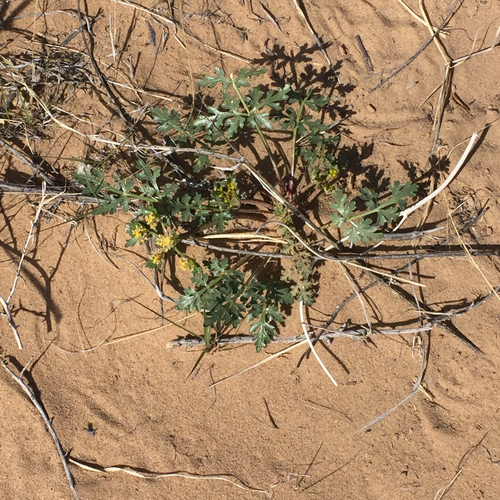
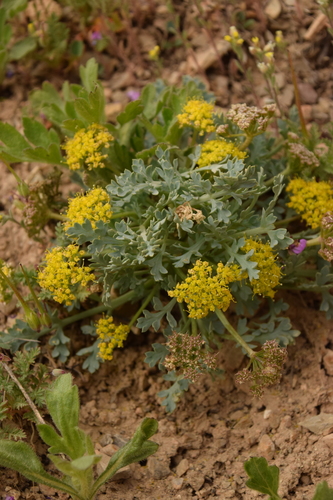
Carum carvi
L.
Caraway
iNaturalist· cc-by-nc
(c) Svetlana Nesterova, some rights reserved (CC BY-NC), uploaded by Svetlana Nesterova
iNaturalist· cc-by-nc
(c) Paola Casale, some rights reserved (CC BY-NC)
Summary
Source: WikipediaA biennial herb reaching 0.6 m tall and 0.3 m wide, frost-hardy with hermaphroditic flowers blooming June–July and seeds ripening July–August. Self-fertile and bee-pollinated. Tolerates light sandy, medium loamy, and heavy clay soils with good drainage; grows in mildly acidic to basic pH. Adapts to semi-shade or full sun but prefers moist conditions.
Description
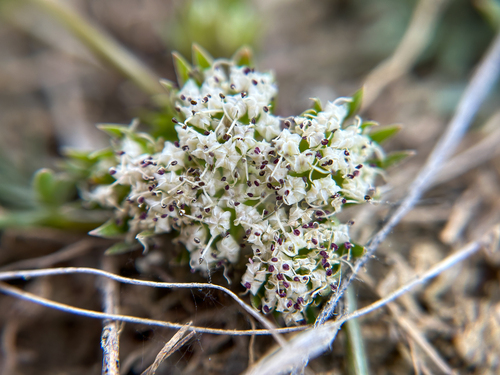
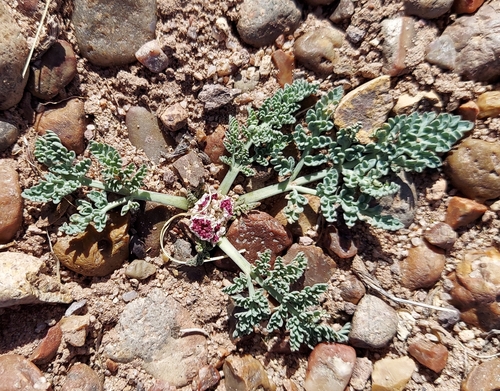
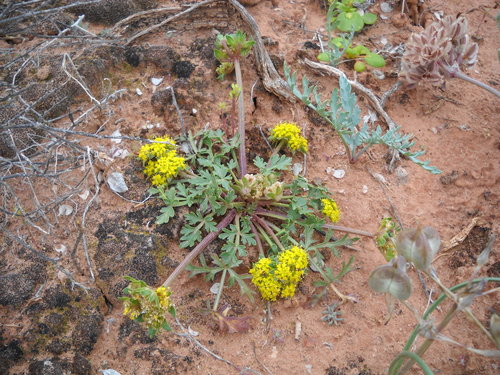
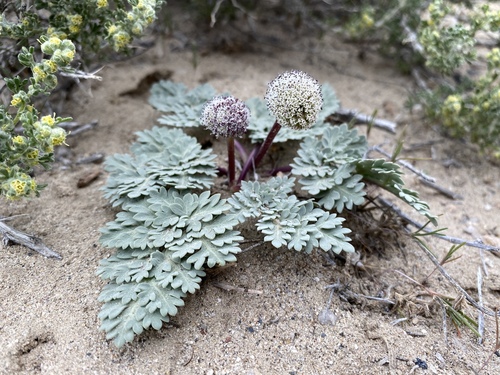
A herb. The plant takes two years to grow then flower. It is an erect herb. It grows about 40 cm high. The root is thick, long and tapering like a carrot. It has a pale colour. The leaves are twice divided. The upper leaves are smaller and less divided. The leaves are pale green. The flowers are white. The fruit are oblong and narrow. They usually have distinct ribs. These dark brown fruit are 5-6 mm long. Caraway is more curved and darker in colour than cumin.
Edible Uses
The seed can be eaten raw or cooked and has a spicy flavour, commonly used to flavour confectionery, bread, salads, and vegetables. It is high in protein and fat. Per 100g, the seed contains 333 calories, 10g water, 20g protein, 14.5g fat, 50g carbohydrate, 12.5g fibre, 6g ash, 689mg calcium, 568mg phosphorus, 16.2mg iron, 258mg magnesium, 17mg sodium, 1351mg potassium, 5.5mg zinc, 363 IU vitamin A, 0.383mg thiamine, 0.379mg riboflavin, and 3.61mg niacin. Seeds are often chewed after a meal to freshen the breath and relieve heartburn following rich food. An essential oil from the seed is used to flavour ice creams, candy, and soft drinks, and is an essential ingredient of the liqueur kümmel. The root is cooked and used as a vegetable in the manner of parsnips — stronger in flavour but considered delicious by many. Young leaves can be eaten raw in salads or used as a flavouring in soups; they have a mild parsley-dill flavour and are far less spicy than the seeds. Older leaves can be cooked as a spinach. The crushed seeds can be brewed into a tea that has a soothing effect on digestion.
Traditional Uses
The seeds are used to flavour cakes, bread and biscuits. They can also be used in vegetable dishes, pickles and coleslaw. They have a licorice flavour. They are used to flavour various alcoholic drinks. Caution: Alcohol is a cause of cancer. The young leaves are used to flavour soups, meats, cheese and salads. The tender leaves and shoots are cooked as a vegetable. The young roots can be cooked and eaten.
Medicinal Uses
Caraway has a long history of use as a household remedy, particularly for digestive complaints, where its antispasmodic action soothes the digestive tract and its carminative action relieves bloating from wind and improves appetite. It is frequently added to laxative medicines to prevent griping. The seed is antiseptic, antispasmodic, aromatic, carminative, digestive, emmenagogue, expectorant, galactogogue, and stimulant. It can be chewed raw for near-immediate relief of indigestion or made into infusions. The seed is also used in treating bronchitis and features in cough remedies, being particularly appropriate for children. It is said to increase breast milk production in nursing mothers. Seed should be harvested when fully ripe, then dried and stored in a cool, dry place away from sunlight. The essential oil extracted from the seed shares similar properties. A tea brewed from the seeds is a pleasant stomachic and carminative, used historically to treat flatulent colic. In Tibetan medicine, the seed is considered to have an acrid taste and a heating potency, used to treat failing vision and loss of appetite. The German Commission E Monographs approve Carum carvi for dyspeptic complaints.
Known Hazards
Caraway is said to contain the alleged 'psychotroph' myristicine. Excessive intake can lead to kidney and liver damage
Distribution
A temperate plant. A hardy plant. It needs a sunny, sheltered position. In Hobart Botanical gardens. It grows in Nepal from 2500-4500 m altitude. It suits hardiness zones 3-10. In Sichuan and Yunnan.
Where It Grows
Afghanistan, Africa, Albania, Andorra, Armenia, Australia, Asia, Austria, Balkans, Belarus, Belgium, Bhutan, Bosnia, Britain, Bulgaria, Canada, Caucasus, Central Asia, China, Cuba, Czech Republic, Denmark, East Africa, Egypt, Estonia, Ethiopia, Europe*, Finland, France, Georgia, Germany, Greece, Himalayas, Holland, Hungary, Iceland, India, Indochina, Italy, Kazakhstan, Kyrgyzstan, Latvia, Lithuania, Luxembourg, Mediterranean, Middle East, Morocco, Myanmar, Nepal, Netherlands, North Africa, North America, Norway, Pakistan, Poland, Prussia, Romania, Russia, Scandinavia, SE Asia, Serbia, Slovakia, Slovenia, Spain, Sweden, Switzerland, Syria, Tajikistan, Tasmania, Thailand, Tibet, Turkey, Türkiye, Ukraine, USA, West Indies, Yugoslavia,
Cultivation
Succeeds in ordinary garden soil as long as it is not too wet in winter. Prefers a moist soil in full sun or partial shade. Tolerates a pH in the range 4.8 to 7.6. Caraway is a well-known herb that has been cultivated for its culinary and medicinal uses since ancient times. It is frequently cultivated in the modern herb garden and sometimes also commercially, there are some named varieties. Plants growing in more northerly latitudes and also in full sun are richer in essential oils and therefore more aromatic. Plants strongly resent root disturbance. They often self-sow freely when in a suitable location. This species is deep rooted and is a good plant for breaking up the sub-soil on heavy, wet land. It dislikes growing near fennel or wormwood but is a good companion for most plants, especially those that are shallow-rooted. The flowers attract parasitic wasps to the garden, these prey on aphids and so help to reduce populations of insect pests.
Propagation
Seed is best sown in situ as soon as it is ripe in late summer or early autumn. It can also be sown in March or April in situ, though in areas with cool summers plants may not produce a crop of ripe seed. Plants are highly sensitive to root disturbance and should not be transplanted.
Other Uses
An essential oil extracted from the seed is used in perfumery, for scenting soap, and as a parasiticide. Twenty-five kilos of seed yield approximately one kilo of essential oil; the essential oil yield from plants cultivated in Poland reaches up to 10.33% of the seed. Caraway is also used as a breath freshener.
Production
It is harvested in the very early morning before seed heads shatter. Complete seed heads are stored for 10 days to dry out before threshing.
Other Information
A common culinary herb. It is grown as a food plant. It is also sold in local markets.
Notes
There are 30 Carum species.
Nutrition
| Part | Moisture | kJ | kcal | Protein | Vit A | Vit C | Iron | Zinc |
|---|---|---|---|---|---|---|---|---|
| Seed | 9.9 | 1393 | 333 | 19.8 | 36 | 21 | 16.2 | 5.5 |
| Roots | 451 | 108 | — | — | — | — | — | — |
| Leaves | 111 | 27 | 4.9 | — | — | — | — | — |
Synonyms
Also Known As
Alcaravia, Anis, Carvi, Cemen, Chir, Chhonyo, Comi, Comino, Go-snod, Gunyun, Frenk kimyonu, Jangli jira, Jeera, Jenuju, Jintan, Jira, Kala jeera, Kaluduru, Karawya, Karuwai, Karve, Karwij, Karvi, Kemenmag, Kemeny, Kim, Kimine, Kitik, Kmien, Kmin komeny, Kmyn, Koomen, Koomlid, Koru, Kosnyot, Kummel, Kuo nie, Makozira, Navadna kumina, Qimon, Rasca, Shia jeera, Shia-jira, Shimai-shembu, Shimpaisapu, Sushavi, Tmin, Wilayati-zirah, Yuan-sui, Zera, Zira, Zirah-siah, Zire
References (90)
- Abbet, C., et al, 2014, Ethnobotanical survey on wild alpine food plants in Lower and Central Valais (Switzerland). Journal of Ethnopharmacology 151 (2014) 624–634
- Aipeisova S.A., et al, 2019, Wild useful herbs of Aktobe Region (Western Kazakhstan). Ukrainian Journal of Ecology, 9(3), 329-331
- Ambasta S.P. (Ed.), 2000, The Useful Plants of India. CSIR India. p 107
- Battacharyya, A., 1991, Ethnobotanical Observations in the Ladakh Region of Northern Jammu and Kashmir State, India. Economic Botany, Vol. 45, No. 3, pp. 305-308 (As Carum carvi forma gracile)
- Bhatia, H., et al, 2018, Traditionally used wild edible plants of district Udhampur, J&K, India. Journal of Ethnobiology and Ethnomedicine (2018) 14:73
Show all 90 references Hide references
- Bianchini, F., Corbetta, F., and Pistoia, M., 1975, Fruits of the Earth. Cassell. p 100
- Bircher, A. G. & Bircher, W. H., 2000, Encyclopedia of Fruit Trees and Edible Flowering Plants in Egypt and the Subtropics. AUC Press. p 86
- Bodkin, F., 1991, Encyclopedia Botanica. Cornstalk publishing, p 218
- Boesi, A., 2014, Traditional knowledge of wild food plants in a few Tibetan communities. Journal of Ethnobiology and Ethnomedicine 10:75
- Bonet, M. A. & Valles, J., 2002, Use of non-crop food vascular plants in Montseny biosphere reserve (Catalonia, Iberian Peninsula). International Journal of Food Sciences and Nutrition (2002) 53, 225–248
- Bremness, L., 1994, Herbs. Collins Eyewitness Handbooks. Harper Collins. p 239
- Brickell, C. (Ed.), 1999, The Royal Horticultural Society A-Z Encyclopedia of Garden Plants. Convent Garden Books. p 232
- Brouk, B., 1975, Plants Consumed by Man. Academic Press, London. p 287
- Brown, D., 2002, The Royal Horticultural Society encyclopedia of Herbs and their uses. DK Books. p 155
- Burnie, G & Fenton-Smith, J., 1999, A Grower's Guide to Herbs. Murdoch Books. p 18
- Bussman, R. W., et al, 2016, A comparative ethnobotany of Khevsureti, Samtskhe-Javakheti, Tusheti, Svaneti, and Racha-Lechkhumi, Republic of Georgia (Sakartvelo), Caucasus. Journal of Ethnobiology and Ethnomedicine (2016) 12:43
- Bussman, R. W., et al, 2021, Unity in diversity—food plants and fungi of Sakartvelo (Republic of Georgia), Caucasus. Journal of Ethnobiology and Ethnomedicine (2021) 17:72 p 5
- Cerne, M., 1992, Wild Plants from Slovenia used as Vegetables. Acta Horticulturae 318
- Cheifetz, A., (ed), 1999, 500 popular vegetables, herbs, fruits and nuts for Australian Gardeners. Random House p 121
- "Chinese Nutrition Journal", 2002, Vol 23(8) p 298
- Christanell, A., et al, 2010, The Cultural Significance of Wild Gathered Plant Species in Kartitsch (Eastern Tyrol, Austria) and the Influence of Socioeconomic Changes on Local Gathering Practices. Chapter 3 in Ethnobotany in the New Europe. Berghahn Books. Cobley, L.S. (rev. Steele, W.M.) 2nd Ed., 1976, An Introduction to the Botany of Tropical Crops. Longmans. p 249
- Cundall, P., (ed.), 2004, Gardening Australia: flora: the gardener's bible. ABC Books. p 334
- Denes, A., et al, 2012, Wild plants used for food by Hungarian ethnic groups living in the Carpathian Basin. Acta Societatis Botanicorum Poloniae 81 (4): 381-396
- Dogan, A., et al, 2014, A review of edible plants on the Turkish Apiaceae species. J. Fac. Pharm. Istanbul, 44(2) pp 251-262
- Dorjey, K., et al, 2012, Ethnobotanical observations in Trans-Himalayan Region of Ladakh. Journal of Plant Development Sciences Vol. 4 (4): 459-464.
- Dorjey, K., 2015, Exploration of Plant based Traditional Knowledge from Sham region of Ladakh (J. & K.), India. Journal of Plant Development Sciences Vol. 7 (5) : 429-433.
- Ertug, F, Yenen Bitkiler. Resimli Türkiye Florası -I- Flora of Turkey - Ethnobotany supplement
- Esperanca, M. J., 1988. Surviving in the wild. A glance at the wild plants and their uses. Vol. 1. p 186
- Facciola, S., 1998, Cornucopia 2: a Source Book of Edible Plants. Kampong Publications, p 16
- Girard, N. J., 2020, Sustainable Foraging of Wild Edible Plants in Norway. A Bioculutral Approach. M. Sc. thesis Norwegian University. p 37
- Ghimire, S. K., et al, 2008, Non-Timber Forest Products of Nepal Himalaya. WWF Nepal p 132
- Gouldstone, S., 1983, Growing your own Food-bearing Plants in Australia. Macmillan p 187
- Guo, C., et al, 2022, An Ethnobotany Survey of Wild Plants Used by the Tibetan People of the Yadong River Valley, Tibet, China. Journal of Ethnobiology and Ethnomedicine
- Hedrick, U.P., 1919, (Ed.), Sturtevant's edible plants of the world. p 165
- Hemphill, I, 2002, Spice Notes. Macmillan. p 101
- http://nordicfood lab/org/blog/2102/9/wild-edible-plants-an-overview
- Hu, Shiu-ying, 2005, Food Plants of China. The Chinese University Press. p 593
- Kalle, R. & Soukand, R., 2012, Historical ethnobotanical review of wild edible plants of Estonia (1770s-1960s) Acta Societatis Botanicorum Poloniae 81(4):271-281
- Kang, Y., et al, 2014, Wild food plants used by the Tibetans of Gongba Valley (Zouqu country, Gansu, China) Journal of Ethnobiology and Ethnomedicine 10:20
- Kaul, M.K. et al, 1985, Ethno-botanic studies in North-West and Trans-Himalaya - contribution to the wild food plants of Ladakh. J.Econo. Tax. Bot. Vol. 6 No. 3 pp 523-527 (As Carum carvi forma gracile)
- Kiple, K.F. & Ornelas, K.C., (eds), 2000, The Cambridge World History of Food. CUP p 432, 1745
- Kishor, A., et al, 2018, Wild Food Plants of Himachal Pradesh: A Review. Plant Archives Vol. 18 No.2 pp. 2737-2751
- Kolosova, V., et al, 2020, Foraging in Boreal Forest: Wild Food Plants of the Republic of Karelia, NW Russia. Foods 2020, 9, 1015; p 8
- Kybal, J., 1980, Herbs and Spices, A Hamlyn Colour Guide, Hamlyn Sydney p 68
- Lazarides, M. & Hince, B., 1993, Handbook of Economic Plants of Australia, CSIRO. p 49
- Lim, T. K., 2015, Edible Medicinal and Non Medicinal Plants. Volume 9, Modified Stems, Roots, Bulbs. Springer p 23
- Łukasz Łuczaj and Wojciech M Szymański, 2007, Wild vascular plants gathered for consumption in the Polish countryside: a review. J Ethnobiol Ethnomedicine. 3: 17
- Luczaj, L., 2012, Ethnobotanical review of wild edible plants of Slovakia. Acta Societatis Botanicorum Poloniae 81(4):245-255
- Łuczaj, L., et al, 2013, Wild edible plants of Belarus: from Rostafiński’s questionnaire of 1883 to the present. Journal of Ethnobiology and Ethnomedicine 2013, 9:21
- Luczaj, L., et al, 2015, Wild food plants and fungi used by Ukrainians in the western part of the Maramureş region in Romania. Acta Soc Bot Pol 84(3):339–346
- Lukasz, L., 2016, Wild Edible Plants Traditionally Used in Poland.
- Mabey, R., 1973, Food for Free. A Guide to the edible wild plants of Britain, Collins. p 148
- Manandhar, N.P., 2002, Plants and People of Nepal. Timber Press. Portland, Oregon. p 138
- Martin, F.W. & Ruberte, R.M., 1979, Edible Leaves of the Tropics. Antillian College Press, Mayaguez, Puerto Rico. p 222
- Menninger, E.A., 1977, Edible Nuts of the World. Horticultural Books. Florida p 147
- Miguel, E., et al, 1989, A checklist of the cultivated plants of Cuba. Kulturpflanze 37. 1989, 211-357
- Molla, A., Ethiopian Plant Names. http://www.ethiopic.com/aplants.htm
- Mulherin, J., 1994, Spices and natural flavourings. Tiger Books, London. p 30
- Murugan, Pal M., et al, 2010, Phytofoods of Nubra valley, Ladakh - The cold desert. Indian Journal of Traditional Knowledge. Vol. 9(2): 303-308
- Nanagulyan, S., et al, 2020, Wild plants and fungi sold in the markets of Yerevan (Armenia). Journal of Ethnobiology and Ethnomedicine 16:26
- Negi, P. S. & Subramani, S. P., 2015, Wild Edible Plant Genetic Resources for Sustainable Food Security and Livelihood of Kinnaur District, Himachal Pradesh, India, International Journal of Conservation Science. 6 (4): 657-668
- Paoletti, M.G., Dreon, A.L., and Lorenzoni, G.G., 1995, Pistic, Traditional Food from Western Friuli, NE Italy. Economic Botany 49(1) pp 26-30
- Pieroni, A.,& Giusti, M. E., 2009, Alpine Ethnobotany in Italy: Journal of Ethnobiology and Ethnomedicine. 5:32
- Pieroni, A. & Soukand, R., 2017, Are Borders more Important than Geographical Distance? The Wild Food Ethnobotany of the Boykos and its Overlap with that of the Bukovinian Hutsuls in Western Ukraine. Journal of Ethnobiology 37(2): 326–345
- Pieroni, A. & Soukand, R., 2018, Forest as Stronghold of Local Ecological Practice: Currently Used Wild Food Plants in Polesia, Northern Ukraine. Economic Botany, XX(X) pp. 1-21
- Plants for a Future database, The Field, Penpol, Lostwithiel, Cornwall, PL22 0NG, UK. http://www.scs.leeds.ac.uk/pfaf/
- Prakofjewa, J., et al, 2023, Boundaries Are Blurred: Wild Food Plant Knowledge Circulation across the Polish-Lithuanian-Belarusian Borderland. Biology 2023, 12, 571.
- Pruse, B., et al, 2021, Active Wild Food Practices among Culturally Diverse Groups in the 21st Century across Latgale, Latvia. Biology 2021, 10, 551.
- Purseglove, J.W., 1968, Tropical Crops Dicotyledons, Longmans. p 650
- Raghavan, S., 2007, Handbook of Spices, Seasonings, and Flavourings. Second Edition. CRC Press p 78
- Rana, J.C. et al, 2011, Genetic resources of wild edible plants and their uses among tribal communities of cold arid regions of India. Genetic Resources and Crop Evolution. 59:135-149
- Rawat, G.S., & Pangtey, Y.P.S., 1987, A Contribution to the Ethnobotany of Alpine Regions of Kumaon. J. Econ. Tax. Bot. Vol. 11 No. 1 pp 139-147
- Redzic, S. J., 2006, Wild Edible Plants and their Traditional Use in the Human Nutrition in Bosnia-Herzegovina. Ecology of Food and Nutrition, 45:189-232
- SAYCE
- Seidemann J., 2005, World Spice Plants. Economic Usage, Botany, Taxonomy. Springer. p 87
- Sharma, L. et al, 2018, Diversity, distribution pattern, endemism and indigenous uses of wild edible plants in Cold Desert Biosphere Reserve of Indian Trans Himalaya. Indian Journal of Traditional Knowledge. Vol 17(1) January 2018 pp 122-131
- Sher, H. et al, 2011, Ethnobotanical and Economic Observations of Some Plant Resources from the Northern Parts of Pakistan. Ethnobotany research & Applications 9:027-041
- Shikov, A. N. et al, 2017, Traditional and Current Food Use of Wild Plants Listed in the Russian Pharmacopoeia. Frontiers in Pharmacology. Vol. 8 Article 841
- Simkova, K. et al, 2014, Ethnobotanical review of wild edible plants used in the Czech Republic. Journal of Applied Botany and Food Quality 88, 49-67
- Solomon, C., 2001, Encyclopedia of Asian Food. New Holland. p 64
- Soukand, R., et al, 2017, Multi-functionality of the few: current and past uses of wild plants for food and healing in Liubań region, Belarus. Journal of Ethnobiology and Ethnomedicine (2017) 13:10
- Soukand, R., et al, 2021, The trauma of no-choice: Wild food ethnobotany in Yaghnobi and Tajik villages, Varzob Valley, Tajikistan. Genetic Resources and Crop Evolution · December 2021
- Sp. pl. 1:263. 1753
- Svanberg, I., et al, 2012, Edible wild plant use in the Faroe Islands and Iceland. Acta Societatis Botanicorum Poloniae 81(4): 233-238
- Tardio, J., et al, 2006, Ethnobotanical review of wild edible plants in Spain. Botanical J. Linnean Soc. 152, 27-71
- Tyagi, R. K., et al, 2004, Conservation of Spices Germplasm in India. Indian J. Plant Genet. Resour. 17(3): 163-174
- Uprety, Y., et al, 2016, Traditional use and management of NTFPs in Kangchenjunga Landscape: implications for conservation and livelihoods. Journal of Ethnobiology and Ethnomedicine (2016) 12:19
- van Wyk, B., 2005, Food Plants of the World. An illustrated guide. Timber press. p 121
- Wiersema, J. H. & Leon, B., 2013, World Economic Plants. A Standard Reference CRC Press. 2nd Ed. p 147
- Yeshi, K. et al, 2017, Taxonomical Identification of Himalayan Edible Medicinal Plants in Bhutan and the Phenolic Contents and Antioxidant Activity of Selected Plants. TBAP 7 (2) 2017 pp 89 - 106