Brachiaria ramosa
(L.) Stapf.
Signal grass, Browntop millet
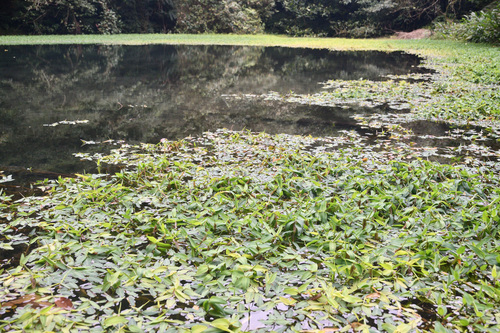
iNaturalist· cc-by
(c) Kevin Faccenda, some rights reserved (CC BY)
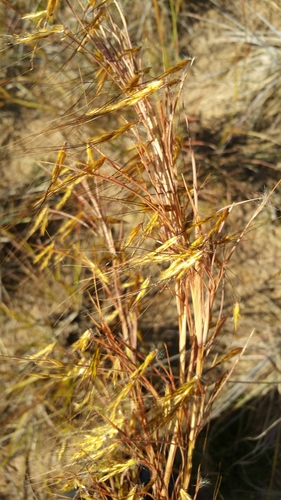
iNaturalist· cc-by-nc
(c) SONU KUMAR, some rights reserved (CC BY-NC)
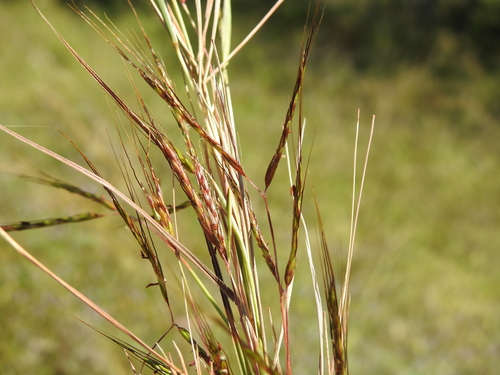
iNaturalist· cc-by-nc
(c) Kellen Apuna, some rights reserved (CC BY-NC)
Description
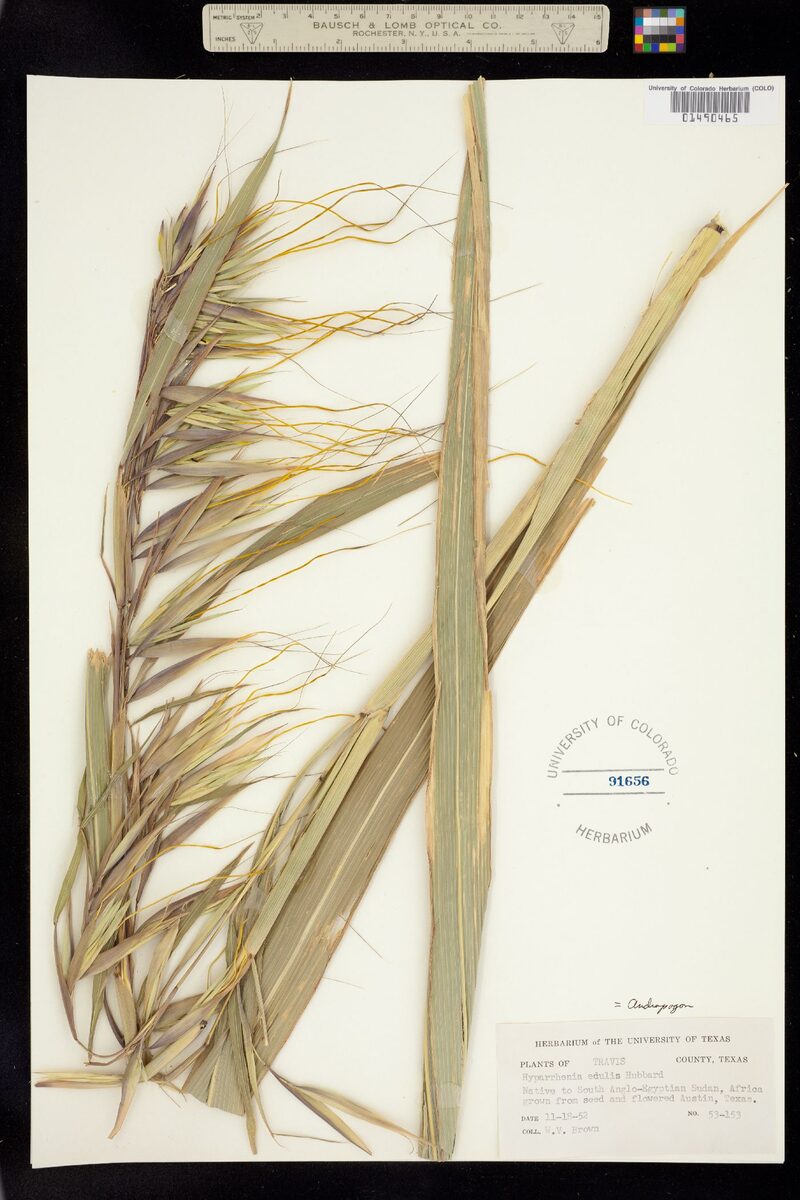
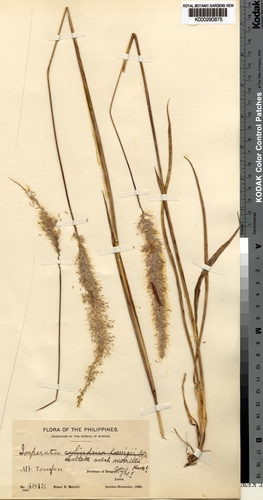
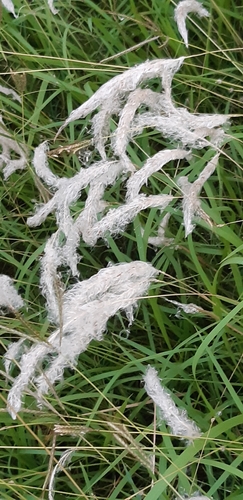
A millet grass. It is an annual grass. It grows 60 cm high. It forms loos tufts. The culms root from the lower nodes. The leaves are 5-12.5 cm long by 0.6-1.5 cm wide. The leaves are soft and limp. The edge is sharp. Leaves have a somewhat rough texture. They can be finely hairy. The flowers are green and in long undivided flower arrangement.
Edible Uses
In South Asia, it is traditionally cultivated as a cereal crop. It is used because it has potential to give high yield in resource-poor and fragile ecological conditions. In the southern parts of India, the grains of browntop millet from non-shattering varieties are consumed as boiled whole grain (like rice), porridge, kheer or unleavened bread and dosa. The grain is also used as a birdseed, and forage crop (in the US) for domestic animals and game animals (such as deer and rabbit) and for birds such as turkey, duck, dove, quail and pheasant. Browntop millet can represent up to 10–25% of the diet of terrestrial and water birds. Also 50% of ingested seed found in mourning dove's crops was browntop millet. Urochloa ramosa is also used to suppress root-knot nematode populations in tomato and pepper crops in south-eastern states of America. Urochloa ramosa also has the ability to accumulate significant amounts of metals such as lead and zinc in its shoot and root tissues making it an important plant for remediation of contaminated soils (Lakshmi et al., 2013).
Traditional Uses
The seeds are mixed with millet or other grains to increase the bulk. If used for chapattis it should be eaten with buttermilk to avoid constipation.
Known Hazards
The plant can accumulate toxic/lethal levels of nitrate and should not be fed to livestock if the plant has been stressed by droughty or cold conditions.
Distribution
It is a tropical plant. It grows on most alluvial soils. In Nepal is grows to 1800 m altitude. In Yunnan.
Where It Grows
Africa, Asia, Australia, Bhutan, Burkina Faso, Cambodia, China, East Africa, Ethiopia, Guinea, Guinée, Guinea-Bissau, Himalayas, India, Indochina, Indonesia, Iran, Malawi, Malaysia, Mauritania, Mexico, Middle East, Mozambique, Nepal, Nigeria, Pakistan, Saudi Arabia, SE Asia, Senegal, South Africa, Southern Africa, Thailand, USA, Vietnam, West Africa, Yemen, Zimbabwe,
Cultivation
Plants can be grown from seed or by splitting the rhizome.
Propagation
Seed - sow in situ. The optimal air temperature for germination is between 17 - 26°c.
Other Uses
The plant is used to suppress root-knot nematode populations in tomato and pepper crops in the Southeast USA. It is grown as a fast-growing catch crop between commodity crops, and is not known to be allelopathic. The plant is used as a fast-growing cover for erosion control. It is used as a nurse crop in the Southeast until a perennial grass cover is established. It also has the ability to accumulate significant amounts of lead and zinc in shoot and root tissues, making it an important plant for the remediation of contaminated soils277].
Other Information
It is cultivated for its grain.
Notes
There are about 100 Brachiaria species.
Synonyms
Also Known As
Anda korra, Au kawunga, Baadeho, Banspate, Bennakki hullu, Chama pothaval, Duo zhi bai xing cao, Gae rid, Kanarin doki, Kuri, Makdaghas, Pala pul, Peda sama, Rebha pereng-perengan
References (15)
- Ambasta, S.P. (Ed.), 2000, The Useful Plants of India. CSIR India. p 80
- Arora, R. K., 2014, Diversity in Underutilized Plant Species - An Asia-Pacific Perspective. Bioversity International. 203 p.
- Burkill, H. M., 1985, The useful plants of west tropical Africa, Vol. 2. Kew.
- Flora of Pakistan. www.eFloras.org
- Gallagher, D. E., 2010, Farming beyond the escarpment: Society, Environment, and Mobility in Precolonial Southeastern Burkina Faso. PhD University of Michigan.
Show all 15 references Hide references
- GUPTA & KANODIA,
- Kiple, K.F. & Ornelas, K.C., (eds), 2000, The Cambridge World History of Food. CUP p 118
- Manandhar, N.P., 2002, Plants and People of Nepal. Timber Press. Portland, Oregon. p 119
- D. Prain, Fl. trop. Afr. 9:542. 1919
- PROSEA (Plant Resources of South East Asia) handbook Volume 10 Cereals. p 150
- SAXENA;
- SHANKARNARAYAN & SAXENA.
- Wiersema, J. H. & Leon, B., 2013, World Economic Plants. A Standard Reference CRC Press. 2nd Ed. p 707 (As Urochloa ramosa)
- Wild edible plants of Himachal Pradesh
- World Checklist of Useful Plant Species 2020. Royal Botanic Gardens, Kew (As Urochloa ramosa)