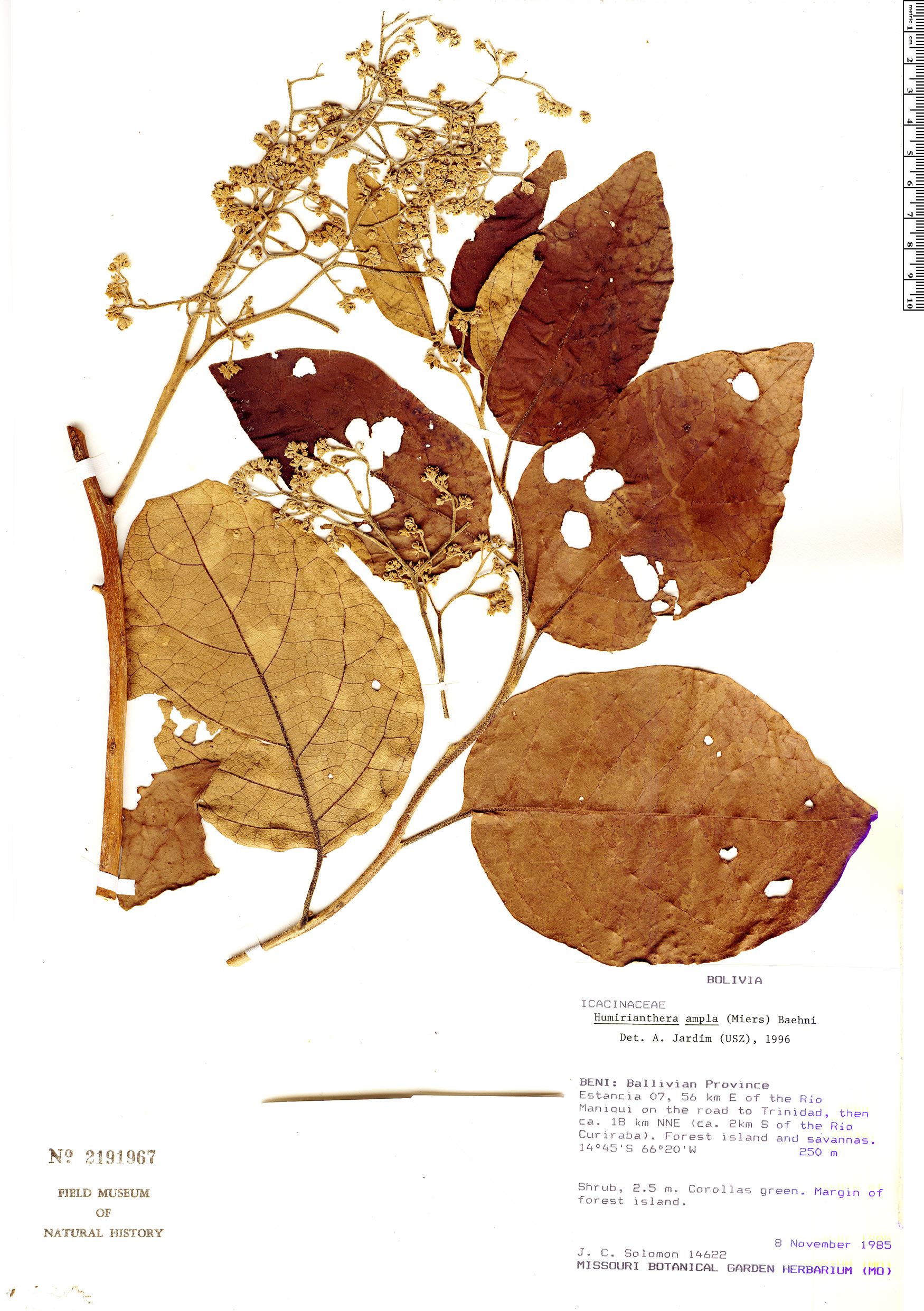
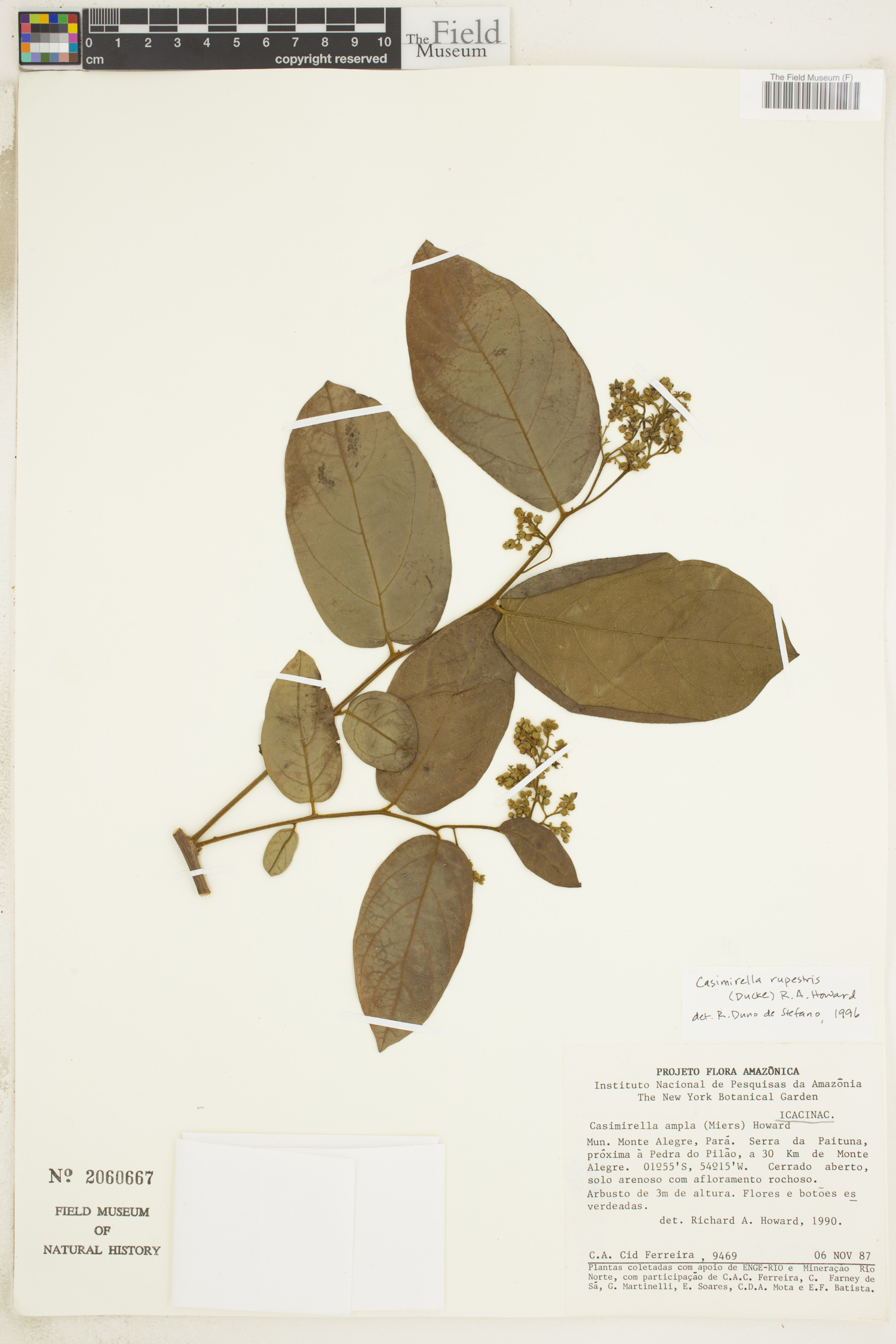
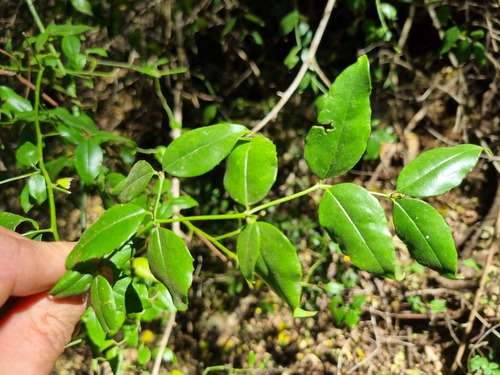
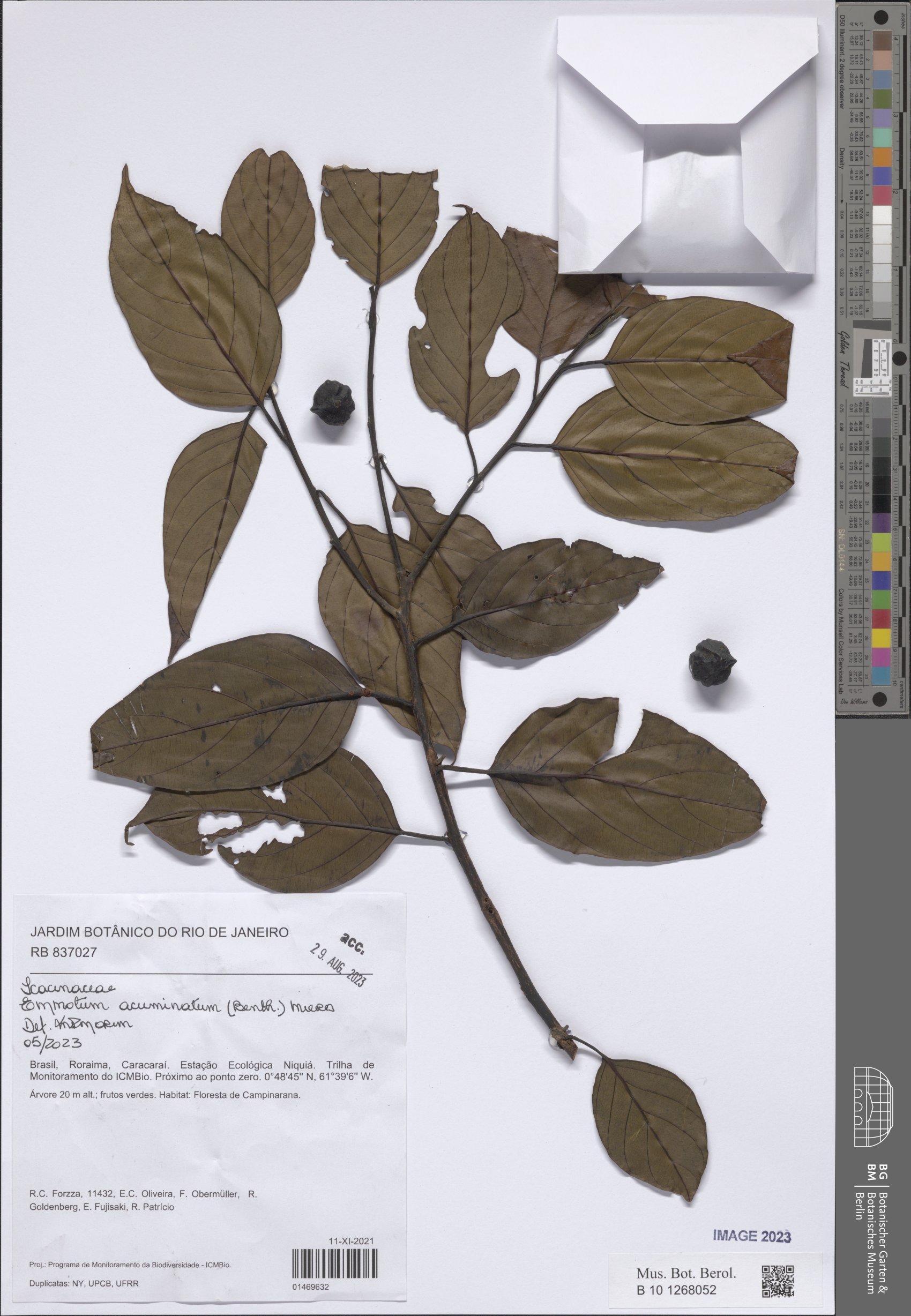
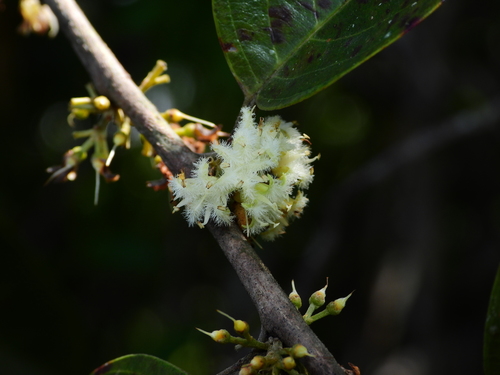
Cantleya corniculata - (Becc.) R.A.Howard
(Becc.) R.A.Howard
Daru
gbif· cc-by-nc
Arizona State University Vascular Plant Herbarium (ASU-Plants)
gbif· cc-by-nc
President and Fellows of Harvard College
gbif· cc-by
The New York Botanical Garden
Description
Cantleya corniculata is an evergreen Tree growing to 30 m (98ft) by 25 m (82ft) at a fast rate. See above for USDA hardiness. It is hardy to UK zone 10. Suitable for: light (sandy), medium (loamy) and heavy (clay) soils. Suitable pH: mildly acid, neutral and basic (mildly alkaline) soils and can grow in very acid soils. It cannot grow in the shade. It prefers moist or wet soil.
Edible Uses
Fruit. Said to be of a rather poor quality.
Distribution
Southeast Asia - Malaysia, Indonesia.
Where It Grows
TROPICAL ASIA: Brunei Darussalam, Indonesia, Malaysia, Singapore
Cultivation
A plant of the moist, lowland tropics.
Propagation
Seed
Other Uses
Furniture Wood. Other uses rating: High (4/5). The tree produces a highly valued timber that is much sought after and commonly exported. Due to the heavy exploitation of this tree for its timber, it has been classified as 'Vulnerable' in the IUCN Red List of Threatened Species. The brownish-yellow wood has a strong, aromatic scent. It is close-grained, hard, very heavy, does not split and is very durable in the ground. Because of its fragrance, it is sometimes used as a substitute for sandalwood (Santalum spp.). It is used for heavy outdoor work, house and ship building, bridges, flag poles etc. However, because it is prone to shrink and warp, it is only suitable for furniture or turnery if it has been fully seasoned.
Synonyms
Also Known As
Cantleya corniculata or Daru. Other Names: bedaru, samala, bedaru, garu buwaja, tusam